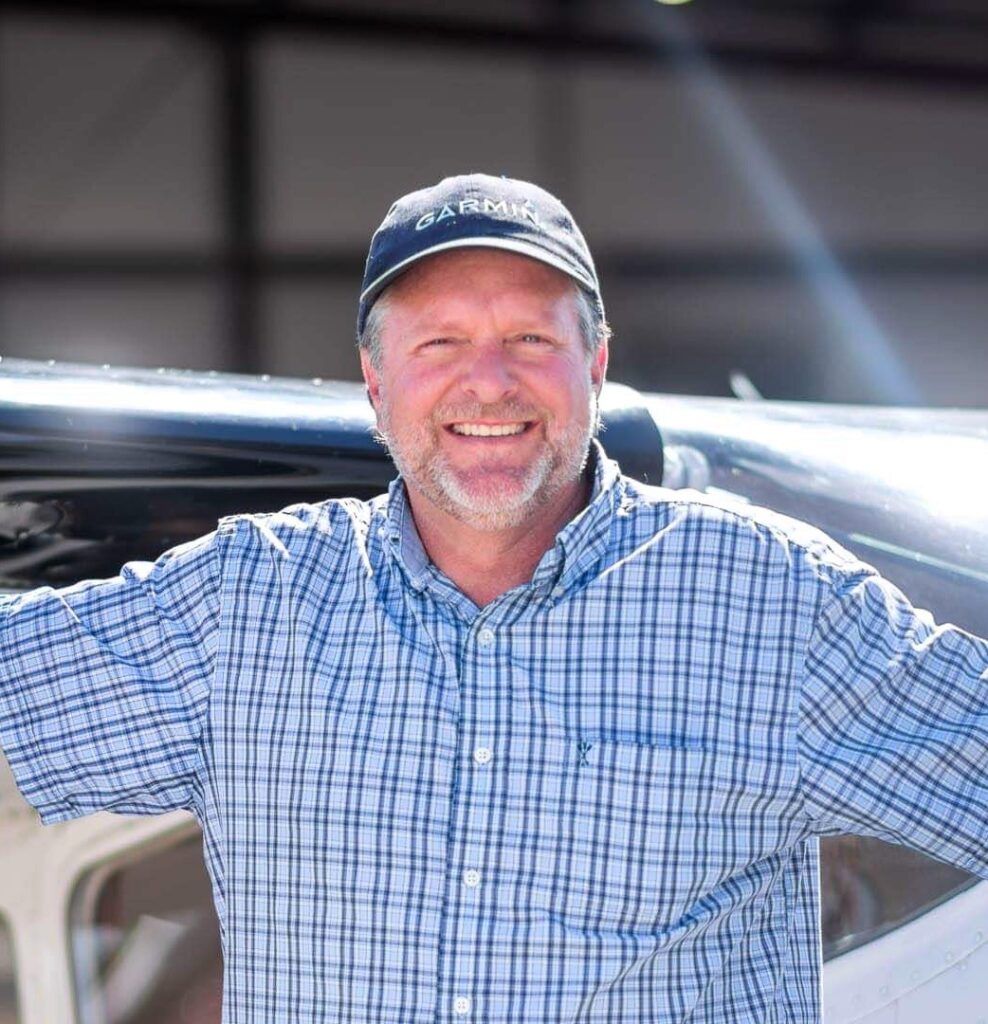
Andrew is a Multi Instrument Commercial Pilot with close to 3000 hours who started flying the Idaho Backcountry after learning to fly in the year 2000. It has been one of his greatest thrills to give back to Idaho after all that it has shared with him. Andrew makes his living off the growth in Idaho as a General Contractor building custom dreams and commercial buildings. He is keenly aware of the importance of managing growth proactively for us all to enjoy the aviation access we love today.
WORTH THE READ: ANDREW GEORGE GUEST EDITORIAL
Our many RAF supporters have such vast and varied experience, and we’re capturing some of their words of wisdom to share with you. This month’s guest editorial is by Andrew George, the President of the Idaho Aviation Association.
When I spoke at the 2024 RAF Volunteer Education Conference in Montana, I emphasized to those in attendance that we face one overarching challenge and one true adversary that poses the greatest threat to our industry: public opinion. I have not wavered in this belief.
As aviators, we are a minority voice navigating within a majority of opinions that often shape policies. These policies, in turn, have the potential to restrict our rights to explore the skies. While we can discuss wilderness access issues, the complexities of the air traffic control system, or even the nuances of proper etiquette and behavior, none of these concerns carries the weight of what a negative public perception can do.
Aviation has long battled the stigma of being unsafe or corrupt and careless at times—an image that does not reflect reality. Every industry has its bad actors, but aviation suffers disproportionately because its rare missteps are often catastrophic and widely publicized. Tragedies overshadow human-interest stories, creating lasting impressions that are hard to reverse.
Consider the devastating events at Reno, when the Galloping Ghost experienced a minor mechanical failure that led to significant loss of life and indelible memories for millions. That singular event reshaped how the Reno Air Races operated and began to erode public support, contributing to the eventual decline of the races at Stead Field.
This delicate balance between public perception and our freedoms is not unique to Reno—it applies across the country. One incident is all it takes to shift public sentiment in a way that permanently alters our ability to enjoy the skies.
I see the RAF as a vital force in combating these perceptions. The organization is uniquely positioned to share positive, corrective information about aviation’s benefits. Unlike larger national organizations like AOPA or EAA, which focus on broad industry-wide concerns or specific passions like building and flying experimental aircraft, the RAF’s grassroots approach is tailored to the needs and culture exemplified within individual states.
Aviation adapts to the physical and cultural geography of each region. The RAF excels by fostering a flow of information from local communities to a central hub and then redistributing it widely. The RIF RAF newsletters are great communicators of regional activities and contributions. This creates a system where local knowledge and stories can shape public opinion far beyond where they originated. The RIF RAF has shown where the Congressional information is shared as well. A benefit to its commitment to work with the Federal agencies throughout.
Because the RAF operates at the airfield level —where its contacts understand the specific needs of local pilots—it is uniquely effective in shaping country wide public perception. By focusing on grassroots engagement, the RAF has already made significant strides in influencing public opinion in many areas, with even greater potential in the future.
To maintain and grow this influence, we must all participate. It takes consistent communication—sharing information, correcting misconceptions, and engaging those who may view aviation as reckless or uncaring. Changing minds requires effort from all of us, not just within our local communities but also in collaboration with those far removed from our own neighborhoods.
We are always one bad day away from a shift in public opinion. While this is the reality of the social environment we live in, the degree of that shift depends on what we do today—how we communicate, how we collaborate, and how we behave as ambassadors of aviation.
We will all share in the struggles to protect our rights as aviators while we also create new ways to ensure our behaviors are safe and perceived as positive. The RAF is poised to be one of the few, deliberate organizations that I see as being in the right place at the right time. The RAF is not the AOPA in size and doesn’t need to be. It is not the EAA and has a singular focus. It is not like the IAA either as we are specific to our geographical areas. The RAF, oh it is sitting pretty in my mind…it has the beauty of being large enough to command a seat at the table, small enough to know where it came from yet powerful enough to add strength to any argument it sees fit. That’s where the RAF provides such assistance to help create a stream of information back and for that will and has shaped positive public opinion.
Let this serve as a reminder: Every day, the IAA (or other organizations) seeks ways to share, communicate, and collaborate—not just locally but across the nation. I strongly support the RAF’s mission and its ability to share our passion for aviation, connecting my community to yours and fostering understanding and appreciation for what we all love.
Andrew is a Multi Instrument Commercial Pilot with close to 3000 hours who started flying the Idaho Backcountry after learning to fly in the year 2000. It has been one of his greatest thrills to give back to Idaho after all that it has shared with him. Andrew makes his living off the growth in Idaho as a General Contractor building custom dreams and commercial buildings. He is keenly aware of the importance of managing growth proactively for us all to enjoy the aviation access we love today.
Posted in News
Recent Posts
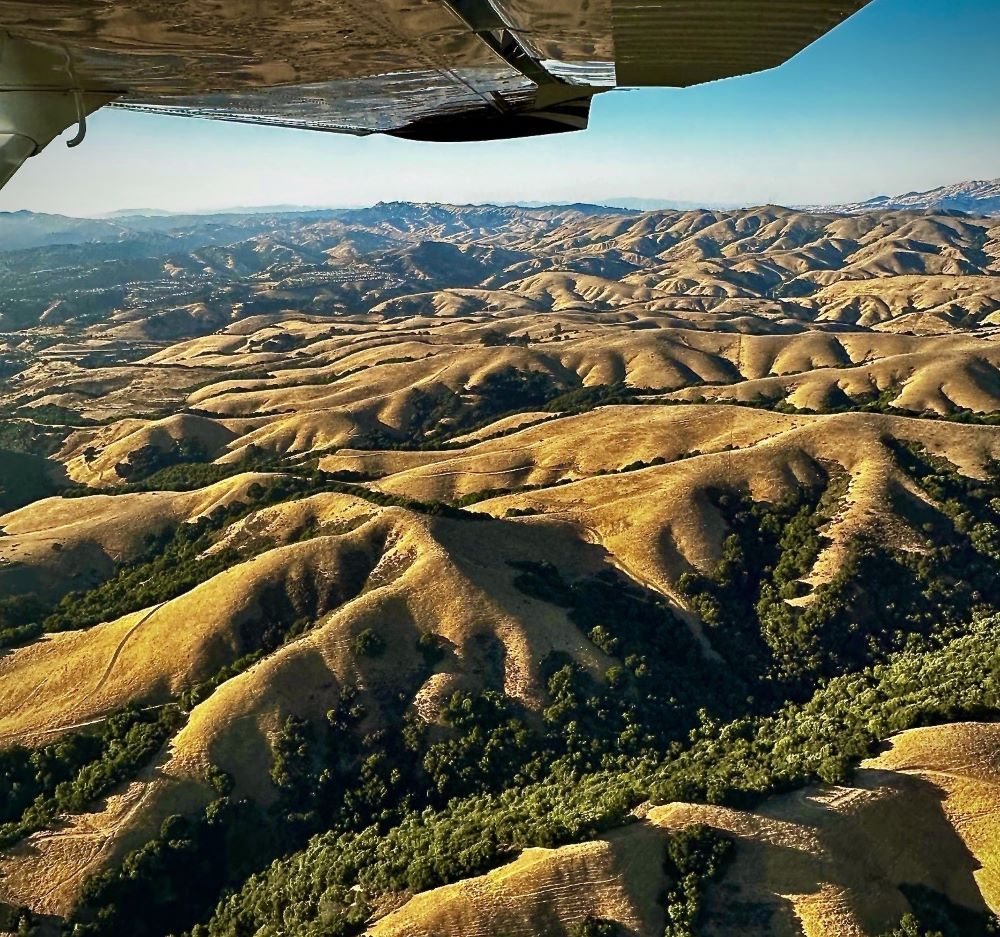
I live and work in Ohio, and like to play in the mountains, both flying and with feet on the ground. A lot of us live east of the Rockies, without the profound effects of density altitude, or that invisible mountain wave. In my earnest desire to fly in the mountains I love, many years ago I registered for a backcountry flying course…in Truckee, CA. Miraculously, I made it to Reno before experiencing a mountain wave. With Truckee practically in sight and approaching the final mountain ridge, my ground speed went from 135 kts to 80 kts in an instant. I floated over the ridge, pitch expected for straight and level at 80. I will never approach a ridge crossing straight-on again. Rather, at 45º, to allow for only a 90º turn to escape safely. Density altitude – the lack of power from high elevation coupled with above-standard temperature – gripped me when on final into Raton Municipal/Crews Field KRTN, 6,352 elevation, in a Grumman Tiger with student pilots aboard for a cross-country experience. Seduced by the gradual rising terrain westbound from Ohio, on final I realized I was sinking below the runway edge. It REALLY gifted me a profound understanding of density altitude! Can we safely transition to higher altitude flying? Sure! It just takes creativity and planning. Be aware of FAA hazardous attitudes, do some research, talk to experienced pilots in the places you are going, do more research, then get in your plane and practice where you live. Scenario training is great when you really lean into it. AOPA developed Focused Flight Reviews, which include a Backcountry option, mentioned on page 4, August 2026 Flight Training. One safety tool is Vc, or “canyon speed,” coined by Amy Hoover and “Dick” Williams in their manual Mountain, Canyon, and Backcountry Flying. Contact me for info on the backcountry flying course in Truckee. I have vetted these samples of the many resources myself. Just remember, online videos and reading can be productive, but it’s your hips in the seat with other experienced pilots that really works! For more resources, find the RAF Safety, Education, and Etiquette page here . Submitted October 15, 2026 By Christine Mortine, CFII, DPE, RAF Safety, Education, & Etiquette Committee - Education Chair cmortine@theraf.org
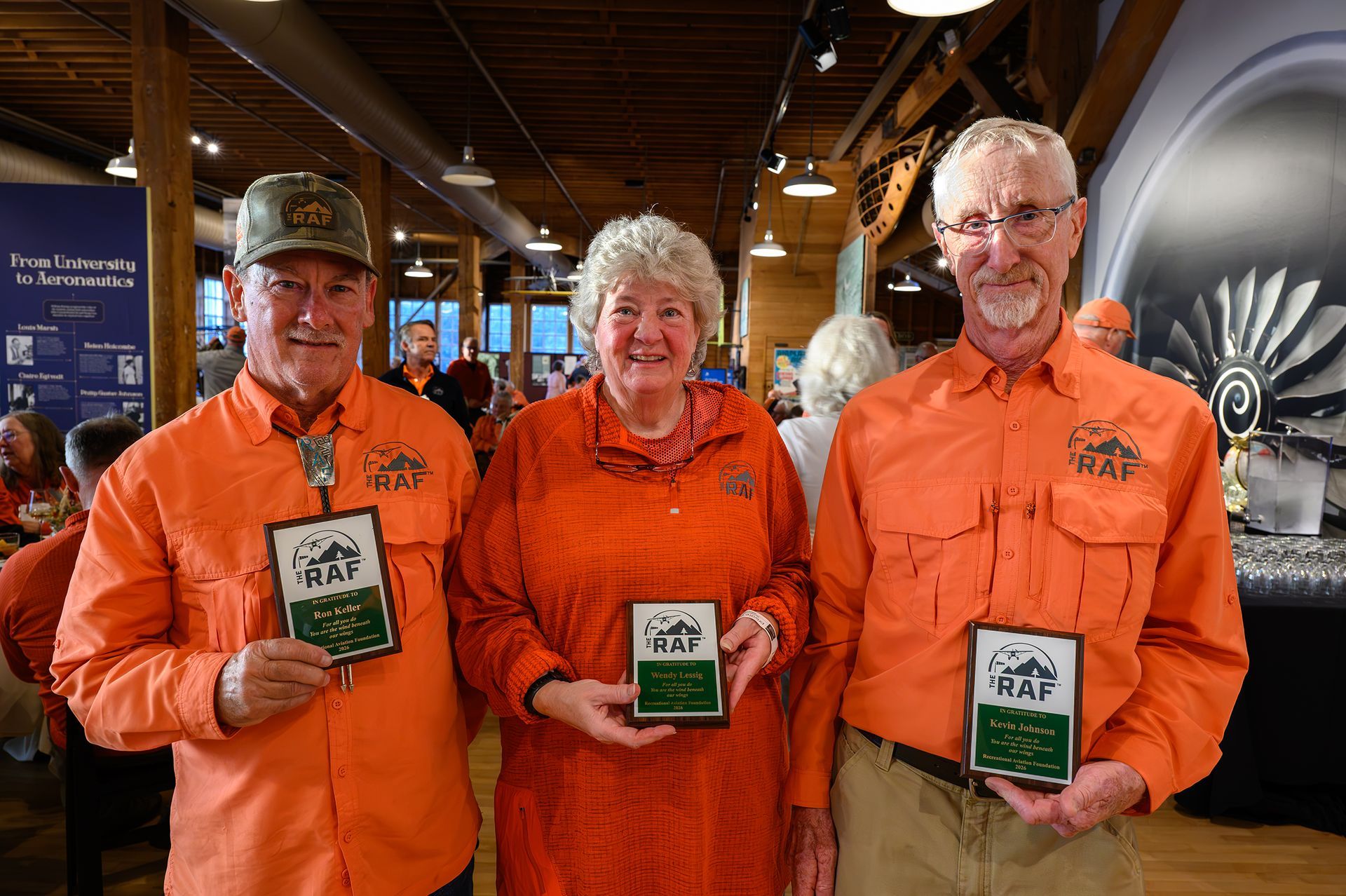
Three outstanding RAF volunteers were honored at the 2026 RAF Educational Conference in Seattle recently. RAF Volunteer Coordinator Erin White said, “It was incredibly difficult to choose this year’s winner. The HQ team and I finally narrowed down the candidates to three, and we simply couldn’t pick only one. I am very proud to announce that there are three 2026 award winners.” Wendy Lessig of Utah, Ron Keller of New Mexico, and Kevin Johnson of Oregon were each awarded the “Wind Beneath Our Wings” plaque that recognizes extraordinary efforts to further the RAF mission. This award was created and generously sponsored by RAF co-founders Dan and Margie Prill, and Chuck and Penny Jarecki. Each name has also been engraved on a permanent plaque displayed in the RAF's Bozeman, MT office. Wendy Lessig became Utah Liaison in 2019 and set a high bar for the task. A former director of Utah Back Country Pilots, she coordinated their mission to preserve and ethically access Utah’s backcountry airstrips with the RAF’s national recognition to boost awareness of her projects. Wendy has spent countless hours working to open multiple airstrips as part of the RAF’s Expanding the Map initiative. She works closely with the Bureau of Land Management and has become well-versed in public land management policy. She navigates the steps required to ensure access on federal lands, including using RAF grants and procuring other funding to pay for cultural surveys. Her diligence has paid off with successes that include the reopening of Taylor Flat and Keg Knoll airstrips. She engaged with Utah DOT Aeronautics and UBCP to install weather stations at strategically important locations for aviation. Wendy has flown her PA-12 all over the US, often to help at work parties. Ron Keller had been advocating for recreational aviation in New Mexico well before 2016 when he became RAF Liaison. Keller helped start the New Mexico Airstrip Network in 2014. He excels at working on projects in partnership with the Forest Service, New Mexico Pilots Association, and New Mexico Airstrip Network; with the goal to preserve valuable recreational destinations — places in the high desert where you could land your own aircraft, pitch your tent with panoramic views of ponderosa, piñon pine, and Rocky Mountain juniper. As RAF Liaison, he received permission from the USFS to rehabilitate Sacaton airstrip that had been dormant for over 40 years. Several work parties later, these dedicated volunteers saw Sacaton registered and ready for public access. Beyond reopening airstrips, Keller organizes volunteers, and has many camping amenities to show for their efforts, like picnic tables, vault toilets, and shade structures, most welcoming to campers and hikers. Of course Ron loves flying to all these places, but he also says, “I enjoy mowing all six USFS-managed airstrips on the Gila National Forest.” Choosing to haul a mower for hours each way on dirt roads certainly helped qualify Ron for this award. Upon receiving the award, Ron immediately credited it to the many volunteers who assist his efforts in NM. Kevin Johnson lives in Oregon where he bases his C172, but he’s often on the go. Kevin is an RAF Ambassador and has provided his design and carpentry skills on RAF projects from the Pacific Northwest to Montana, quietly and steadily getting an incredible amount of work done. He also builds and installs airfield kiosks of his own design. When he learned of the drive-in-only work call at Walker Ridge airfield in California, he drove nine hours each way to help out, towing a windsock pole that he’d built to the site. His range was recently expanded to include east Tennessee, where he joined the initial work party on the “Fly Rocky Top” project to construct a pilot pavilion over the weekend at Higdon Field, one of the seven outpost airfields planned as part of the RAF Expanding the Map project. During the award ceremony, the crowd gave each a standing ovation, and White added, “Volunteers from California to Maine and everywhere in between are doing incredible work every day preserving special places to fly.” The RAF is thankful for each and every person who volunteers their time and talent towards the mission of preserving, improving, and creating airfields for recreational access. Submitted October 14, 2026 By Carmine Mowbray