Nicolas Chabbert is an accomplished aviation professional with 31 years of experience in the general aviation sector, as well as hands-on expertise as an aircraft and balloon pilot. In addition to his management responsibilities, he is actively involved in several aerospace associations, and served as Chairman of the European General Aviation Manufacturers Association (ASD-EGAMA) for five years. In 2021, Chabbert was the first European Chairman for GAMA, the powerful General Aviation Manufacturers Association in DC, after 3 years serving as Aviation & Safety Committee chair for the association. Click here to read his full bio.
WORTH THE READ: NICOLAS CHABBERT GUEST EDITORIAL
Our many RAF supporters have such vast and varied experience, and we’re capturing some of their words of wisdom to share with you. This month’s guest editorial is by Nicolas Chabbert, the Senior Vice President of Daher’s Aircraft Division and CEO of DAHER Aircraft, Inc and Kodiak Aircraft, Inc.
As the world’s oldest airplane manufacturer in continuous production today – and a family-owned company – it’s no surprise that Daher is proud to be a supporter of the Recreational Aviation Foundation. We share a common vision of conserving and maintaining backcountry airstrips, which is best summarized by the motto: “Daher cares for those who care for aviation.”
Building on this strong “aviator DNA,” we have actively backed the RAF for many years, being even more uniquely positioned as a Foundation supporter since our company’s 2019 acquisition of the Kodiak aircraft product line.
The Kodiak is truly at home in the backcountry, based on its roots as a rugged STOL airplane that was developed for humanitarian missions into some of the world’s most remote and challenging locations. The cornerstone Kodiak 100 version is a common sight at backcountry strips, and we launched the larger, faster Kodiak 900 version in 2022 as the next step in Daher’s approach to the continual improvement of our turboprop-powered airplane families.
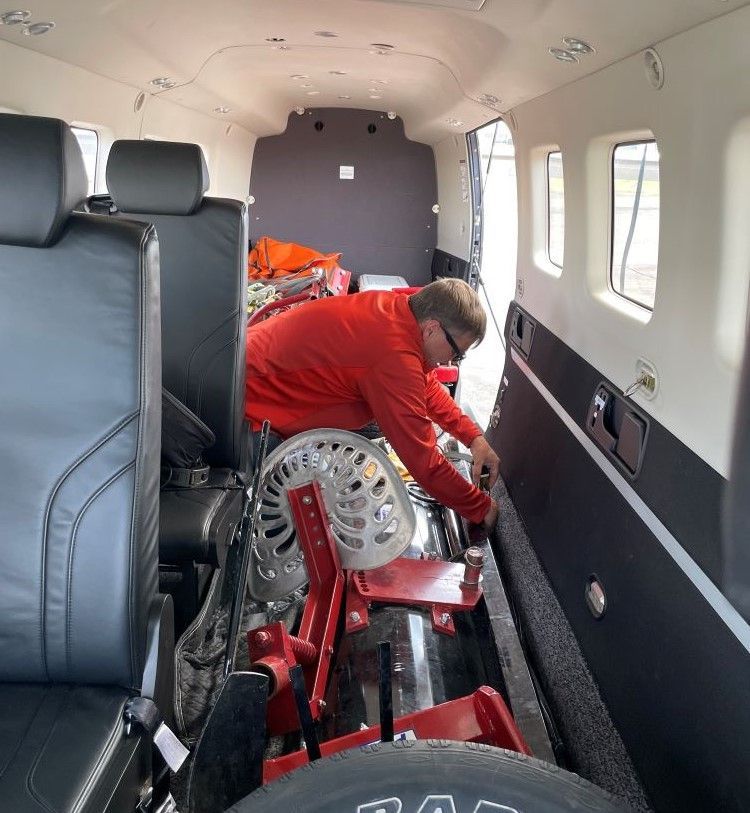
With the Kodiak now fully integrated into Daher’s aircraft portfolio, we’ve stepped up our contributions to the RAF’s goals. Earlier this year, we provided a Kodiak 900 to assist U.S. Forest Service personnel in accessing two isolated grass strips in the mountains of southeastern Idaho. Pilots and employees from our Kodiak Aircraft Company joined with the USFS for the airlift of building materials and support equipment to Moose Creek (1U1) and Shearer (2U5), utilizing the Kodiak 900 prototype.
These two isolated and unimproved strips are very difficult to reach, with high mountains and the nearest roads being more than 19 miles away – normally requiring pack animals for resupply of any kind. In the past, USFS rangers were based at the locations, but years of budget constraints creates challenges for the government agency in maintaining and supporting its sites. Using the Kodiak 900’s superior cabin size and excellent cargo-carrying capability, the USFS was able to accomplish maintenance for these airstrips and their structures, along with other support duties.
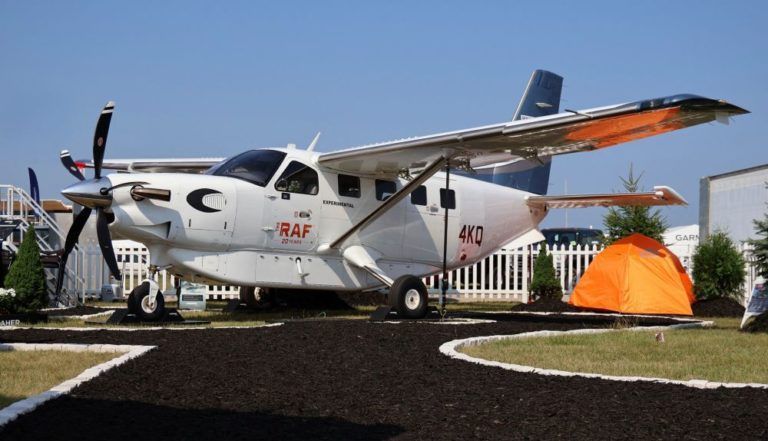
For me, the flights into Moose Creek and Shearer are perfect examples of what the RAF and its network of supporters can do to meet the Foundation’s goal of preserving backcountry airstrips and highlighting their true value as a national resource. This also is why we chose to highlight the RAF on Daher’s exhibit stand during EAA AirVenture at Oshkosh, Wisconsin – positioning a Kodiak 100 with the Foundation’s logos next to a high-vis RAF tent, becoming a center of attraction for some of the 677,000 attendees at the 2023 annual fly-in.
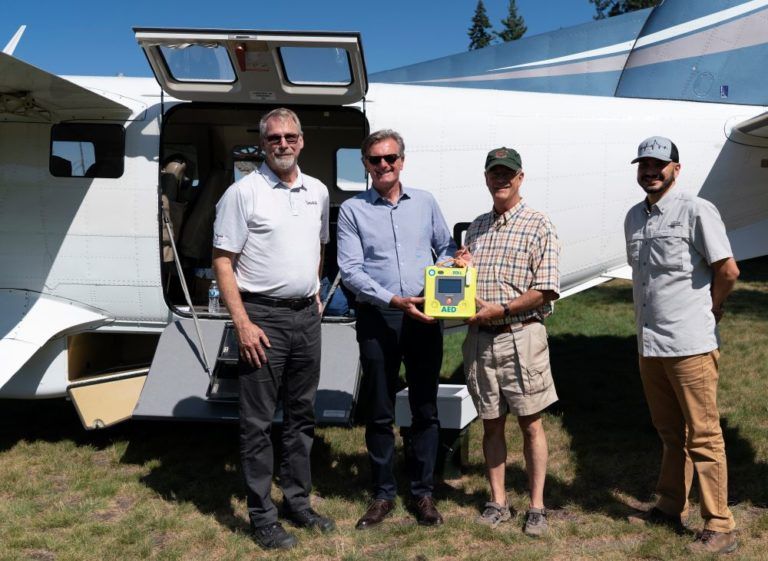
Another important action that Daher supported this year was the delivery of critical care defibrillators to backcountry strips across the state of Idaho. In coordination with the Backcountry Aviation Defibrillator Project, we provided two Kodiak 100s – along with pilots, fuel and logistics assistance – to deploy the automated external defibrillators (AEDs) at four airstrips, with one of the AED units sponsored by Daher.
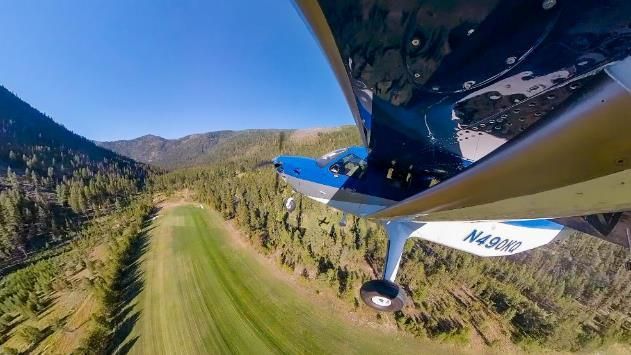
The Kodiak’s exceptional STOL characteristics were demonstrated once again during these flights, performed to Cavanaugh Bay (66S) in northern Idaho – which is not far from Daher’s Kodiak production facility and final assembly line at Sandpoint; to Big Creek (U60) and Johnson Creek (3U2) in the state’s central portion; and to Smiley Creek (U87) in south-central Idaho.
These missions help fulfill the Backcountry Aviation Defibrillator Project’s goal of positioning AEDs at high-traffic remote airstrips by deploying ZOLL 3 units that communicate via Wi-Fi to display their operational status. It enables the transmission of vital data in critical situations when seconds can literally make a life-saving difference. In the future, the defibrillators are expected to broadcast their availability and status using flight planning applications. The AEDs are acquired through donations to The Gem State Aviation Fund, a 501(c) (3) corporation that promotes aviation-related charitable and educational activities, primarily within the state of Idaho.
Daher truly values its relationships with organizations such as the RAF and the Backcountry Aviation Defibrillator Project, living up to our commitment in “caring for those who care for aviation.”

Submitted on November 30, 2023.
Posted in News
Recent Posts
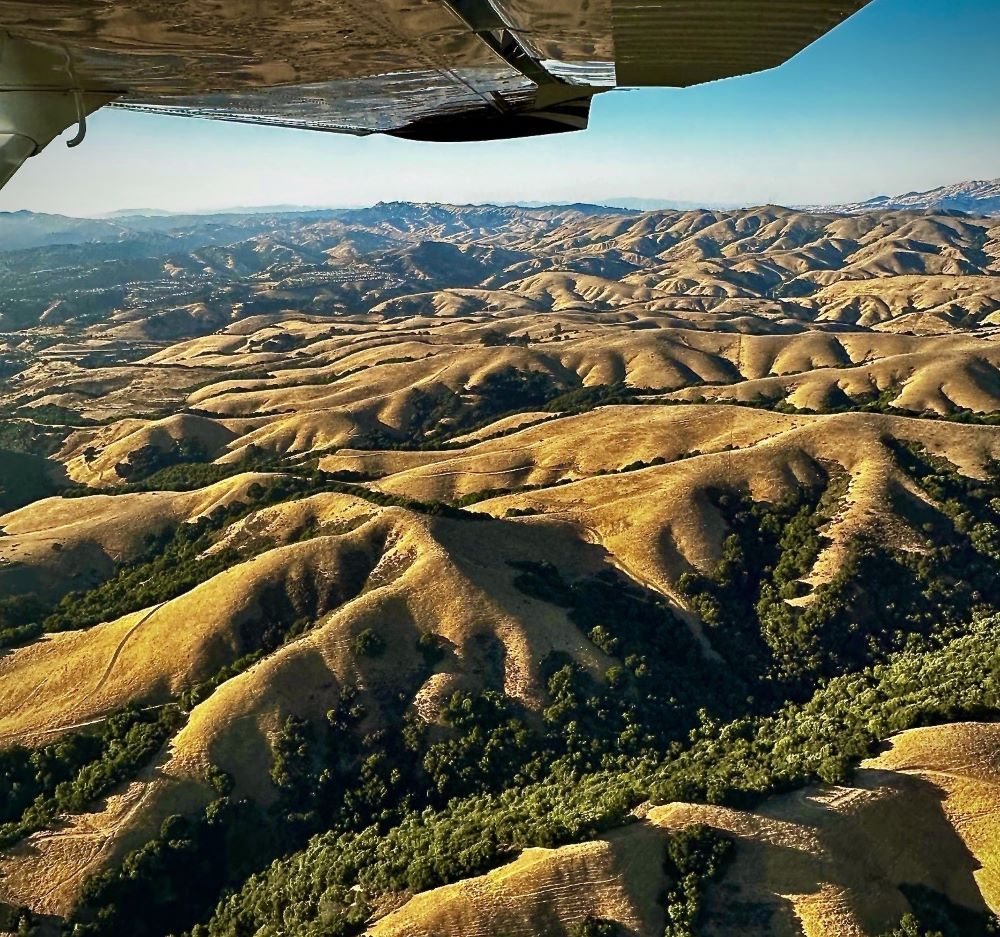
I live and work in Ohio, and like to play in the mountains, both flying and with feet on the ground. A lot of us live east of the Rockies, without the profound effects of density altitude, or that invisible mountain wave. In my earnest desire to fly in the mountains I love, many years ago I registered for a backcountry flying course…in Truckee, CA. Miraculously, I made it to Reno before experiencing a mountain wave. With Truckee practically in sight and approaching the final mountain ridge, my ground speed went from 135 kts to 80 kts in an instant. I floated over the ridge, pitch expected for straight and level at 80. I will never approach a ridge crossing straight-on again. Rather, at 45º, to allow for only a 90º turn to escape safely. Density altitude – the lack of power from high elevation coupled with above-standard temperature – gripped me when on final into Raton Municipal/Crews Field KRTN, 6,352 elevation, in a Grumman Tiger with student pilots aboard for a cross-country experience. Seduced by the gradual rising terrain westbound from Ohio, on final I realized I was sinking below the runway edge. It REALLY gifted me a profound understanding of density altitude! Can we safely transition to higher altitude flying? Sure! It just takes creativity and planning. Be aware of FAA hazardous attitudes, do some research, talk to experienced pilots in the places you are going, do more research, then get in your plane and practice where you live. Scenario training is great when you really lean into it. AOPA developed Focused Flight Reviews, which include a Backcountry option, mentioned on page 4, August 2026 Flight Training. One safety tool is Vc, or “canyon speed,” coined by Amy Hoover and “Dick” Williams in their manual Mountain, Canyon, and Backcountry Flying. Contact me for info on the backcountry flying course in Truckee. I have vetted these samples of the many resources myself. Just remember, online videos and reading can be productive, but it’s your hips in the seat with other experienced pilots that really works! For more resources, find the RAF Safety, Education, and Etiquette page here . Submitted October 15, 2026 By Christine Mortine, CFII, DPE, RAF Safety, Education, & Etiquette Committee - Education Chair cmortine@theraf.org
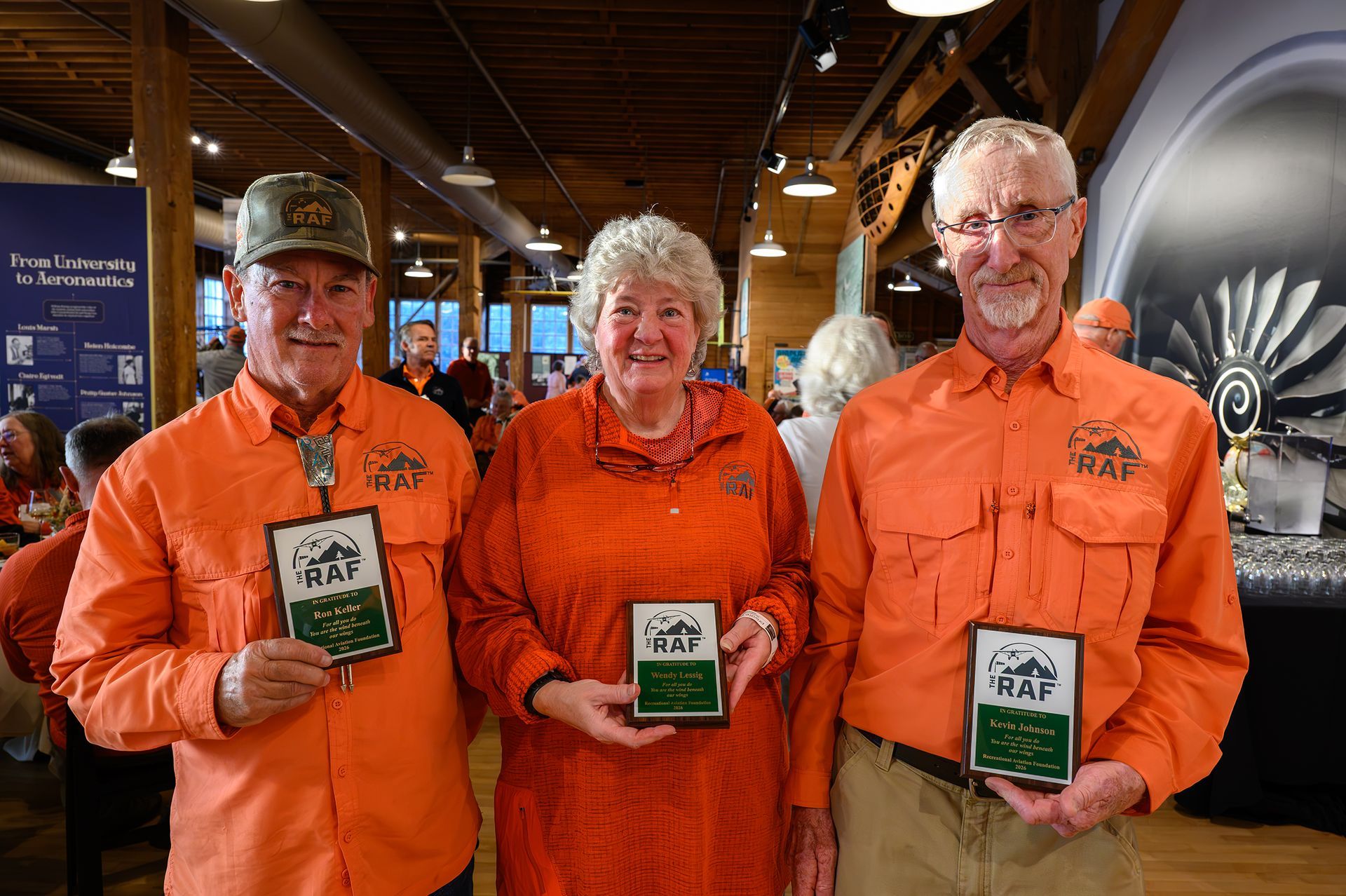
Three outstanding RAF volunteers were honored at the 2026 RAF Educational Conference in Seattle recently. RAF Volunteer Coordinator Erin White said, “It was incredibly difficult to choose this year’s winner. The HQ team and I finally narrowed down the candidates to three, and we simply couldn’t pick only one. I am very proud to announce that there are three 2026 award winners.” Wendy Lessig of Utah, Ron Keller of New Mexico, and Kevin Johnson of Oregon were each awarded the “Wind Beneath Our Wings” plaque that recognizes extraordinary efforts to further the RAF mission. This award was created and generously sponsored by RAF co-founders Dan and Margie Prill, and Chuck and Penny Jarecki. Each name has also been engraved on a permanent plaque displayed in the RAF's Bozeman, MT office. Wendy Lessig became Utah Liaison in 2019 and set a high bar for the task. A former director of Utah Back Country Pilots, she coordinated their mission to preserve and ethically access Utah’s backcountry airstrips with the RAF’s national recognition to boost awareness of her projects. Wendy has spent countless hours working to open multiple airstrips as part of the RAF’s Expanding the Map initiative. She works closely with the Bureau of Land Management and has become well-versed in public land management policy. She navigates the steps required to ensure access on federal lands, including using RAF grants and procuring other funding to pay for cultural surveys. Her diligence has paid off with successes that include the reopening of Taylor Flat and Keg Knoll airstrips. She engaged with Utah DOT Aeronautics and UBCP to install weather stations at strategically important locations for aviation. Wendy has flown her PA-12 all over the US, often to help at work parties. Ron Keller had been advocating for recreational aviation in New Mexico well before 2016 when he became RAF Liaison. Keller helped start the New Mexico Airstrip Network in 2014. He excels at working on projects in partnership with the Forest Service, New Mexico Pilots Association, and New Mexico Airstrip Network; with the goal to preserve valuable recreational destinations — places in the high desert where you could land your own aircraft, pitch your tent with panoramic views of ponderosa, piñon pine, and Rocky Mountain juniper. As RAF Liaison, he received permission from the USFS to rehabilitate Sacaton airstrip that had been dormant for over 40 years. Several work parties later, these dedicated volunteers saw Sacaton registered and ready for public access. Beyond reopening airstrips, Keller organizes volunteers, and has many camping amenities to show for their efforts, like picnic tables, vault toilets, and shade structures, most welcoming to campers and hikers. Of course Ron loves flying to all these places, but he also says, “I enjoy mowing all six USFS-managed airstrips on the Gila National Forest.” Choosing to haul a mower for hours each way on dirt roads certainly helped qualify Ron for this award. Upon receiving the award, Ron immediately credited it to the many volunteers who assist his efforts in NM. Kevin Johnson lives in Oregon where he bases his C172, but he’s often on the go. Kevin is an RAF Ambassador and has provided his design and carpentry skills on RAF projects from the Pacific Northwest to Montana, quietly and steadily getting an incredible amount of work done. He also builds and installs airfield kiosks of his own design. When he learned of the drive-in-only work call at Walker Ridge airfield in California, he drove nine hours each way to help out, towing a windsock pole that he’d built to the site. His range was recently expanded to include east Tennessee, where he joined the initial work party on the “Fly Rocky Top” project to construct a pilot pavilion over the weekend at Higdon Field, one of the seven outpost airfields planned as part of the RAF Expanding the Map project. During the award ceremony, the crowd gave each a standing ovation, and White added, “Volunteers from California to Maine and everywhere in between are doing incredible work every day preserving special places to fly.” The RAF is thankful for each and every person who volunteers their time and talent towards the mission of preserving, improving, and creating airfields for recreational access. Submitted October 14, 2026 By Carmine Mowbray