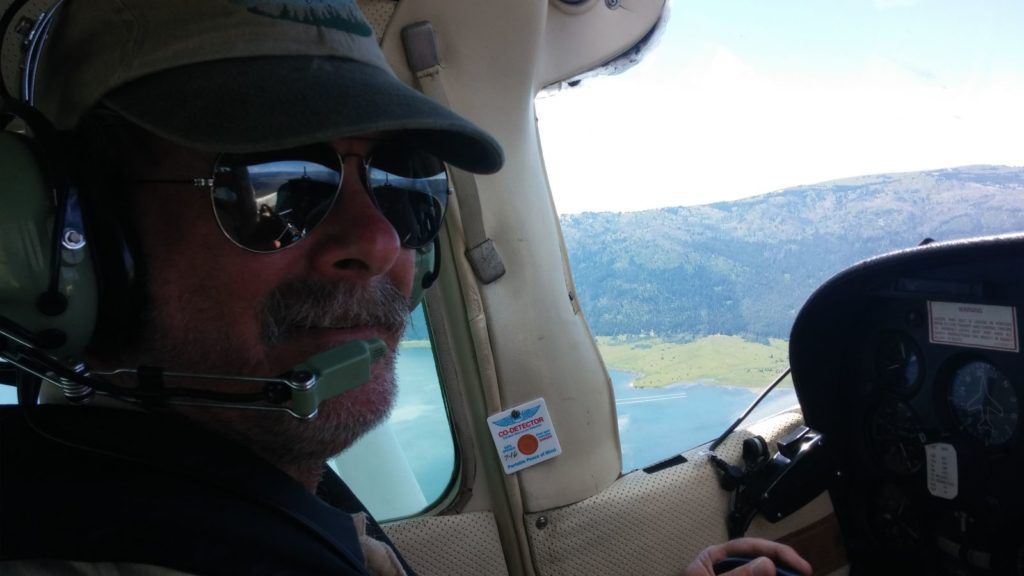
Ron learned to fly through an Air Force aero club, and in 1984 at the age of 27, he earned his private certificate. He has been involved with the New Mexico Airstrip Network (NMAN) since its beginning. He belongs to RAF, NMPA, USPA, IAA, AOPA, and EAA. He retired from his FAA career in electronics and has served as the Aviation Safety and Education Administrator for New Mexico Aviation Division.
WORTH THE READ: RON KELLER GUEST EDITORIAL
Our many RAF supporters have such vast and varied experience, and we’re capturing some of their words of wisdom to share with you. This month’s guest editorial is by Ron Keller, the RAF’s New Mexico Liaison.
My interest in aviation started as a child on our small farm in Ohio. When I saw an airplane fly overhead, I always wondered what the world looked like from up there. My first introduction to aviation was during my enlistment in the US Air Force, as an aircraft instrument systems specialist, maintaining fixed and rotary-wing aircraft at Kirtland AFB in Albuquerque. After my enlistment, I continued the profession at Kirtland, then designed, constructed and maintained electrical systems on Cockpit Procedure Trainers for the same group.
But I missed working on real aircraft, so I obtained a full-time position with the NM Air National Guard and maintained electrical and avionics systems on several aircraft, including F-16s. As really good luck would have it, the FAA needed experienced electronics technicians, and I was hired as a radar technician at Albuquerque ATCT. After 9/11, I was promoted to maintenance coordinator for radar, ILS, VOR, and communications. I retired from federal civil service in 2011. For the next three years I served as aviation safety and education administrator for the NM Aviation Division, until my wife retired.
My father-in-law was a CFII, so I started flying lessons through the Air Force Aero Club in Albuquerque and earned my private pilot certificate in 1984. He helped me select my first airplane, a 1955 Cessna 170B, and he checked me out for my tailwheel endorsement.
Soon, I started landing at a backcountry airstrip next to property my in-laws owned. When the New Mexico Pilots Association formed a backcountry group in 2010, I volunteered to help former RAF NM Liaison Larry Filener, and met the RAF. We teamed up with many dedicated volunteers to begin improving Negrito, a USFS airstrip. The District Ranger was pro-aviation and allowed us to get to work. Because we were able to prove our worth as a volunteer team with a strong RAF-NMPA partnership, we were allowed to continue making improvements and having fly-ins. In 2014 we formed the New Mexico Airstrip Network, 13 partners who support recreational aviation opportunities. The RAF is a highly valued partner.
In 2016 I was asked to become an RAF Liaison. I was relieved that most of the duties were tasks I’d already been doing for several years. My wife Mary Ann was so impressed with the RAF way of doing things, she supported me becoming a Liaison as a great way for me to “give back” to aviation.
As Liaison, I work with private landowners, the State of New Mexico, US Forest Service, Bureau of Land Management, and local governments. There are challenges common to each agency. The turnover rate among key personnel is substantial. This makes it necessary to make new introductions and establish good working relationships.
Airstrip maintenance is a “dirty job,” so I bought a tractor, mower, disc, and seeder. A great pilot friend donated a box blade. A custom drag was also added to the list. Mowing, dragging, and replacing windsocks was accomplished, and many rewarding projects followed, such as installing an accessible vault toilet at Negrito. In 2020 we received permission from the USFS to rehabilitate Rainy Mesa, an airstrip that had been dormant for over 40 years. Small trees had to be cleared, and we really worked the tractor, blade and drag. Several work parties later, and with a dedicated core of volunteers, Rainy Mesa was registered and reopened.
In 2022, after the RAF/Gila NF Challenge Cost Share agreement was signed, we rehabilitated Sacaton airstrip after four decades of dormancy. A good pilot friend and I put our tractors and blades to work, along with another great crew. It was registered and charted and is a gem of a location just outside a wilderness boundary. Before the delivery of the new vault toilet, I drove the route and measured 11 cattle guards to ensure the semi-truck and trailer could fit through them all.
Being an RAF Liaison is challenging sometimes, but always rewarding. I particularly enjoy overseeing a project from start to finish like the rehabilitation and reopening of airstrips. I also cherish the solitude available when I am mowing all six USFS-managed airstrips on the Gila National Forest. No matter how big an airstrip project may be, it is the satisfaction of knowing it will make a difference for generations to come.
In closing, I obviously enjoy flying in the backcountry. Also, very rewarding are the opportunities to make a difference in “preserving, improving, and creating airstrips for recreational access.”
Submitted April 29, 2025
Posted in Guest Editorial
Recent Posts
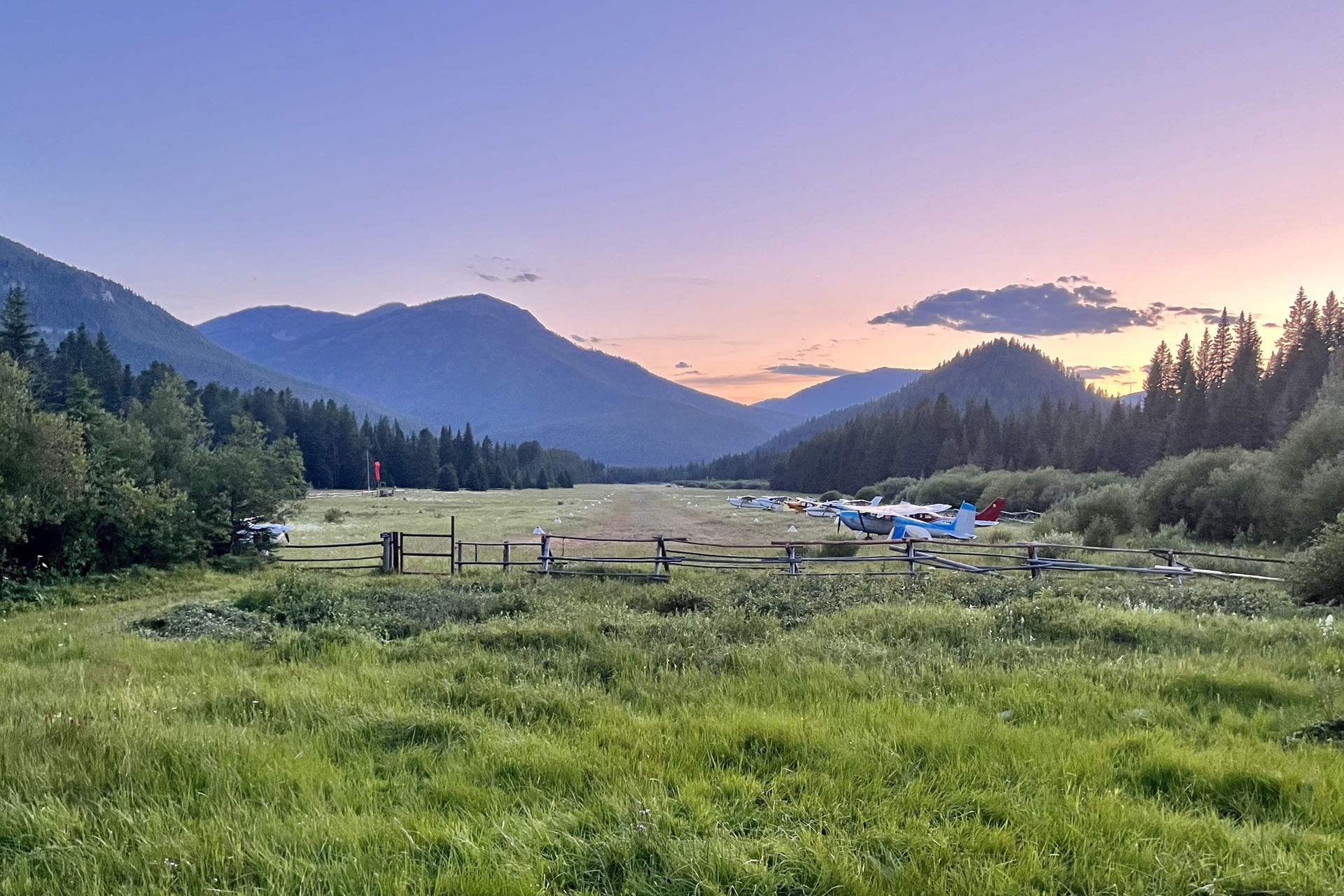
At about this time, every year, we have this conversation at the RAF about what our year end letter (code for asking for your financial support) should say to you, and about the RAF and the accomplishments of the past year.
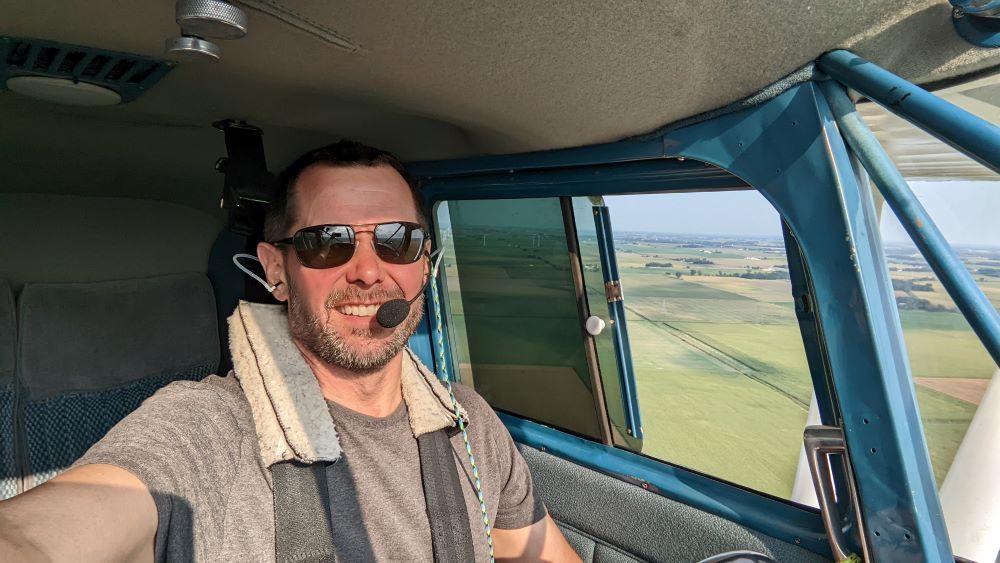
A Christmas gift of flight lessons from his parents started Scott Anttila’s aviation journey in 1985. “I learned at Johnson Field, a small grass strip tucked into the woods in Michigan’s Upper Peninsula, and that early exposure to simple backcountry flying stuck with me,” Scott says. Growing up in the U.P., he spent a lot of time outdoors and found that flying was another way to get to the places he liked to explore—especially the ones most people never saw. As he earned more ratings and eventually moved to the Detroit area for work, Scott realized he needed a way to stay connected to northern Michigan. He bought an airplane and used it to get back to the smaller airstrips and lake country he enjoyed. Along the way, he also flew gliders out of Frankfort, soaring along the Sleeping Bear Dunes and towing sailplanes over the Great Lakes. “Those flights gave me a different appreciation for the landscape and made me even more interested in the small, out-of-the-way airports scattered around the state,” he says. Visiting those kinds of places, Scott first came across the Recreational Aviation Foundation. He started using RAF-supported airstrips both inside and outside Michigan. “I noticed how well-kept they were and how much access they opened up,” he says, adding, ”Over the years, I’ve watched a number of grass strips close, which made the RAF’s mission feel especially important to me. Maintaining these airstrips keeps aviation connected to the outdoors and makes it possible for more people to reach the quiet, remote areas that inspired me to fly in the first place.” Scott joins the other two RAF Michigan Liaisons, General Grant and Tanmoy Ganguly. He can be reached at santtila@theraf.org . Submitted December 11, 2025.
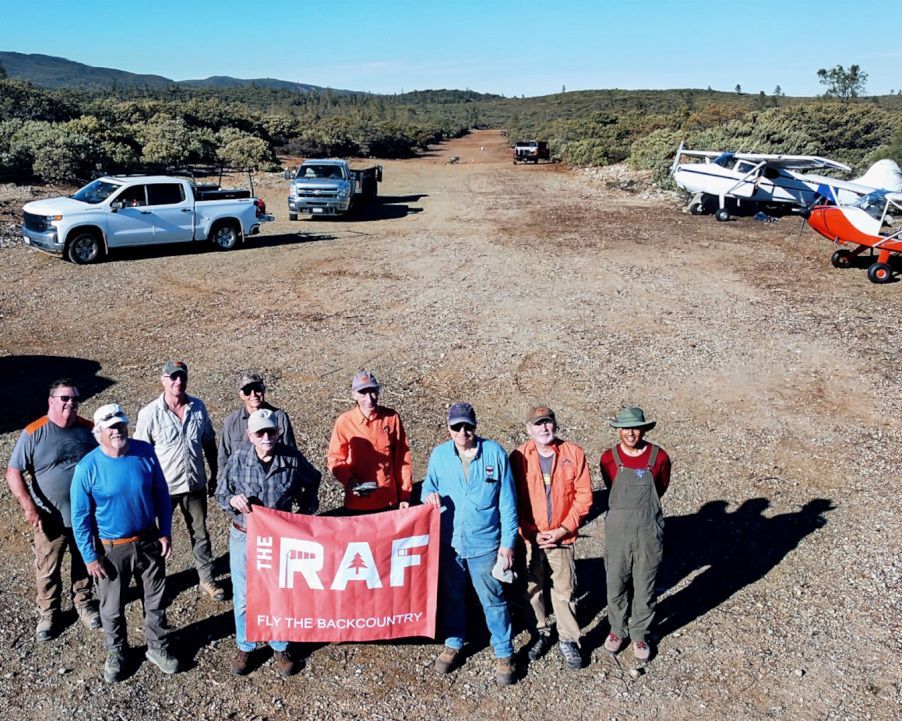
“The word that comes to mind when I think of our second Walker Ridge work party is magical,” RAF California Liaison Doug Lumgair said, "even though it started off again with a truck stuck in the mud.” Volunteers began arriving Friday afternoon in a tailwheel Rans, a Super Cub, and Lumgair in his Cessna 170. A pickup with a big dump trailer brought the Polaris Ranger, and more pickups arrived. The runway surface posed major problems with boulders protruding from the surface. Everyone was eager to get started with pry bars and remove them. Once they fired up the generators to power the hammer drills, they discovered that this was the best method for attacking the rocks below the surface and breaking them up into pieces that they loaded into the trailer for removal. “At times, it felt like we had taken on an impossible task. But with steady work and persistence, by afternoon, we began to see the light at the end of the tunnel,” Lumgair said. In the Friday evening fire circle, they made new friends while sitting around a propane fire pit that had been cleverly transformed into a radiant heater by placing a washing-machine drum over it. Walker Ridge lies in a dark-sky area. Before the full supermoon rose, Lumgair said they could see the Milky Way with the naked eye. The campsite at the south end of Walker Ridge has a gorgeous view of the valley, and the view became “even more breathtaking as Central Valley tule fog filled the valley and the supermoon lit the fog, creating a shimmering white lake.” Lumgair said. Saturday morning, two crews quickly organized with hammer drills, and others began cutting brush along the runway edges. Volunteers had already removed what Lumgair called an incredible amount of brush during their first work party, but Saturday, they hauled out twelve more trailer loads. Late on Saturday, they had enough time to work on the rock outcroppings in the south turnaround area as well. "It was amazing that we were able to cut and haul so much brush and break down rocks and fill the resulting holes—all in one steady, hard-working day. Thank you very much to everyone for supporting the RAF in so many ways,” he said. Some stayed Saturday night to enjoy another beautiful evening. Work remains, and Lumgair is planning more work parties in the coming year to complete further improvements, some of which will require additional approval from the BLM. “Please let me know if you get up there this winter. I’d love to hear your thoughts and see any photos of your experience, Lumgair added. Doug Lumgair can be reached at dlumgair@theraf.org . Submitted December 11, 2025.
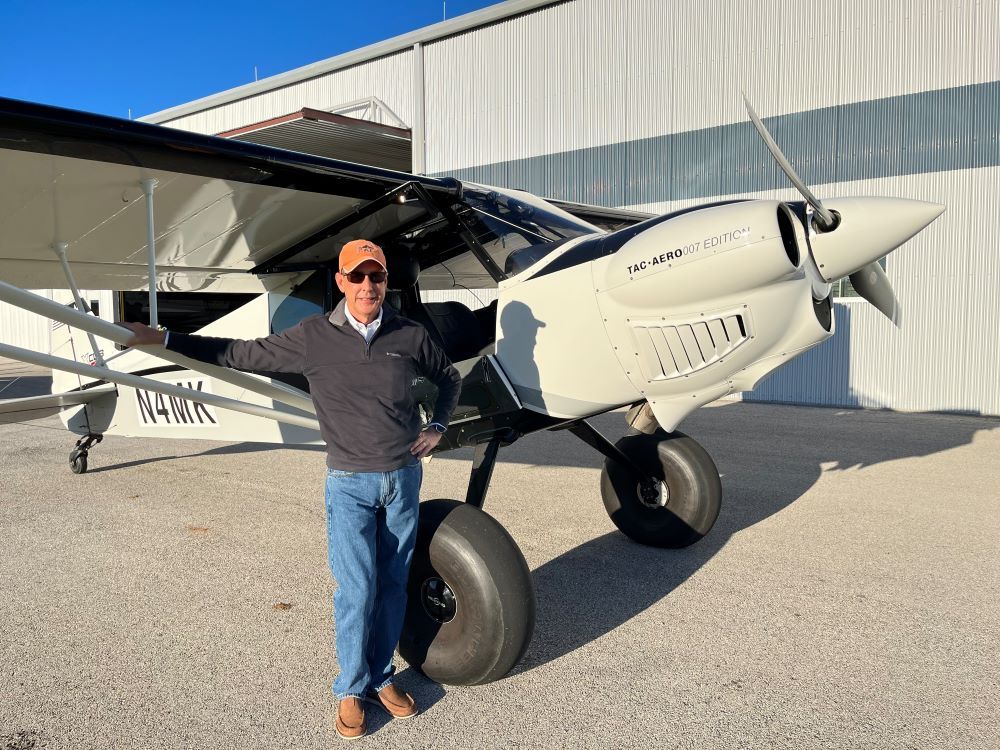
Chris at TacAero in Fredericksburg, Texas to fly what he calls, "the mighty XCub. It's an awesome airplane,” he added.
That is the end of a quote that goes a bit like this: “It may not be easy, but if you don’t start, it won’t happen at all.” When I read that, I thought back 23 holiday seasons ago, about when the RAF got underway. We likely were a bit naïve about the road, or lack thereof, that was out front of the RAF, but we were wise enough to grasp that if the RAF were to become a successful contributor to our country’s recreational and backcountry aviation, the path would not be easy. What we did know was – and some of you have heard this before – “If not us, who? And if not now, when?” That simple realization got us started, or it wouldn’t have happened at all. The RAF works much that way today. We are a “jump in and figure it out” organization. We sense a need, and bypass the tendency to spend lots of time getting ready to get ready. As RAF Director Bill Brine of Massachusetts says, “The RAF has a bias towards action.” And we attract folks who have that same get-it-done attitude. What I try to do in this piece is relate these words to other parts of my life, and those who spend a few minutes reading them. With it being the giving season, I suggest that one of the best gifts you can perhaps give is one that says, “It might not be easy, but now is a good time to get going or (you guessed it), it won’t happen at all.” In this digital consumption world we live in, I urge you to be your best authentic you. We’re all bombarded with algorithms and social media. If you’re reading this, you are that authentic person the RAF seeks, who pitches in on the team that the RAF thrives on. You can be the wrapping paper around the gift of getting started, of helping others to take meaningful action, and accepting responsibility as opposed to taking credit, all while embracing the learning that comes from the occasional setback. If success had been a requirement ahead of passion, the RAF would not be where it is today. The RAF has proven that people with passion get things done. So, at this time of year, give that gift of passion and leadership, the kind the RAF works hard to exemplify. - John McKenna, RAF Chairman Submitted December 9th, 2025.