WORTH THE READ: SCOTT HECK GUEST EDITORIAL

Our many RAF supporters have such vast and varied experience, and we’re capturing some of their words of wisdom to share with you. This month’s guest editorial is by Scott Heck, a longtime RAF friend and supporter.

It was the early 2000s when John McKenna asked me to fly into Ryan Field with him and Chuck Jarecki to meet Ben and Butchie and see their airfield. Afterward, we sat and talked about how – if we were to receive such a gift – to form an entity to hold the property. John, Chuck and others were creating the RAF to save airstrips, and rose to the opportunity Ryans were offering. As I write this, I am shaking my head in amazement. Through their hard work and the others who joined in early, an organization was formed that few would believe could have been achieved. 

Me? I went home and went back to work. My one contribution after that was when John called me to ask for a donation. He talked me into a “lifetime membership.” It wasn’t a hard sell. A few years later John called me and again asked for a donation. “I thought I had a lifetime membership,” I said. He responded, “You did, but your lifetime ran out.” So, I wrote a check and have written that check every year, just like many in the RAF family do.

The RAF held its Volunteer Education Conference in Bozeman this year and my wife Barbara and I were invited. We offered to help in any way we could. We were assigned a couple of little odd jobs. All the heavy lifting had already been done by the entire three-person paid RAF staff: Tricia McKenna, Kodi Myhre, and Erin White and volunteers they’d rounded up. You read correctly. The RAF has just three paid staff, backed up by many volunteers, to take care of over 12,000 supporters. I find that amazing!

About the conference – you had to be there to witness the enthusiasm, dedication, hard work and planning that was evident from panel presentations to audience participation with suggestions, anecdotes and questions. I have been to many conferences during my business life and most were, I am trying to think of the right word, maybe “nice”? This was fun!! A room full of people with the same agenda, and love for making it come to life.  

Dan Baker was one of several guest speakers. Dan started FlightAware as an 18-year-old for fun. The “fun” grew into a multi million-dollar business. He said FlightAware’s data capture is used by the airlines to manage arrivals, departures and create efficiency. And here I thought it was so I could track a friend. Then Charlie Gasmire (Airplane Academy) schooled all of us on his production efforts to promote aviation with short videos on YouTube. And you didn’t want to miss Charlie Gregoire of Redbird Flight Simulations talk about bringing simulators to you! And don’t forget a forum with Scott Haas of the US Forest Service. It turns out that the RAF really does have friends at the USFS that many in the RAF cultivated through tireless efforts. 

But the real eye opener was RAF Treasurer Mike Perkins’ presentation, what he warned would be the “driest” presentation of the conference. Boy, was he surprised, and so was I. He didn’t make it one minute into his presentation when the first hand shot in the air. Questions came continuously. Turns out, the RAF conferees were very tuned-in to how carefully our funds are being spent, and the projects that are in progress. You can trust this group to manage and spend the available funds to support RAF goals with the highest degree of integrity.

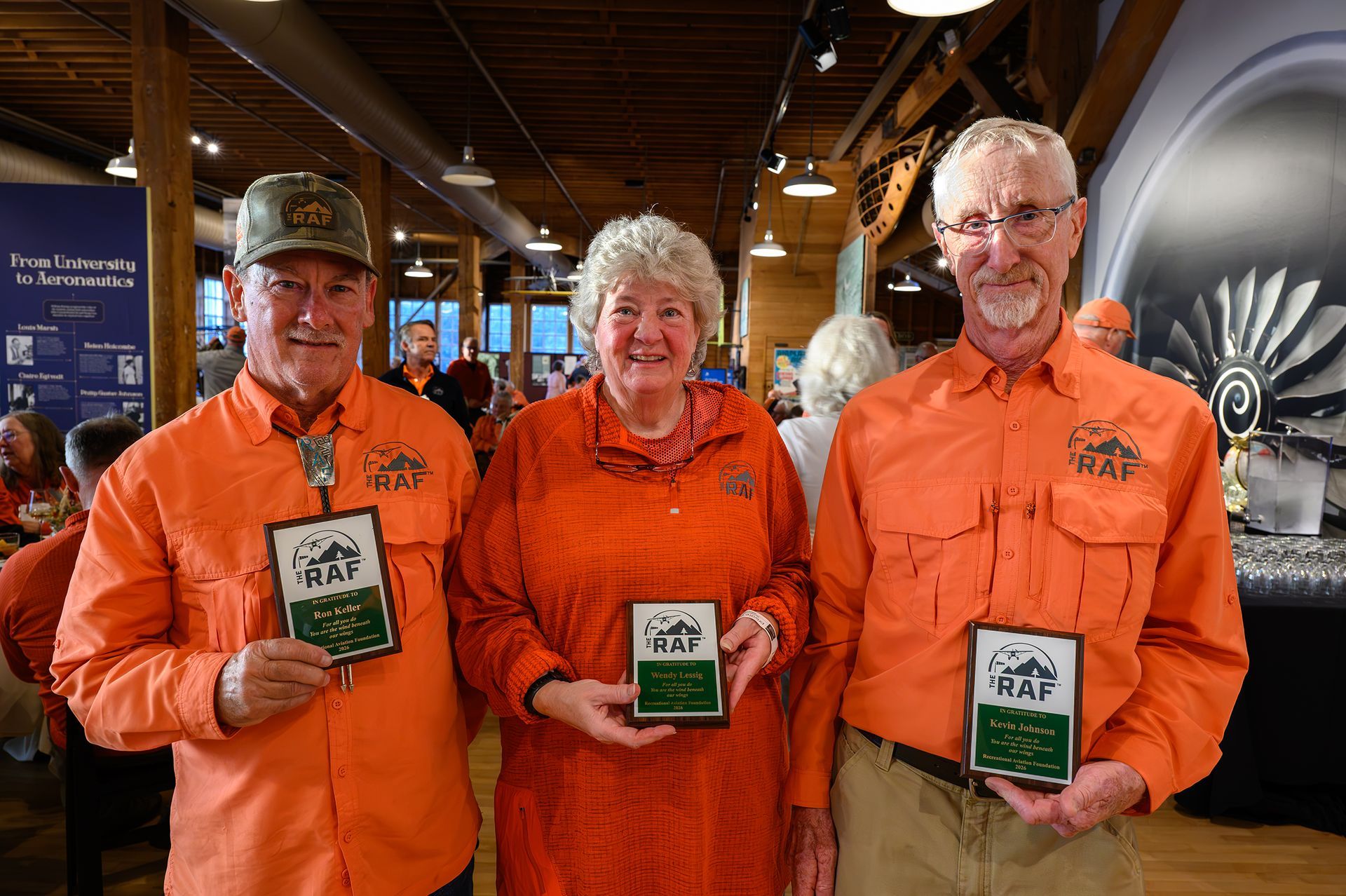
Each conference attendee was given a special gift for attending. It was, by far, the best gift ever. The gals at HQ had spent the past year ducking into thrift stores and second-hand shops all over Montana to find nicely broken-in classic Western shirts with the pearl snaps. They had each one embroidered with the RAF logo, and everyone wore theirs at the barbecue at Bozeman’s “Big Yellow Barn.”

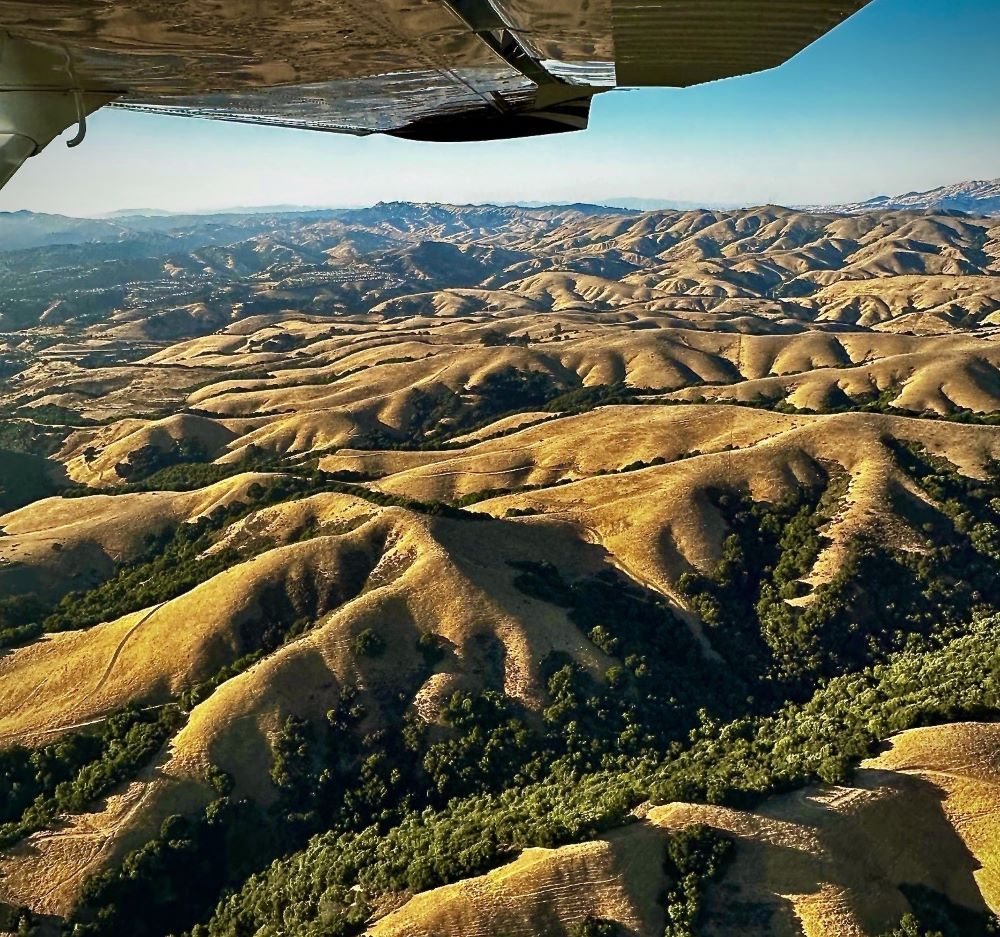
I remember my first landing on grass 50 plus years ago and truly believe that once you have landed on grass you are never again really satisfied being in the “other” airport environment. I still remember my first flight, decades ago, into the Idaho backcountry. John and Tricia invited Barb and me to tag along as a flight of two for breakfast at Sulphur Creek. The approach started by following a ridge line paralleling the runway. You wonder how you are ever going to get down to land. But soon enough, a pass between two mountains comes into view and you start to descend in a left base to somewhere, because by now, the runway is long gone. My only thought was, “I hope John knows where he’s going.” Soon a left turn put us following a river with a few twists and turns and then, low and behold, there was the strip. Great breakfast, by the way.

I have always liked wearing RAF gear but now, after the conference, I am especially proud to sport the RAF orange.
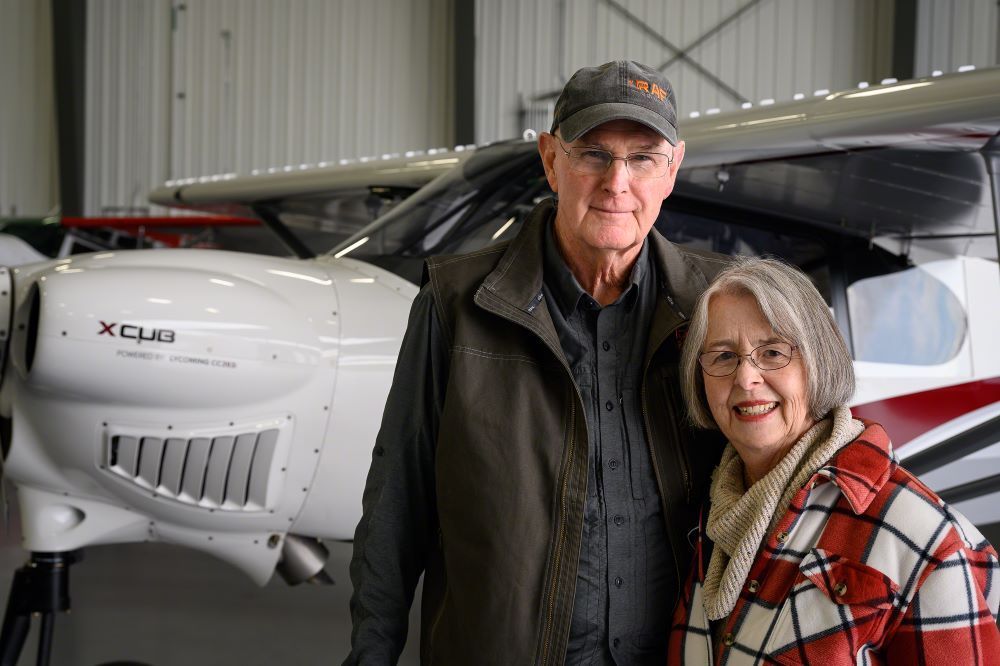
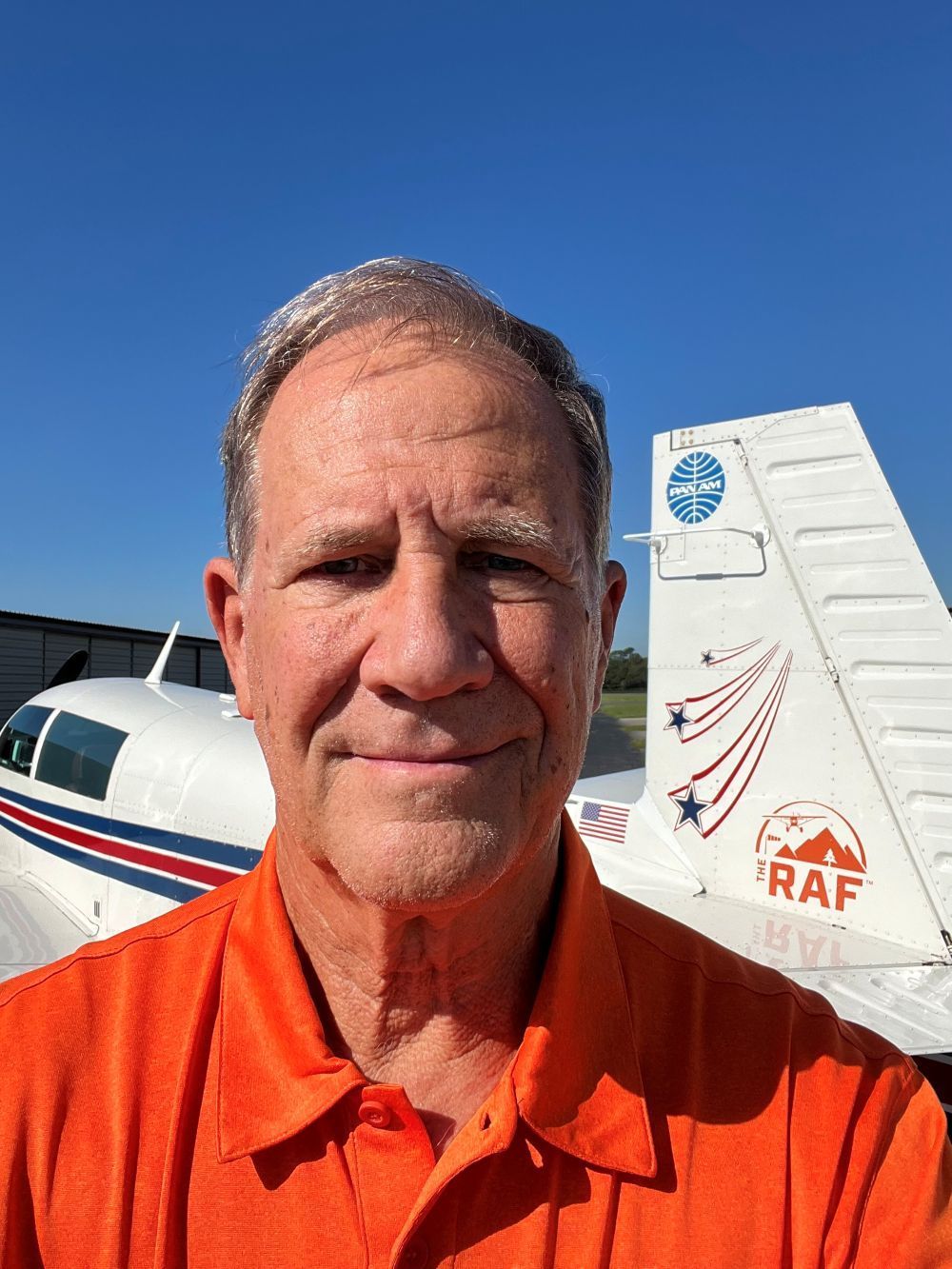
Scott Heck has been hooked on flying since his first flight lesson in 1967 and has been “blessed to fly low and slow and high and fast.” Heck spent a number of years in banking, taught finance at Montana State University, and with his wife Barbara owned a multi-county Montana title company for over 20 years. He is now retired and flies what Barbara calls “his fourth last-airplane,” an N-XCub. 


Posted in Guest EditorialNews

Recent Posts

March 15, 2026
Karsen Kramer has a passion for both aviation and backcountry exploration. Growing up in Colorado, he developed a love for the outdoors through hiking, camping, fishing, and off-roading. His interest in aviation began at a young age after flying with his grandfather in a Cessna 180. Karsen moved to Montana in 2022 to pursue aviation and earned his Associate’s Degree in Aviation in 2024. He is currently working toward a Bachelor’s degree in Business Marketing at Montana State University while also working as a flight instructor in Bozeman. Karsen holds his CFI, CFII, and MEI certifications and teaches an instrument ground course at Gallatin College. He has a great passion for teaching and highly values providing instruction to the next generation of pilots.  Active in the aviation community, you can count on Karsen to attend EAA AirVenture in Oshkosh, Wisconsin each year. He is excited to volunteer with the RAF and help support its mission of preserving and promoting backcountry aviation, which he hopes to enjoy himself someday, in the same C180 that started it all.
March 15, 2026
Idaho Ambassador
March 12, 2026
RAF Oregon Ambassador Sarah Brown and RAF Oregon Liaison Richard Mayes have been awarded an RAF grant to rehabilitate the campground at Siletz Bay State Airport (S45), near the small community of Lincoln Beach on the Oregon coast. “Once an extremely popular place for pilot gatherings, this campground saw up to twenty-five airplanes at a time for weekend camping in its heyday,” Brown said. However, the campground has become overgrown and nearly forgotten over the years. Local RAF supporter Bruce Dunlop suggested the recreational potential to Brown. She and Oregon Ambassador Kevin Johnson explored the feasibility of reviving it; they envisioned the rehabilitation with the help of RAF funds and volunteers. Efforts include clearing brush and removing and chipping dead trees, removing rotten platforms, fire rings, and picnic tables. Volunteers will replace picnic tables and fire rings, lay gravel to help improve drainage, and build a firewood shed. The airport is owned and managed by the Oregon Department of Aviation (ODA). “Director Kenji Sugahara is an enthusiastic proponent of the RAF and its mission,” Brown said. RAF's Oregon team has successfully worked with ODA to improve safety and facilities at several other airports with recreational potential, particularly McKenzie Bridge (00S), Owyhee (28U), and Toketee (3S6). Other ongoing collaborations between RAF and ODA include discussions to improve the facilities at Nehalem Bay (3S7). Repaved in 2025, the Siletz Bay airport is a 15-minute walk from beautiful Gleneden Beach, what Brown says is “a great place to walk in the sand, look for agates, fly a kite, surf, or whale watch in the spring and summer.” A 40-minute walk north of the airport takes you to hiking trails at the Alder Island Nature Trailhead. Highway 101 parallels the runway and is known for its scenic cycling. Golfing is another recreational opportunity at the Salishan Coastal Lodge Resort, which is adjacent to the airport. Several nice restaurants are located within walking distance. See the Siletz Bay Airport listing in the Airfield Guide . Submitted March 12, 2025
March 12, 2026
Opportunity has three components:  1) The effort that goes into its creation; 2) Recognizing the opportunity; 3) Being ready and willing to act on the opportunity. Number one on the list is the sweat equity we have all put into the RAF – each one of you who has given of your time and talent. Campfire conversations that led to work parties that proved our conviction to the RAF mission. We learned what needed to be done, and we learned how to do it together. We were polite and persistent in our approach, which, in time, presented opportunities. Number two is recognizing that an opportunity is presenting itself, and knowing that it is one worth taking on. Over the years, we learned the RAF’s ability to prioritize, begin, and how to go about the best next steps. No backcountry guidebook was available, so we did a lot of “learning by doing.” The RAF has become a respected organization in our area of work. The opportunities that we are seeing on our plate today are not just luck. They were created. That is a tribute to you, the people of the RAF. Finally, when you add one and two, you come to being ready to act. We put much of the early effort into creating opportunities, then gained the experience to prioritize them, found wisdom and strength in allying with like-minded groups, and finally, we are doing our best to take action on the best of them. You are vitally important at this stage since we need you to continue to be a part of the action. The RAF will be asking you for support at many levels as we move forward, and we hope you will find the challenges as exciting as we do. When we call for your help, we only request that you look at the project and decide, is this my time to do what I can? We hope you will join us, and why not bring a new friend to help out? - John McKenna, RAF Chairman Submitted March 15, 2026
March 12, 2026
Ken is a third-generation general aviation pilot. His grandfather owned a Jenny, and his father a Cessna 195. Ken’s flying background includes gliders of all types, numerous tailwheel, and high-performance aircraft. He learned to fly in Glenwood Springs, Colorado, in the 1980s, then flew for commercial glider operations in Aspen and Boulder. He recently got back into flying and enjoys doing so with his wife/copilot, Deb, and dog Moki in their C185. They have a particular interest in mountain and backcountry flying and camping. “Our family enjoys the outdoors and any excuse to travel to off-the-beaten-path locations,” Ken says. They have recently been to all the Colorado airports (excluding Denver International) and most of the airports in Wyoming. “We had a great time participating in the 2025 EAA AirVenture Cup Race prior to Oshkosh, where we placed second in the Skywagon class,” Ken adds, noting that there were only two entries. They camped under the wing of their 185 parked with 100 other Skywagons at Oshkosh, “and met many others with the same aviation affliction.” Ken looks forward to fulfilling his role as a Colorado Liaison supporting the RAF mission. He plans to fly to as many RAF-supported sites as he can to meet and learn from others. He, Deb, and Moki live in Loveland, Colorado, and base their plane at KFNL. “If you plan to be in the area or are traveling through, please give me a shout as I’d enjoy meeting you,” Ken says. He and his family plan many more adventures, so you may come across them when you’re on your own adventure, and if so, please say “hello.” Contact Ken at klong@theraf.org  Submitted March 12, 2026