CUSTER-GALLATIN CALL TO ACTION

Your help is needed! Custer-Gallatin National Forest has released its Draft plan. The public comment period ends Thursday, June 6, 2019.

This Forest encompasses more than three million acres in SW Montana and South Dakota. There are six mountain ranges within the Forest complex.

Montana Liaison Ron Normandeau says this Draft “portrays a prejudice against airstrips and aircraft access.” We need to provide positive input advocating airstrips before the comment deadline on June 6.
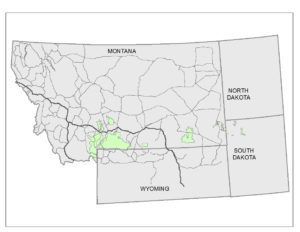
Ron has excerpted the following relevant language regarding Airfields. Please refer to it before commenting:

2.4.12 Airfields, Aircraft Landing Strips (AIRFIELDS)

Introduction

The Custer Gallatin National Forest does not manage any public or administrative airfields as part of the transportation system. The forest owns taxiways and tarmacs at the West Yellowstone Airport in support of the smokejumper and air tanker base. No public sites have been designated or authorized on the Custer Gallatin National Forest.

Desired conditions under general recreation apply to public recreational motorized aircraft landing strips.

Standards (FW-STD-AIRFIELDS)

01 Public recreational motorized aircraft landing and take-off shall only be allowed at designated and authorized sites.

02 Any new landing and take-off locations shall be constructed, maintained, and operated by the holder of a special use authorization.

Suitability (FW-SUIT-AIRFIELDS)

01 Backcountry aircraft landing strips are not suitable in designated wilderness, the Hyalite Porcupine Buffalo Horn Wilderness Study Area, the Cabin Creek Recreation Wildlife Management Area, National Natural Landmarks, the Wild Horse Territory, research natural areas, special areas, recommended wilderness areas, within ¼ mile each side of eligible wild rivers, within ½ mile each side of the Continental Divide Trail, riparian management zones, areas of primitive or semi-primitive nonmotorized recreation opportunity spectrum, or within the grizzly bear recovery zone. Backcountry aircraft landing strips are suitable in areas of rural, roaded natural and semi-primitive motorized recreation opportunity spectrum, outside of the designated areas listed in the preceding sentence.

Alternative D: Backcountry aircraft landing strips are not suitable anywhere on the Custer Gallatin National Forest.

Talking points to use in your comments.

1. Airstrip section portrays a forest prejudice against aircraft access.

2. Airfields Desired conditions under general recreation does not provide adequate guidance to future planners for the establishment of forest access by aircraft.

3. Desired conditions do not meet Planning Directives standards for presentation of the plan component; Desired Condition.

Excerpt from Plan Directive:

Desired conditions must be described in terms that are specific enough to allow progress toward their achievement to be determined, but do not include completion dates. (36 CFR 219.7(e)(1)(i)) Forest Service Handbook FS1909.12, Chapter 20, Sec 22.11 page 22

4. The airfields section does not address the five plan components: Desired Condition, Objectives, Standards, guidelines, and suitability. The directives require all five components to define an activity.

5. Excerpt from Plan Directive:

Plans must include the following plan components (36 CFR 219.7): desired conditions (sec. 22.11), objectives (sec. 22.12), standards (sec. 22.13), guidelines (sec. 22.14), and suitability of lands (sec. 22.15). Goals may be included as an optional plan component (sec. 22.16). Forest Service Handbook FS1909.12, Chapter 20, Sec 22.1 page 20

6. Under Suitability the list of areas “unsuitable for aircraft landing strips” is unsupported by law accept for designated wilderness and research natural areas.

7. Draft Environmental Impact Statement does not present any data on aircraft operations impact on the environment.

It’s easy to comment —Here’s how:

• Online at: https://tinyurl.com/caracgnf

• Email to cgplanrevision@fs.fed.us. Use Subject line “Comment – draft plan – CGNF”

By Mail to Custer Gallatin National Forest, Attn: Forest Plan Revision Team, P.O. Box 130, (10 E Babcock), Bozeman, MT 59771
The RAF has participated respectfully in previous Forest Plans with success. Please take a moment to comment. Your voice matters!

Submitted on May 28, 2019


Posted in Calls to Action

Recent Posts
June 1, 2026
West Virginia’s Cheat River Island (56WV) was the site of a May 2026 work party coordinated by RAF West Virginia Liaison Robert Miller. RAF Virginia Liaison Paul Kosubinsky and WV Ambassador Kevin Rudisill assisted, along with a dozen other volunteers. The airfield is just outside Rowlesburg, West Virginia, about 68nm SSE of Pittsburgh, and is owned by Dave and Pam Graybill. With the help of Dave's excavator and the volunteer crew helping by hand, about 1,500 feet of brush and trees were cleared along the runway.
By Carmine Mowbray June 1, 2026
Thanks to the efforts of RAF California Liaison Doug Lumgair and dedicated volunteers, an abandoned, overgrown airstrip on BLM land has been reclaimed from encroaching vegetation. Now known as Walker Ridge, this northern California airstrip offers a remote, secluded experience within easy reach of pilots in the Sacramento/Central Valley and San Francisco Bay regions. Camping at the south end of the 1,800-ft strip offers a gorgeous view of the valley — and after dark, with no artificial lighting for miles, the night sky turns breathtaking. The recreational opportunities at this airstrip are plenty. Hunting is allowed in the area, which includes deer, wild boar, turkey, and quail. Along with this, biking and hiking trails surround the area, with a main trail that is located right next to the airstrip. Not far from Walker Ridge is Wilbur Hot Springs, a natural hot mineral spring centered within a nature preserve, and open to the public on a reservation basis. Lumgair’s organized work parties have been described as “magical” — as the stunning setting makes a deep impression on everyone. Pitch your tent and enjoy the valley overlook— beautiful at any time of day, especially because no structures are visible. Lumgair prepared a detailed work proposal for the BLM, and monitored the request throughout the agency's approval process. By October 2025, the RAF obtained approval to reclaim and rehabilitate the airstrip for increased safety and recreational access. The initial work on the overgrown strip proved challenging, beginning with the rough drive to the site and throughout the arduous removal of protruding boulders right in the runway. Now, the strip is usable by most backcountry-suitable aircraft, and pilots comfortable with a narrow runway. Please see the Airfield Guide for more information on Walker Ridge and videos. Note that there are no water or bathroom facilities available on site. Read more about Walker Ridge and how the RAF is Expanding The Map here . Submitted June 1, 2026 By Carmine Mowbray
June 1, 2026
This year, the RAF is Expanding The Map - and it's shaping up to be one of the most exciting years in our history. Beginning in 2026, the RAF plans to announce the opening and reopening of more than 15 airstrips across the country! We are expanding backcountry access like never before, and we are excited for aviators to explore the growing number of destinations where you can share the joys of recreational aviation with family and friends. This nationwide initiative is focused on opening, improving, and restoring access to airstrips across the United States, helping connect aviators to more of the places they love to explore. The Expanding the Map initiative begins with the reopening of Walker Ridge Airstrip . RAF volunteers, led by RAF California Liaison Doug Lumgair, have reclaimed northern California's Walker Ridge, a once-abandoned BLM airstrip featuring underwing camping and magical views. Walker Ridge airstrip offers a remote, secluded backcountry airstrip experience within easy reach of pilots in the Sacramento / Central Valley and San Francisco Bay Area regions. There are very few opportunities like this for pilots in these large metropolitan areas to fly out to a genuinely remote location and camp with their airplane just a few hours from home. The combination of dark skies, sweeping valley views, dispersed camping right at the airstrip, and true seclusion makes Walker Ridge a rare and special destination. Nestled within the protected landscape of the Berryessa Snow Mountain National Monument, Walker Ridge offers an experience that is both uniquely accessible and remarkably wild. This is the first Expanding the Map airstrip announcement of many, so stay tuned for the next one coming soon ! We have dedicated a new section of our website to highlight the RAF's Expanding the Map initiative. You can also find a wealth of information about Walker Ridge and the RAF’s efforts to reopen the airstrip here . Walker Ridge now appears in the RAF Airfield Guide , an important resource where pilots find helpful airstrip information and safety briefings. Submitted April 1, 2026
May 28, 2026
Ryan Field, 2MT1, remains CLOSED temporarily. In October, the runway was closed to begin restoring bare areas with new soil and grass. After the Montana winter and spring seasons, the new grass is coming in nicely; however, the field will remain closed until the turf has had adequate time to fully establish. We will keep you updated, but as of June 1, 2026, Ryan Field remains CLOSED to operations. Submitted May 28, 2026
May 27, 2026
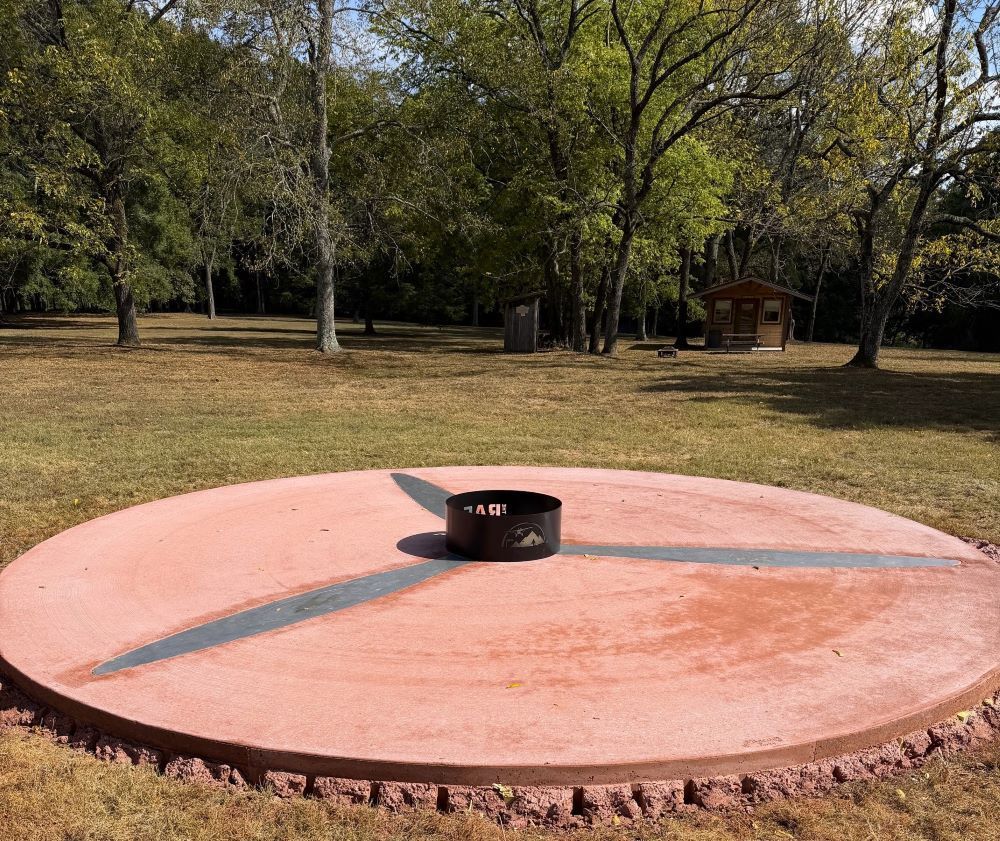
RAF Massachusetts/Rhode Island Liaison Andrew Lyons has been awarded an RAF grant for the addition of a rustic camper cabin at Nadeau’s Airfield in Acton, ME. The 2,400-ft turf field (02ME) is owned by longtime RAF volunteer John Nadeau, who now serves as one of the RAF's Recreational Use Statute Liaisons. Nadeau welcomes visitors to experience backcountry flying not far from the populated eastern seaboard, and envisions the airfield as a gathering spot for RAF enthusiasts in the region. Not far to the west are clusters of New Hampshire’s mountains, and coastal flying opportunities to the east. “The airfield is well located to serve as a hub for exploring much of what New England has to offer,” Lyons said. There is a small pond on the airfield for visitors to try a bit of fishing. The camping area plan includes the installation of a pre-cut kit cabin manufactured locally in New England, with the addition of sleeping platforms and an RAF fire ring. The cabin will serve as a comfortable shelter, and tools and other items will be stored in the unit as well. Pilots are welcome to camp underwing at 02ME. “We anticipate no shortage of volunteers for this project,” Lyons said. A team will pick the cabin kit up from the manufacturer in Vermont to save shipping costs. Lyons expects the cabin will be completed in early summer 2026. Currently, there is a port-a-john, and future plans include the addition of a plumbed restroom and shower at the field. Find more about Nadeau’s Field in the Airfield Guide . Submitted May 27, 2026