JOHN CYRIER

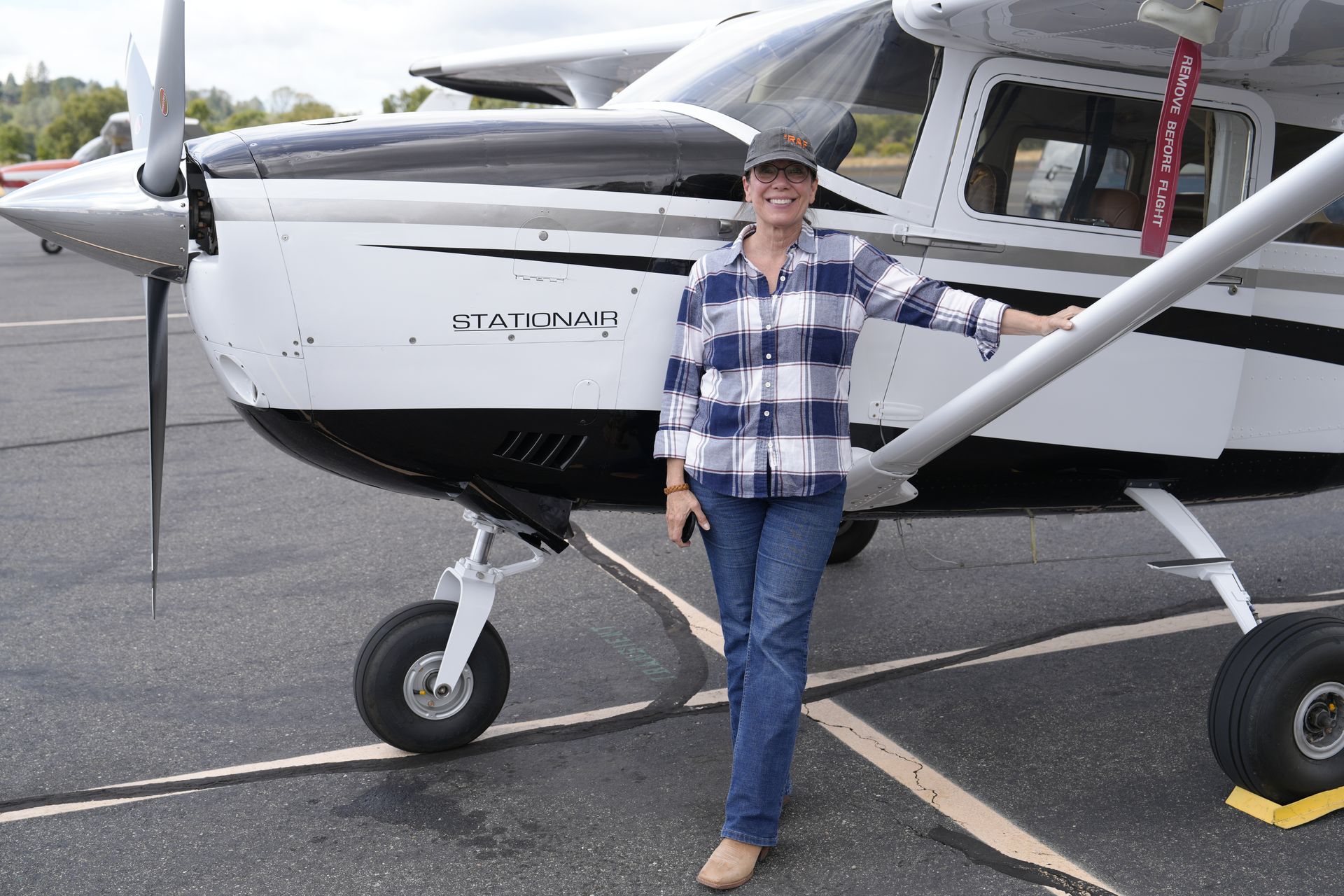
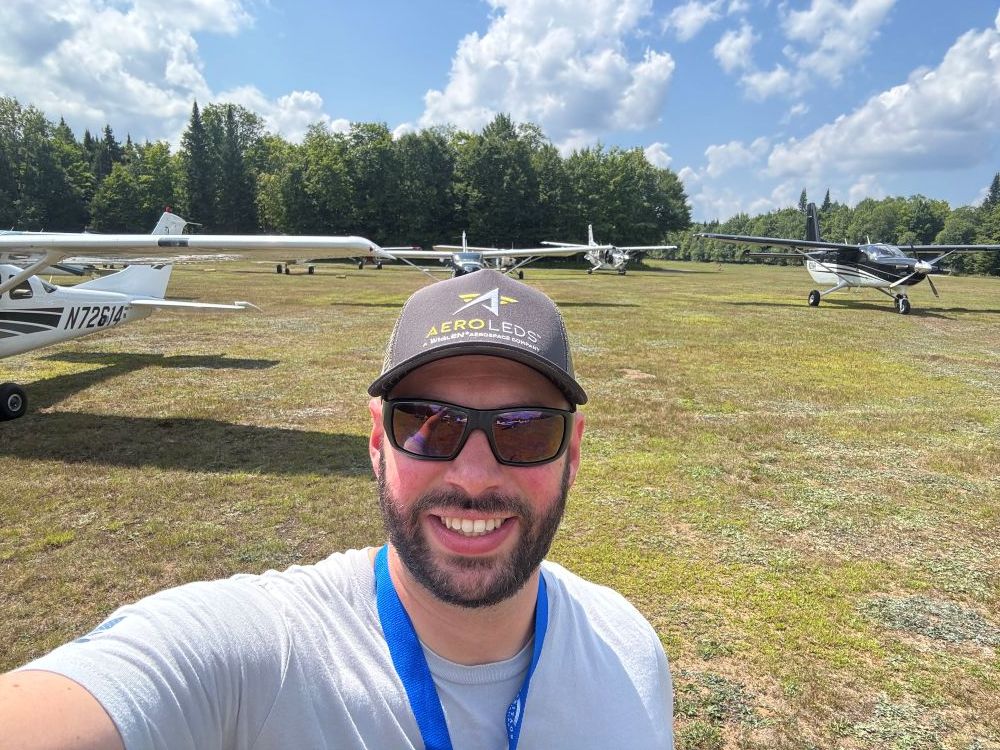
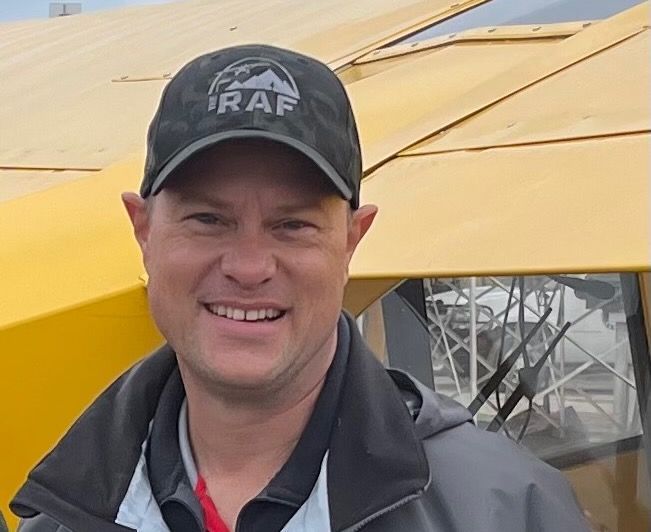
Texas native John Cyrier became enamored with aviation at age 11, when his older brother flew him in a J3 Cub to a local airshow. He received his private pilot license shortly after graduating from Texas A&M University where he was in the Air Force ROTC and the Fightin’ Texas Aggie Band. John currently owns a ‘41 Stearman biplane and a variety of other aircraft, including a ‘78 Woody Pusher, RV4, ’76 Citabria, ’64 Baron and a ’56 T-28C. John’s love of flying prompted him to build an 1800’ grass runway on his ranch in 2006, and he has embarked on many flying adventures from there ever since.

One of John’s most memorable aviation experiences was flying a CAF World War II fighter plane, the P-39Q Airacobra, to Oshkosh AirVenture in 2022 to honor 100-year-old WWII Triple Ace Bud Anderson. A historic formation flight with Bud flying in the back of a P-51 with all three of his fighters (P-39Q, P-51B and P-51D) decorated as OLD CROW off his wing topped off the event.


John owned a commercial general contracting firm for many years and served as a Texas State Representative from 2015-2023. He currently runs a consulting company called Someday Strategies. He is on the General Staff for the Commemorative Air Force and is Chair of the San Marcos Airport Advisory Board, Founder of the Lockhart Flying Club, Past Chair of the TX Legislature GA Caucus for 6 years, and a Lifetime member of AOPA, EAA and CAF.


John became involved with the RAF in 2015 as a supporter, and that same year, co-authored a bill to add aviation language to the Texas Recreational Use Statute. The bill did not pass, but he received an Attorney General’s opinion substantiating that protection for aviation already existed within the RUS. In recent years he has helped Texas Liaison Tres Clinton with a variety of efforts, including revitalizing several airstrip gems in West Texas. John also worked with Texas Parks and Wildlife to create a MOU with the RAF to help foster future runways and camping sites. Moving forward, he is enthusiastic about serving as a Co-Liaison with Tres to advance the RAF mission.


“The RAF combines my two passions in life of flying and providing people access to the great outdoors,” John said. “I am thrilled to be a part of this fantastic organization and look forward to helping serve its supporters into the next twenty years.”


Recent Posts

February 13, 2026
RAF Nevada Liaison Julian Pridmore-Brown has been working with Nevada State Parks to make improvements to reopen the historic Flying M Ranch airstrip in western Nevada, 18 nm west of Hawthorne. The famous ranch was owned by hotel magnate Barron Hilton, who turned the property over to the State of Nevada on his passing. Hilton, widely acknowledged as an accomplished pilot himself, hosted guests from around the world at the ranch, including many famous pilots and astronauts. The ranch is well known in the glider community for the Hilton Cup, a multi-day competition bringing glider pilots from every continent, and thousands of spectators. Pridmore-Brown organized a work party for the February 7-8 weekend as part of an America 250 event supporting the surrounding Walker River State Recreation Area. “This weekend was a huge success on several fronts,” Pridmore-Brown said. About 32 RAF supporters and a dozen additional volunteers from Nevada, and from as far away as California and Oregon, helped. Several of the Park’s top management were on hand working side by side with volunteers, pounding posts in rocky soil and stringing barbed wire nearly 3,700 feet around the crosswind dirt runway. They cleared brush from a nearby fishing pond using a dump trailer supplied by an RAF volunteer. “The State Park folks are very committed to this project and it was clearly evident,” Pridmore-Brown reported on his visit to the project site earlier. Three semi trucks of supplies had been brought in, and he said about 15 people were on site getting things prepped, and installing the fence corners. 
February 12, 2026
Bruce Latvala was selected to step up from his role as RAF Ambassador to a seat on the RAF Board of Directors. The opening of Trigger Gap (17A) in northwest Arkansas exposed him to the RAF. Since 2018, he has volunteered as a Kansas Ambassador and enjoyed traveling the country to many RAF-supported airstrips, and helping at work parties. Professionally, Bruce is a Production Test Pilot for Cessna Citation aircraft. He holds multiple type ratings and instructor certifications. His previous professional roles include design engineering and engineering flight test. “Starting my career at Cessna in June of 2008, the 2009 downturn was a mere one year away,” Bruce says. “The silver lining was that a good friend and former coworker moved to Idaho, and he introduced me to backcountry flying.” Their first stop was Moose Creek (1U1). Since then, Bruce says he was hooked and has enjoyed multiple trips flying the northwest United States. RAF President Bill McGlynn said, “We are fortunate to have Bruce allocate time out of his busy life to help us champion the RAF mission. He brings some important analytical skills to the board while also being a great guy and a strong supporter. It will be a pleasure working with Bruce.” Outside of aviation, Bruce enjoys cycling, hiking, kayaking, and rock climbing. He lives in Wichita with his wife, Nicole. Submitted February 12, 2025
February 11, 2026
RAF Arkansas Liaison Harper Goodwin has been awarded an RAF grant to improve Trigger Gap airfield in the Ozark Mountains of Arkansas. Goodwin, Arkansas Liaison Dave Powell and other volunteers recently met at the field to start thinning trees and underbrush along the 3,000 ft turf runway. While the work party was successful, it was apparent that much more needed to be done. “The RAF funds the routine mowing of the runway and camping area, but this expanded effort will remove undesirable trees out to one hundred feet of the runway and camping areas,” Goodwin said. This year marks the tenth anniversary of the airfield, and during this time, the perimeter area has been kept under control using a large batwing mower by the farmer who runs cattle nearby, but Goodwin explained that he can no longer continue maintaining the area. Goodwin and Ambassador Jake Hampton volunteered time to define the area, mark trees, and get bids on the project that will remove and mulch encroaching trees, brush, and briars. “By removing the unwanted trees and underbrush now and allowing a few select trees to grow to maturity, this airfield and mountain top will truly present a park-like setting and unlimited views,” Goodwin said. He anticipates a three-day project with a land management company handling the bulk of the work. The brush and trees, many having vicious thorns, will be mulched by a Fecon machine. He wishes to address it soon before it becomes a larger, more costly challenge, and has committed to being on site to oversee the work. The contractor selected for the job is "very enthusiastic about the project, the airfield, and our mission,” Goodwin added. This newly cleared perimeter will need to be maintained on an annual basis, and Adam Jones, Director of FLY OZ, will be providing a large batwing mower twice a year, which will be operated by volunteers. For information on Trigger Gap, see the Airfield Guide . Submitted February 11, 2026 Photo credit: FlyOz
By Carmine Mowbray February 11, 2026
Recreational pilots have a very special place to visit thanks to some dedicated Michigan pilots including Don Seelye. These folks understood the recreational value of North Fox Island in Lake Michigan, just 27 nm from Charlevoix. “We used to fly out there regularly with our family and friends and do some maintenance,” Don says. “It was privately owned, and our pay was the use of the island. We were able to enjoy the Tom Sawyer thing,” he says. Don was raised near Flint, MI. His father was an automotive engineer. Don left college and the restraint of a desk, preferring the outdoors and doing his own engineering, which led to a successful career manufacturing electronic controls for environmental research. His clients included JPL and Generac. His company patented a special controller. “We were told it was the first controller to survive the Antarctic winter.” Don never visited the frozen continent, preferring to explore Lake Michigan for shipwrecks. He bought a Cessna 120 and learned to fly. He’d fly over the lake, spotting telltale indications of something salvageable beneath the surface for his partner, who made furniture from legally salvaged wood. They would take their tugboat over the site and dive to the wreck. The best find, Don explains, was a three-masted schooner that had sunk over a hundred years before. It yielded beautifully preserved white oak. For vacations, Don would fly with his wife Carol and three small kids in the two-seat Cessna. “Once we flew to Mackinac Island. I signed in as ‘C-120 with five onboard’. I kinda expected an official phone call, but it never came,” he mused. Now, Don and his wife love flying the Lake Amphibian they bought in 1971. It has taken them over a good chunk of North America, from Key West to near Hudson Bay, he says, “We like to find remote lakes and camp. We find a somewhat sandy shoreline to beach the plane; maybe catch a big walleye.” In 2009, Don saw an RAF story in a flying magazine and called John McKenna, asking to get involved. “The McKennas came to Michigan and met us that July, and we met with Michigan Aeronautics. More RAF volunteers came in and joined us for local meetings with the DNR in Lansing. We finally pushed and pushed and got North Fox open,” he says.
By John McKenna February 11, 2026
With the departure of Darren Pleasance from AOPA last month, it seems like a couple of questions have landed in the public debate space. One of those questions is, did AOPA just lose a talented executive who had worked hard for a full year to establish himself as the new leader? And no matter your answer to that question, you might ask, do organizations such as AOPA really matter at all? I don’t often offer much commentary on organizational structure and worth, since I’ve never been considered an expert on the matter. However, I will suggest that organizations do matter. Good ones matter because they do their best to bring the collective voice of many to bear on matters we care about. When it comes to aviation, I believe it would be difficult to imagine our environment without an effective AOPA and the people who make it good. Having had the opportunity to peek behind the curtain, I can tell you that since day one of the RAF’s existence, AOPA has been there for us. I won’t take this space to describe each and every case, but trust me when I say they have been our friend, and they do matter. Probably a more vexing question is that of the people within an organization. I feel humbled on a daily basis to be a part of leading you, the RAF family, along with my fellow board members and leadership, on this journey we are on. So, what does that have to do with AOPA? I have, thanks to this RAF thing, come to know AOPA through the helping hands their team has extended. Craig Fuller was our grade school/high school teacher and mentor, giving us the foundational help we so needed at that time. Mark Baker became our friend and champion, lending us resources we could not have gained without his help. Darren Pleasance was well on his way to being that new leader, the one we knew we could count on. We are better for them all. So now what? I feel it is our turn to stand up for AOPA and help them through what is a difficult period. I hope it will pass soon. I am hopeful AOPA leadership will take this time to reflect on the decisions they have made and come out the back end of this better off. I am confident our friend Darren will find a place within aviation to be the kind of leader he was on track to be. And equally, I am optimistic that AOPA as an organization will continue its place of value in the General Aviation space. So, let’s all roll up our sleeves and do what we can to support a good organization that our industry needs. - John McKenna, RAF Chairman Submitted February 11, 2026