Libby Maus

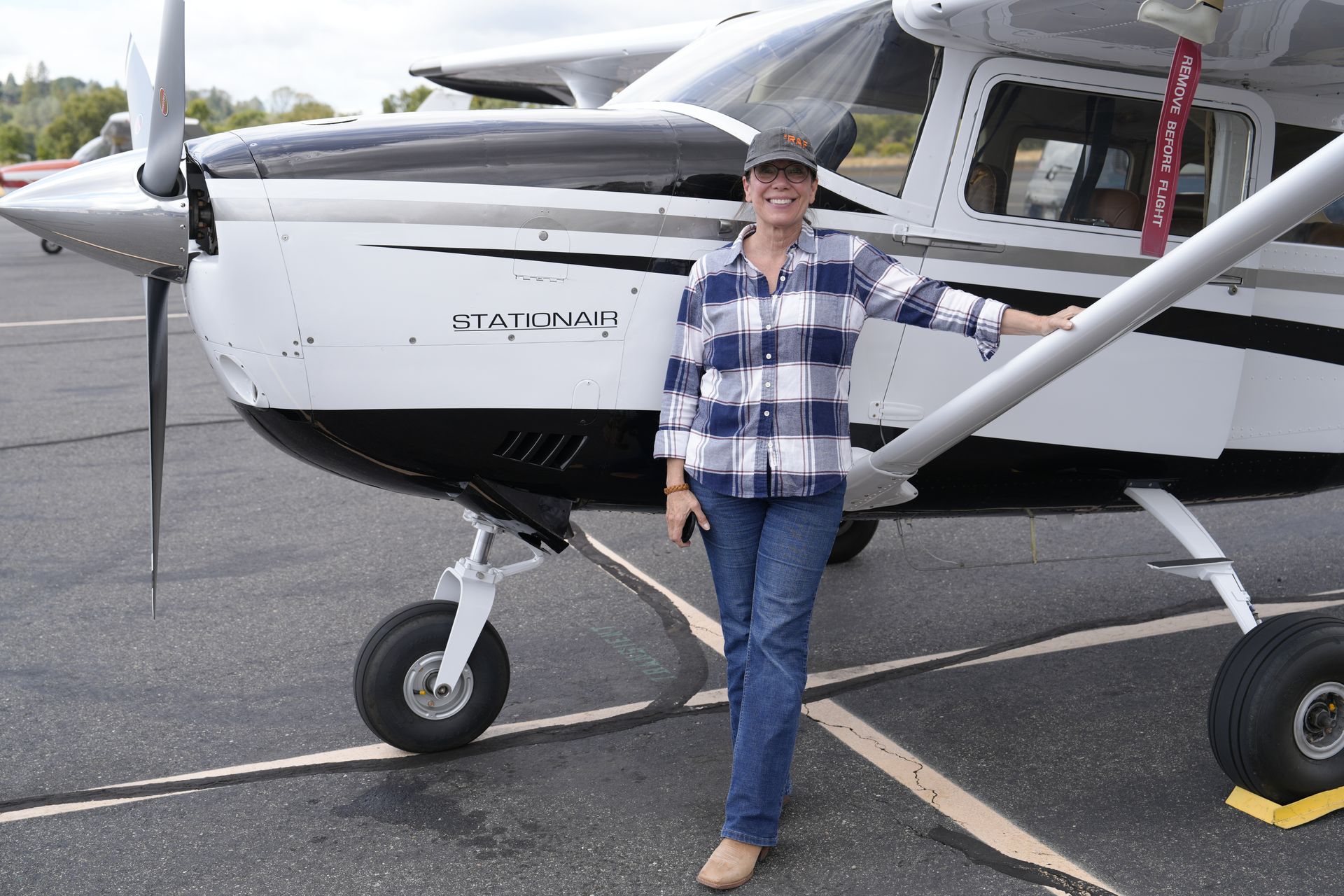
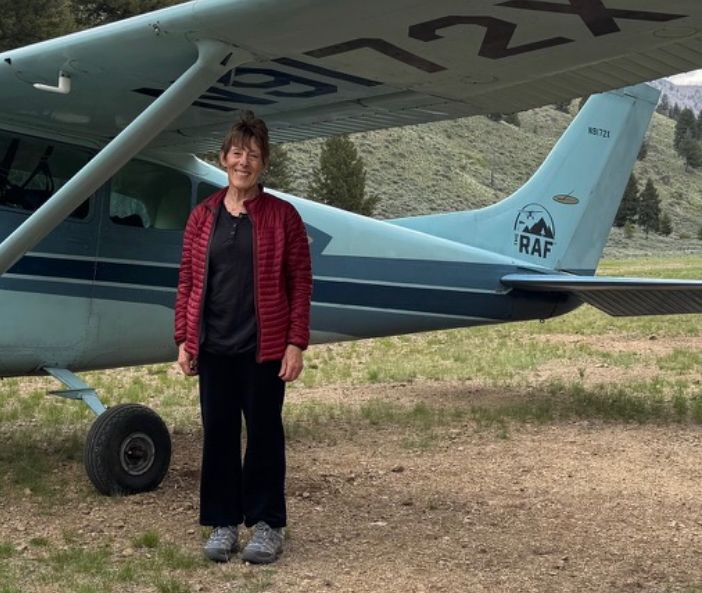
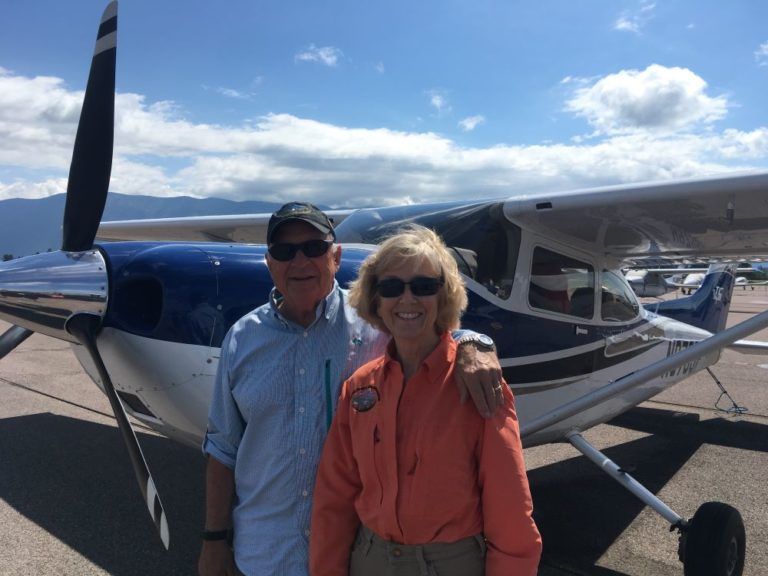
Libby Maus – daughter, sister, wife, mother, and educator. “I’ve enjoyed it all,” she says. Her spirit of adventure has taken her to ski hills, lakes and rivers, hunting grounds and “outdoor vacations”. She is always happy to meet you and hear about you and your life, as well as share her own experiences.


Libby began life in Hot Spring County, Arkansas, and lived in eight cities and towns before attending Southern Methodist University in Dallas.  Then, she and her husband Steve have lived in five cities and towns in Texas in the past 50 years.  Libby is no stranger to making friends and learning her way around geographically. “However, traveling in a single engine plane seemed scary,” she says.


 When Steve bought his first personal aircraft, Libby decided she would be much more comfortable traveling with him by air if she knew how to fly, land, and navigate. She began flying lessons with Dave Boyd in the Bozeman area. “He gave me the knowledge and confidence to continue flying, as a right seater, Steve’s co-pilot, and to enjoy flying with Steve in many situations,” she says. The Maus’s have flown their 182 all around the Cascade Mountains and mountains of Montana, as well as from North Texas to the Ozark Mountains, and back to Bozeman. 


“Having watched longtime, dear friends create a foundation – the RAF – has been totally amazing,” Libby says. “The McKennas’ passion and hard work for the missions of the RAF is the kind of emotion and behavior that our country’s citizens need to embrace.” Libby adds that she also is impressed with the others who have been on the ground level of creating the RAF.  “My love of God, country, family, and friends has grown by association with the RAF.” 

lmaus@theraf.org


    Recent Posts

July 24, 2026
RAF New Hampshire and Vermont Liaison John Meade was awarded a second grant for additional camping amenities at New Hampshire’s Parlin Field, 2B3. This time, the RAF has helped fund a covered camping shelter built by local volunteers for use in case of inclement weather. The shelter will soon have a roll-down tarp for use when occupied. Campers will also soon find solar shower bags and portable charging stations available at the campsites, as part of the grant. Pilots have enjoyed the six campsites with picnic tables and fire rings funded by a 2019 RAF grant, with local pilots providing the volunteer labor. “Over the past few years, the Parlin campsites have served pilots flying into New Hampshire to camp. I know that many visitors use this as a hub of operation to see all of New England,” Meade said. He points out that the FBO can be opened with a key code for access to a restroom and conference table. There are bicycles if one wishes to tour the Sugar Hill Trail System or ride the two miles to town for groceries – including local maple syrup – and restaurants. There is self-serve 100LL available. The field is both paved and has two turf runways. In May, Meade had organized volunteers to provide seasonal cleanup, in cooperation with Heath Marsden, part-time airport manager.  Find out more about Parlin in the Airfield Guide .
By lellington July 24, 2026
TX Ambassador
July 16, 2026
We have a BIG announcement planned for AirVenture this year, and you're invited to join us to celebrate the news. Put these special events on your AirVenture schedule for Tuesday, July 21: 8:30 - 10:30 am: Donuts & Coffee at the Redbird Booth, #301 11:30 am - 12:45 pm: RAF Forum - Beyond The Pavement by Mike Goulian, Forum Stage #10 We can't wait to share what our volunteers have been working on. Submitted June 15, 2026
By Carmine Mowbray July 14, 2026
“It's hard to describe the emotions associated with this effort,” said RAF California Liaison Katerina Barilov of the restoration of Monache Meadows airstrip, on the Kern Plateau south of California’s Mount Whitney. This High Sierra airstrip had been accessed for recreation for years until the US Forest Service unofficially closed it in the 1970s citing the Wilderness Act, although the strip is not in a Wilderness area; it lies between the Golden Trout and South Sierra Wildernesses. The RAF is thrilled to announce that Monache Meadows is officially charted as L80, and has been brought back into safe operation after many years of neglect. It is open for public access, thanks to years of effort and support by RAF volunteers and donors. RAF California Liaison Rick Lach first learned of the airstrip in the 80s on a Jeep excursion planting trout in the High Sierras. Lach became an RAF Liaison in 2011, and determined ways to approach the appropriate land managers about restoring the airstrip for use after being abandoned. Persevering for 15 years with respectful communications with a series of District Rangers, he finally delivered a breakthrough in 2024 when the Forest Service agreed to include Monache Meadows in its scope of work, allocating some funds in cooperation with RAF volunteer efforts. "After years of patience and persistence, I am glad to announce that we have restored Monache Meadows back to safe operation to be enjoyed by pilots once again," said Lach. Both Lach and Barilov organized repeated work parties, seeing as many as 20 volunteers making the arduous drive to help. A Monache resident and RAF supporter donated the windsock. The remote area is popular for camping, hiking, and fishing, and up until now was only accessible seasonally by a rough and rocky road, requiring high-clearance 4WD vehicles. The road becomes soft and impassable during wet conditions and closes due to snow. Barilov said, “We appreciate everyone's help. The strip ended up nearly 2,400 feet in length, is very flat, and is covered with grass. Frankly, it looks like one of the best grass airstrips I have ever landed on.” The airstrip lies at an elevation of 7,874, so those wishing to access it must consider density altitude, and that it seasonally gets heavy snows. The RAF's Expanding the Map initiative is a nationwide effort focused on opening, improving, and restoring access to airstrips, helping connect aviators to more of the places they love to explore. Learn more about Monache Meadows Airstrip and how the RAF is Expanding The Map . Submitted July 15, 2026 By Carmine Mowbray
By Matt Foster July 14, 2026
By Matt Foster - Safety, Education, and Etiquette Committee Chair Your backcountry adventure likely involves a heavily loaded airplane, a short strip, challenging terrain, and limited options. Your practice should reflect those realities – at your home airport. Weave exercises into your normal flying, and consider bringing someone along to observe and keep you honest. Make your normal operations backcountry-ready operations. Seek out an instructor with backcountry experience or challenge your local instructor to learn about your upcoming mission and play a role in your preparation. Load the airplane as you expect to fly it. Bring the camping gear, survival equipment, and ballast that simulates your expected weight and center of gravity. You’ll learn more about how the airplane performs when it's configured for the mission…not when it's empty and light. Make all your landings “spot” landings (remember: your “worst” landing is your standard). Know your performance for takeoff distance and power settings. Learn to lean for density altitude. Practice these calculations for your aircraft. Fly non-standard patterns where airports allow. Practice go-arounds with varying flap settings. Practice slow flight and canyon turns. You can do many of these on every local mission with only a little more thought and purpose…and it can be fun and rewarding. Visualize the adventure, and practice before you launch your adventure. The backcountry is no place to discover your limitations. Submitted July 14, 2026 Photo Credit: Bill Brine