RAF GRANT HELPS LONE PINE AIRPORT ESSENTIAL INFRASTRUCTURE PROJECT

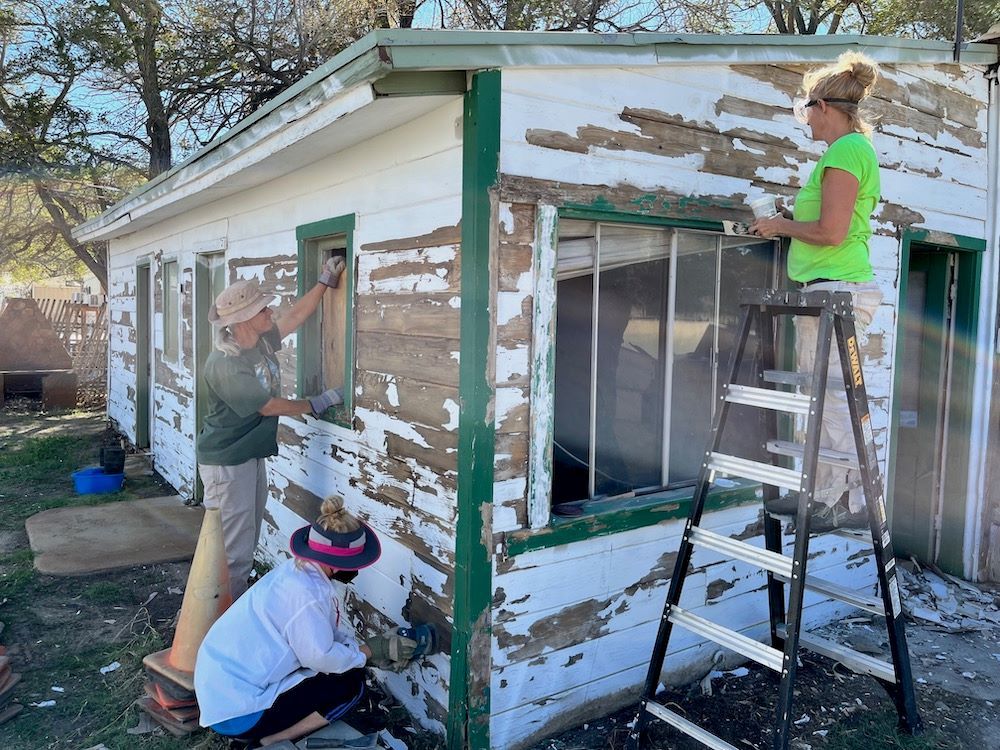
RAF California Liaison Katerina Barilov received an RAF grant for infrastructure improvements at Lone Pine Airport (026) in California, and volunteers began work Sept. 17 and 18 to restore a historic small house that serves as the terminal, and repair the restroom building. “The work party at Lone Pine was a success and they kicked off a big portion of the project,” Barilov said about the work weekend.

 “In order to fully restore these historical landmarks, we need to protect them first,” she said. Volunteers re-roofed the restroom building and made significant progress on the storied terminal building restoration. 

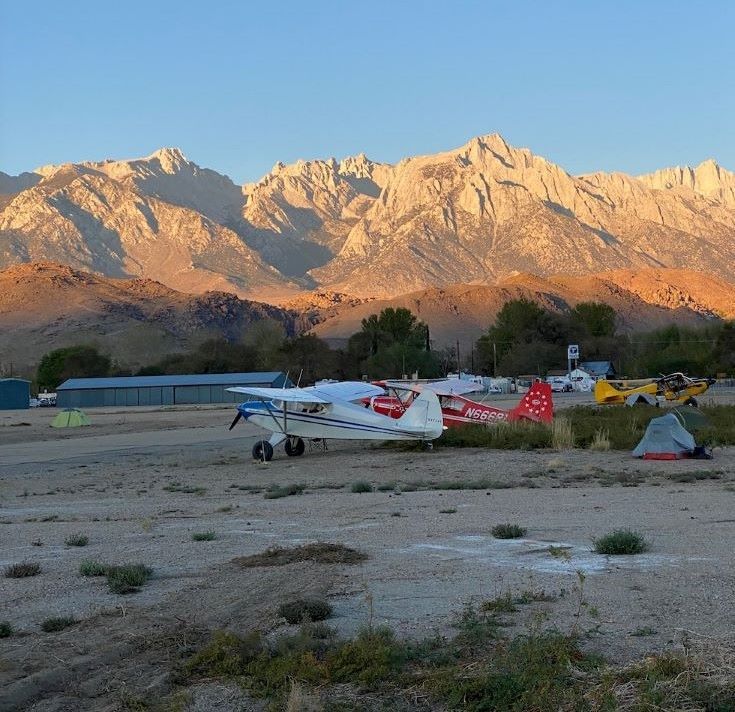
Lone Pine Airport, O26 has historically served as an entryway to the Owens Valley, the backcountry of the Sierras, historic mines, desert airstrips like Chicken Strip, Panamint Springs Resort, and the extraordinary geologic contrast of Mount Whitney, the highest mountain in the lower 48, and Death Valley, the country’s lowest point. 


With fuel, a 3,990-foot asphalt runway and dirt crosswind option, the airport lies at 3,700 foot elevation and is close to the small town’s restaurants, diners, and hotels. The airport stages multiple aviation services including air ambulance, search and rescue operations, and wildfire fighting operations. It’s a destination for gliders, hang-gliders, experimental aircraft, and backcountry aviation enthusiasts, “who seek out the exceptional flying opportunities here, which include the legendary Sierra Wave,” Barilov added.
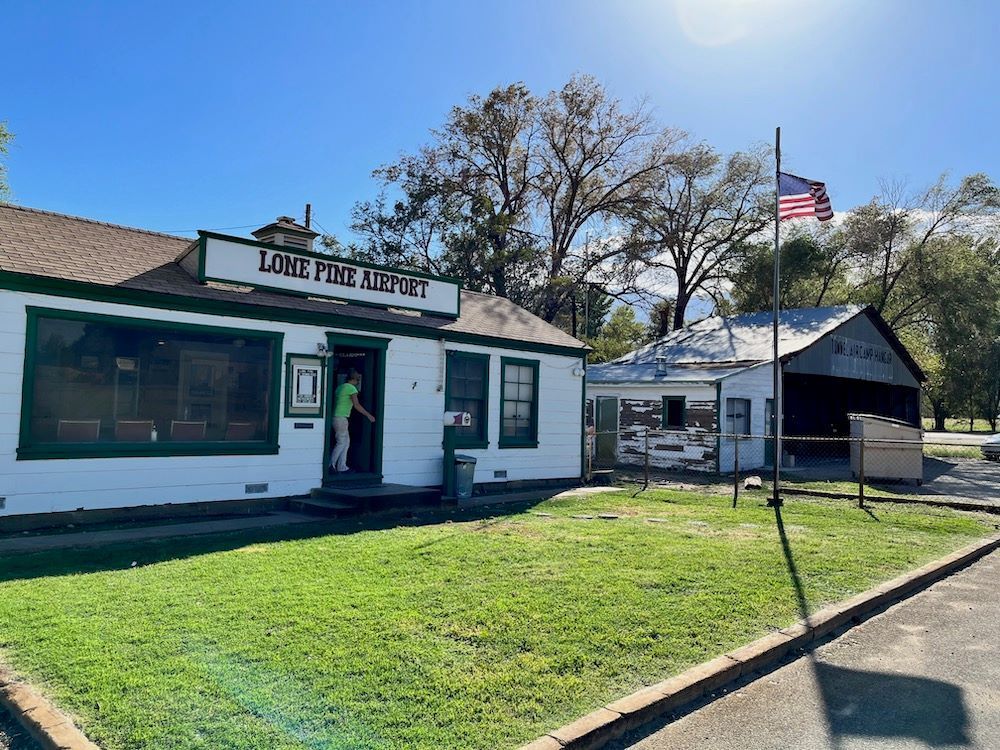
Recognizing the potential of this airport, its historic past, and the important role it continues to play in the community, the Friends of Lone Pine Airport was created to restore and revitalize the facilities. With the RAF grant, and supplies from Inyo County, volunteers from the aviation community are tackling the project.


“The Lone Pine Airport is a rural, community airport, and a world class destination. It deserves to be cared for, protected, restored as a rich resource for future generations of aviators,” Barilov said. “By protecting this gem, we hope to be doing the very work which the RAF seeks to support.”

She pointed out that Lone Pine hosts an annual fly-in, slated for October 16 th . Visit the RAF event calendar listing for more information.

Submitted on September 30, 2022.


Posted in News

Recent Posts

By Steve Jones December 15, 2025
This is a subtitle for your new post
By Kodi Myhre December 11, 2025
At about this time, every year, we have this conversation at the RAF about what our year end letter (code for asking for your financial support) should say to you, and about the RAF and the accomplishments of the past year.
By Taylin Trafton December 11, 2025
A Christmas gift of flight lessons from his parents started Scott Anttila’s aviation journey in 1985. “I learned at Johnson Field, a small grass strip tucked into the woods in Michigan’s Upper Peninsula, and that early exposure to simple backcountry flying stuck with me,” Scott says. Growing up in the U.P., he spent a lot of time outdoors and found that flying was another way to get to the places he liked to explore—especially the ones most people never saw. As he earned more ratings and eventually moved to the Detroit area for work, Scott realized he needed a way to stay connected to northern Michigan. He bought an airplane and used it to get back to the smaller airstrips and lake country he enjoyed. Along the way, he also flew gliders out of Frankfort, soaring along the Sleeping Bear Dunes and towing sailplanes over the Great Lakes. “Those flights gave me a different appreciation for the landscape and made me even more interested in the small, out-of-the-way airports scattered around the state,” he says. Visiting those kinds of places, Scott first came across the Recreational Aviation Foundation. He started using RAF-supported airstrips both inside and outside Michigan. “I noticed how well-kept they were and how much access they opened up,” he says, adding, ”Over the years, I’ve watched a number of grass strips close, which made the RAF’s mission feel especially important to me. Maintaining these airstrips keeps aviation connected to the outdoors and makes it possible for more people to reach the quiet, remote areas that inspired me to fly in the first place.” Scott joins the other two RAF Michigan Liaisons, General Grant and Tanmoy Ganguly. He can be reached at santtila@theraf.org . Submitted December 11, 2025.
By Taylin Trafton December 11, 2025
“The word that comes to mind when I think of our second Walker Ridge work party is magical,” RAF California Liaison Doug Lumgair said, "even though it started off again with a truck stuck in the mud.” Volunteers began arriving Friday afternoon in a tailwheel Rans, a Super Cub, and Lumgair in his Cessna 170. A pickup with a big dump trailer brought the Polaris Ranger, and more pickups arrived. The runway surface posed major problems with boulders protruding from the surface. Everyone was eager to get started with pry bars and remove them. Once they fired up the generators to power the hammer drills, they discovered that this was the best method for attacking the rocks below the surface and breaking them up into pieces that they loaded into the trailer for removal. “At times, it felt like we had taken on an impossible task. But with steady work and persistence, by afternoon, we began to see the light at the end of the tunnel,” Lumgair said.  In the Friday evening fire circle, they made new friends while sitting around a propane fire pit that had been cleverly transformed into a radiant heater by placing a washing-machine drum over it. Walker Ridge lies in a dark-sky area. Before the full supermoon rose, Lumgair said they could see the Milky Way with the naked eye. The campsite at the south end of Walker Ridge has a gorgeous view of the valley, and the view became “even more breathtaking as Central Valley tule fog filled the valley and the supermoon lit the fog, creating a shimmering white lake.” Lumgair said. Saturday morning, two crews quickly organized with hammer drills, and others began cutting brush along the runway edges. Volunteers had already removed what Lumgair called an incredible amount of brush during their first work party, but Saturday, they hauled out twelve more trailer loads. Late on Saturday, they had enough time to work on the rock outcroppings in the south turnaround area as well. "It was amazing that we were able to cut and haul so much brush and break down rocks and fill the resulting holes—all in one steady, hard-working day. Thank you very much to everyone for supporting the RAF in so many ways,” he said. Some stayed Saturday night to enjoy another beautiful evening. Work remains, and Lumgair is planning more work parties in the coming year to complete further improvements, some of which will require additional approval from the BLM. “Please let me know if you get up there this winter. I’d love to hear your thoughts and see any photos of your experience, Lumgair added. Doug Lumgair can be reached at dlumgair@theraf.org . Submitted December 11, 2025.
By Taylin Trafton December 9, 2025
Chris at TacAero in Fredericksburg, Texas to fly what he calls, "the mighty XCub. It's an awesome airplane,” he added.