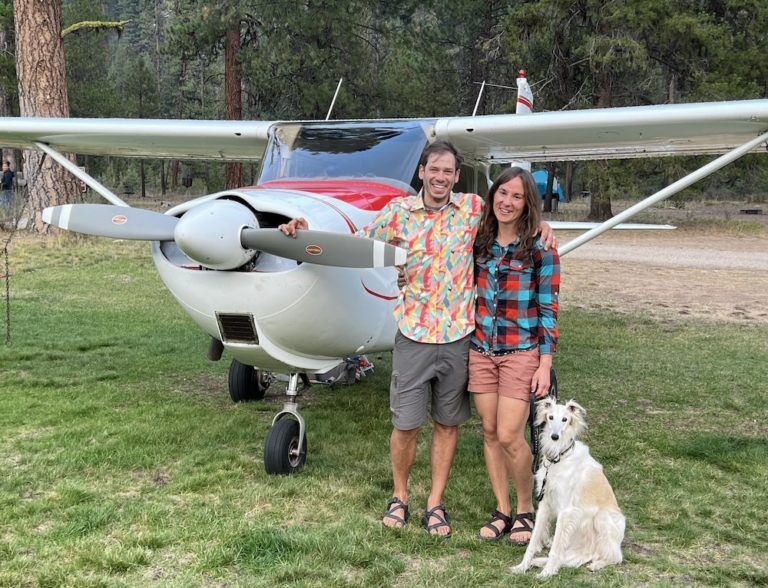
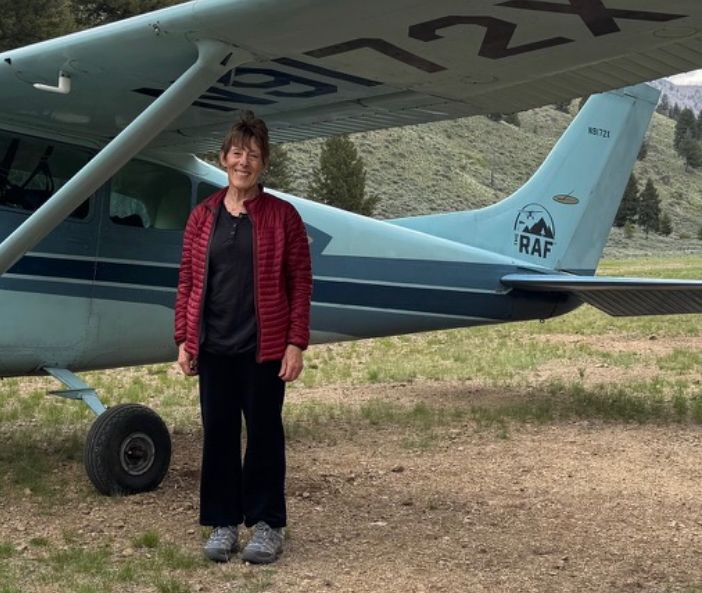
Sarah Brown

Day job: Airline Pilot


Favorite airstrip: Red’s Horse Ranch (68D)


Next adventure: Loading the mountain bikes in the back of our C180 and exploring Pacific Northwest singletrack


Submitted on January 18, 2024.


    Recent Posts

By Carmine Mowbray August 14, 2026
When a few New Mexico backcountry pilots observed the closure of a backcountry airstrip on public land, they understood the need for a goal-focused group to preserve these valuable recreational destinations — places in the high desert where you could land your own GA aircraft, pitch your tent with panoramic views of ponderosa, piñon pine, and Rocky Mountain juniper, and easily hike into the Chiricahua or Aldo Leopold Wilderness area. These pilots began organizing the New Mexico Airstrip Network, NMAN, in 2014. Founders include RAF Director Emeritus Rol Murrow and former New Mexico Liaison Larry Filener. “With their vision, and a bit of organizing, we got a lot accomplished,” New Mexico Pilots Association President Joyce Woods says. Their work brought about a historic MOU, formalizing “the collaborative partnership of federal and state agencies, aviation groups, landowners, and other stakeholders to preserve, promote, and enhance New Mexico’s growing inventory of recreational airstrips and related airports.” This document was signed at the USFS Regional Headquarters in Albuquerque in 2016. Thanks to these visionaries, access to choice flying destinations are available to pilots, nearly 20 in number. The RAF has provided grants for improvements at several New Mexico airstrips, and has formal agreements with the Gila National Forest to maintain and improve airstrips within the Forest. Additionally, NM Liaison Ron Keller has put in many hours and weekends organizing RAF and New Mexico Pilot volunteers for work parties. Joyce credits Keller as a “real workhorse." Plan your New Mexico flying adventures, and bring your camping gear and hiking shoes. Lining the trails are 1,500 different plant species like the Wright's silktassel, Apache plume, cliff fendlerbush, mountain snowberry, and manzanita. You can access sites with prehistoric rock art. Spring visitors might hear the sweet song of the warbler during its migratory stop in the Gila. Night brings the darkest skies you’ve ever seen, sparkling with the Milky Way. Enjoy the warmth of a campfire as the desert night cools, and thank those wise and determined pilots who worked to preserve these New Mexico gems among the New Mexico Airstrip Network. Find more about these airstrips using these valuable resources: RAF Airfield Guide New Mexico Pilots Association Submitted August 15, 2026 By Carmine Mowbray
By Robert Miller August 14, 2026
As a career pilot, Thread and Error Management (TEM) has been ingrained in how I fly. I’ve become convinced that Threat and Error Management matters more in backcountry flying than just about anywhere else. Not because the principles are different but because the timeline for decisions is. In “normal flying,” a poor decision often gives you time to recognize it, correct it, and move on. In the backcountry, the chain gets compressed. Threats are closer, mistakes can compound quickly, and options disappear in a hurry. By the time you realize you're behind the airplane, there may not be enough runway, climb performance, or room to recover. That's why TEM isn't about avoiding mistakes. It's about breaking the chain before the situation starts making decisions for you. Most of the threats are familiar. Density altitude. Winds that don't behave as forecast. Narrow strips, rising terrain, soft surfaces, visual illusions, and airplanes that perform a little differently than they did last time. Add a little fatigue, a little confidence from yesterday's success, or an eager passenger, and the margins start shrinking. The interesting part is that accidents rarely begin with one big mistake. They usually begin with a series of small decisions that seem reasonable at the time. "The tailwind isn't that bad." "We'll climb out fine." "The approach will come together." In the aftermath of a near accident or a survived accident, we’ve heard all of these testimonials…sometimes from the voice in our own headset. The best backcountry pilots I've flown with all seem to have one thing in common. They're willing to change the plan early. They don't wait for proof that something is wrong. If the approach isn't shaping up, they leave. If the takeoff isn't developing as expected, they abort. If the conditions don't match what they planned for, they wait or go somewhere else. That's TEM in its simplest form: anticipate the threats, recognize when reality no longer matches the plan, and act while you still have options. One thought has stayed with me over the years: backcountry accidents rarely begin with bold decisions…they begin with delayed decisions. The RAF Safety, Educational, and Etiquette team is looking at practical ways to apply TEM in the backcountry, including personal decision gates, arrival and departure briefs, and recognizing the traps that catch even experienced pilots. Let us know by sharing your own tips and ideas in “Comments.” (LINK?) Until then, ask yourself one question before every approach and every takeoff: If this doesn't work exactly as planned, what's my next move? If you have a good answer, you're probably ahead of the airplane. Submitted August 8, 2026 By Robert Miller, RAF West Virginia Liaison & Safety, Education, and Etiquette Committee member
August 11, 2026
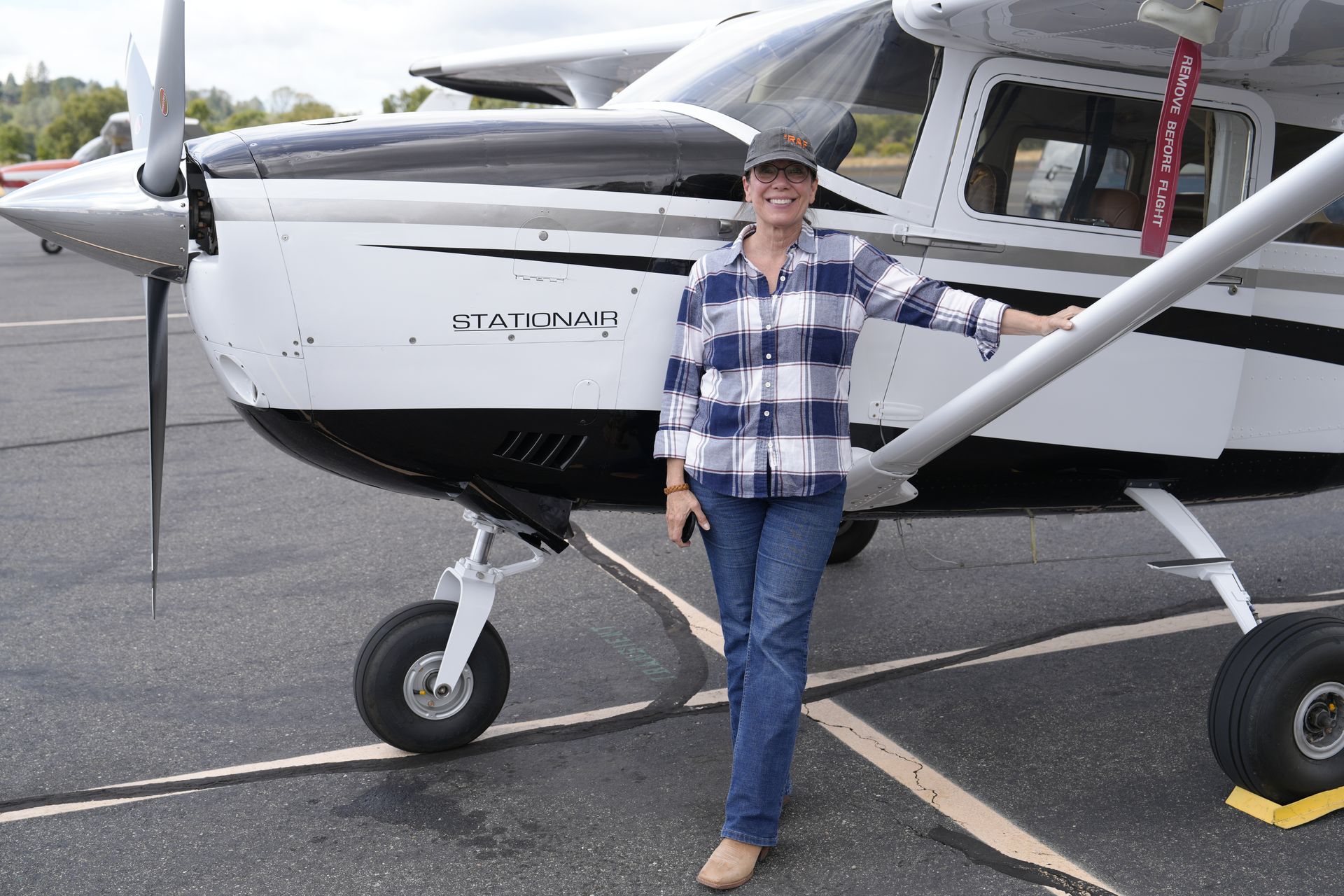
Irene was born and raised in Los Angeles but eventually found her way to Michigan's Upper Peninsula, where she quickly fell in love with the slower pace of life, the endless outdoor adventures, and the welcoming community. After spending a few years between Mississippi and Los Angeles, she knew Marquette was where she wanted to be and returned to make it home. Travel has always been one of Irene's greatest passions. Her mother once joked that she needed to find a career that could support her expensive travel habit—and she did. As a full-time flight attendant, Irene has had the opportunity to experience incredible places and cultures around the world. About five years into her airline career, a pilot casually suggested, "You should be a pilot!" Just one week later, Irene took her first flight lesson and discovered a passion for flying she never knew she had, and hasn’t looked back since. In addition to working as a full-time flight attendant, Irene is a Certified Flight Instructor (CFII/MEI) who is passionate about helping aspiring pilots achieve their aviation goals while developing the skills and confidence to become safe aviators. She is also preparing to begin her second year as a part-time high school Career and Technical Education (CTE) aviation teacher, where she enjoys introducing students to the various opportunities aviation has to offer. When she is not in the air, Irene enjoys spending time with family and friends, cheering on motocross/supercross races, and now volunteering with the RAF. Irene looks forward to contributing to the mission of supporting recreational aviation for future generations and cannot wait to meet the members, volunteers, and aviation enthusiasts who make this community so special. Submitted on August 11, 2026
By John McKenna August 10, 2026
Any of you ever tried to deal with an issue where all you wanted was to simply talk to a real person for help? Sure you have, and each of us likely has our own methods to break through the automation to a real person. To quickly bypass customer service robots, I try trigger words like "Agent" or "Supervisor" and keep my answers short. Don’t over-explain your issue. If the bot persists, you can use “nuclear" phrases like "Cancel my service,” or just repeat gibberish until the system hopefully defaults to a human. But you won’t need these tricks if you reach out to the RAF. When the RAF looks over our nearly 25-year shoulder, what we see is direct involvement by an army of people. It is people who show up at public hearings, people who have dug the holes for pilot shelter foundations, fence posts, and yes, outhouses. It is people who show up at Oshkosh to share our message and celebrate all that we have accomplished, and it is people who make you feel like you have made the right call to be an RAF volunteer or supporter. It’s not to say that automation and AI are tools to be discarded, but they are not tools that the RAF has found effective for doing the people-facing work that we do. Work that is opening a bunch of new places to go, taking care of the ones that exist, and working on issues that we see that could affect our backcountry community. In a funny little way, the more the world automates, the better the playing field is for the RAF, because we are pretty good at the human connection part. That feeling when one human being really hears what the other is saying. Thank you for helping us be a trusted member of this community. Not easy to do, but we mean it when we say, “We care.” - John McKenna, RAF Chairman Submitted August 10, 2026 
August 5, 2026
FEATURING: TOOL ROLLS Whether you’re heading to the hangar, the backcountry, or your next work party, staying organized matters. The RAF Tool Roll keeps your essential tools secure, accessible, and ready when you need them most. Designed to fit conveniently in your airplane or vehicle, it features multiple zippered pouches, labeled compartments, and a durable roll-up design with built-in handles for easy transport. No more digging through a loose toolbox or searching for that one tool you need. Keep your gear organized to spend less time looking and more time flying!