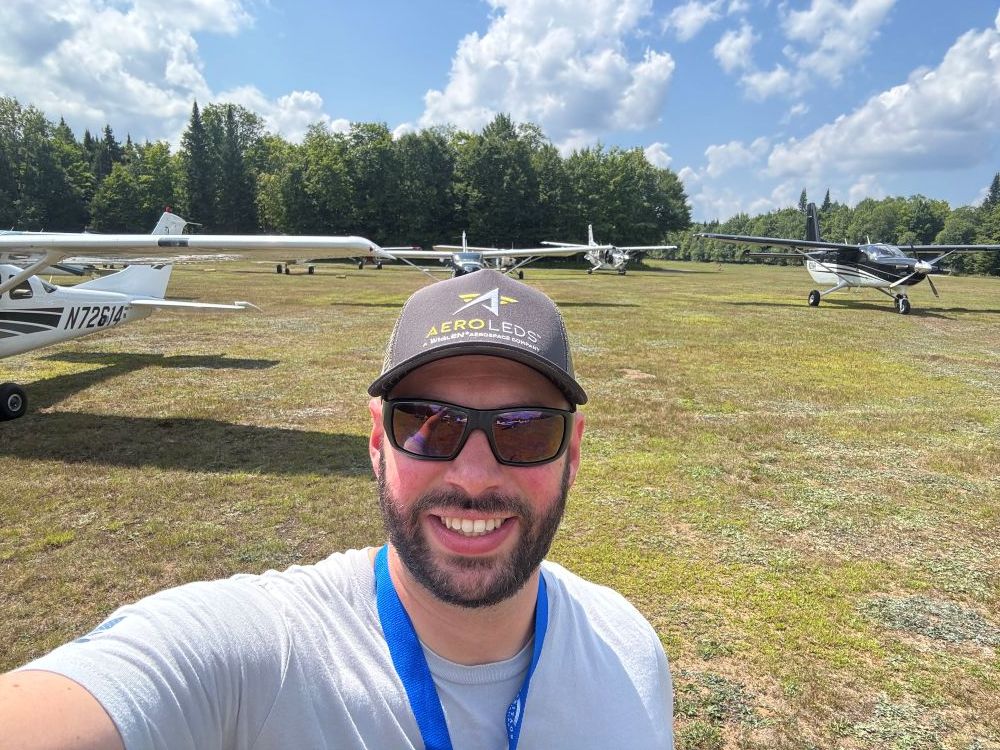
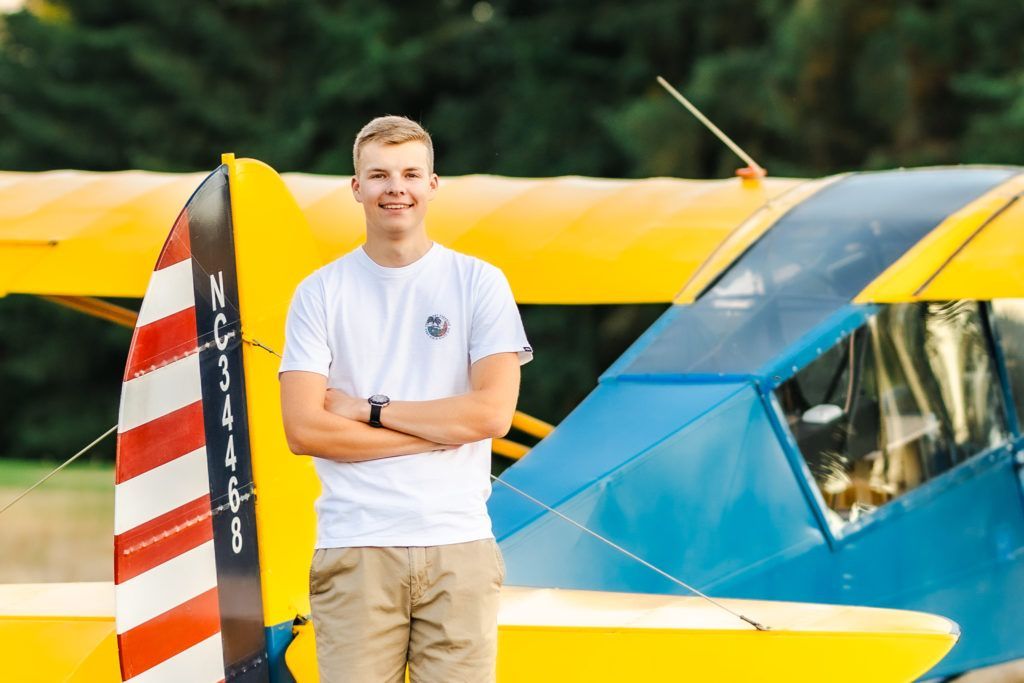
Finley Taylor is an 18-year-old commercial pilot from Bellevue, Washington. He grew up in an aviation family, with both his dad and grandpa having long aviation careers. He holds a commercial pilot’s license with multi engine and instrument ratings. He has been passionate about aviation for as long as he can remember and is looking forward to a future career in aviation.
WORTH THE READ: FINLEY TAYLOR GUEST EDITORIAL
Our many RAF supporters have such vast and varied experience, and we’re capturing some of their words of wisdom to share with you. This month’s guest editorial is by Finley Taylor, an 18 year old commercial pilot and a good friend of the RAF.
My earliest memories of flying with the RAF are in the back of a Piper Super Cub, staring at the back of my dad’s t-shirt over the picturesque North China Wall in Montana. The thrill of the bouncy tundra tires meeting the soft summer grass on some backcountry strip amazed my young self. I understood at a young age that this hobby would quickly evolve to consume my entire life. I kept flying, graduating to the front seat, and adding more types to my ever-growing logbook. Thanks to the RAF, I logged my first official landing at the age of 13 in a Kodiak with Mark Brown, quickly followed by a Cessna Grand Caravan with Peter Burwell.
I continued to fly with my dad, Steve Taylor, at RAF events throughout my childhood. Idaho, Montana, Washington, Vermont, and Michigan are just a few of the states I have experienced incredible backcountry strips that I have had the opportunity to visit. The excitement of travelling to a new place and meeting new people still inspires me to continue my adventures alongside the RAF. From pulling the frozen jeans out of my sleeping bag at Smiley Creek (U87), to making memories with friends at Moose City (86MT). But beyond the incredible places I have visited, I’ve made lifelong friends, learned valuable lessons that have aided me not only as an aviator but also as a person, and enjoyed talking endlessly about airplanes along the way.
I still remember my introduction to an RAF staple: The work party. We packed our sleeping bags and tent into the back of our Cessna 180 and flew to Sullivan Lake (09S) where we would camp for a weekend and work to improve the airport. This trip was a microcosm for the greater purpose of the RAF as people bonded over preserving a beautiful airport while enjoying good company, good food, and campfires. As we watched the sunset over the lake, I couldn’t help but to reflect on the sight of dozens of orange RAF hats scattered down the runway, shovels in hand and ready to work. After a long day digging and replacing equipment, we all sat down to a dinner hosted by the gracious Washington State Liaisons, the Whitelaw brothers. The joint work effort and camaraderie over a seemingly dull task opened my eyes to the spirit of the RAF. Flying to spectacular backcountry strips that would’ve otherwise been forgotten, working with other volunteers for the greater good of aviation and to preserve these magical places for generations to come, and to create memories with fellow aviators.
Earlier this summer, I found myself at Cavanaugh Bay (66S) surrounded by fellow aviators and RAF enthusiasts to celebrate 20 years of the organization. Again, I was struck by the community and sense of belonging with everyone. As a teenager, I notice my peers having trouble connecting with adults and viewing them as the “others.” I attribute my experiences with the RAF as part of the reason that I proudly call these people my friends as well. Sitting on folding lawn chairs watching airplanes takeoff and land, discussing stories, and sharing laughs with others reminds me why the RAF is so special. The special connection shared between people over a common interest is something that must be cherished. A bright orange RAF hat is a sure sign that you’re about to make a new friend. Later that trip, we flew to Ryan Field (2MT1) to continue our celebrations and admire the newly finished barn. Standing under the beautiful, exposed beams and seeing the care and craftsmanship behind the work reminded me of the hard work and dedication the RAF puts towards preserving and maintaining these beautiful backcountry strips. And yet, it’s the dedication of the volunteers that make these places so special and the RAF such a truly unique organization.
Submitted March 20, 2024.
Posted in Guest Editorial, News
Recent Posts
Our many RAF supporters have such vast and varied experience, and we’re capturing some of their words of wisdom to share with you. This guest editorial is by Cindy Cross, RAF VP of Appreciation.
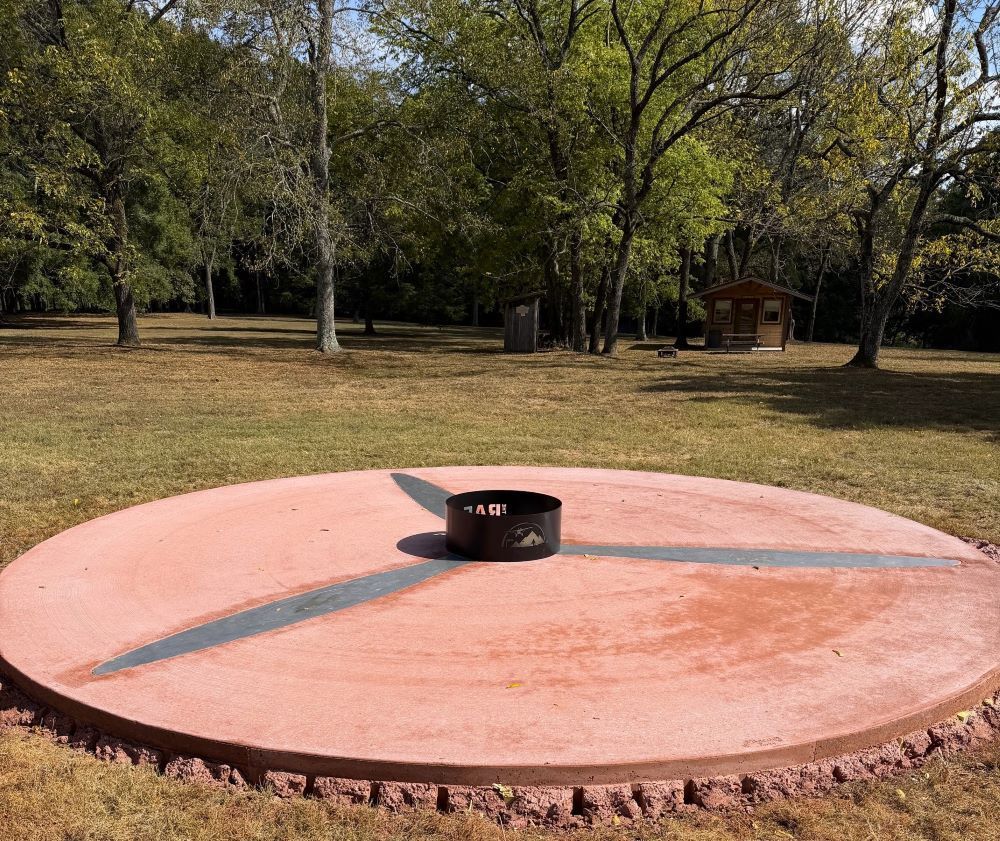
The Beechcraft Heritage Museum at Tullahoma Regional Airport is the site of a new RAF Fire Hub, provided by an RAF grant submitted by Tennessee Ambassador Steve Lewis. The Parish family, who own the Beechcraft Museum, along with other RAF volunteers, contributed to the preparation and installation of the fire hub. They completed the project in time for folks to enjoy it during the annual Beech Party event over the October 10-11 weekend. The 20-foot diameter permanent concrete base was provided by a private donor. The fire ring and three 10-foot-long propeller blades were designed and fabricated by RAF Volunteer Pete Smith of Lewistown, Montana, with design assistance from Pete's son Matt Smith of Bozeman, Montana. The structure lies east of the 2,775-ft turf Parish Aerodrome runway adjacent to the Beechcraft Heritage Museum. “This permanent installation will showcase the RAF mission as the Museum draws visitors from around the country,” Lewis said. For more information on the airport, see the Airfield Guide . Submitted October 21, 2026
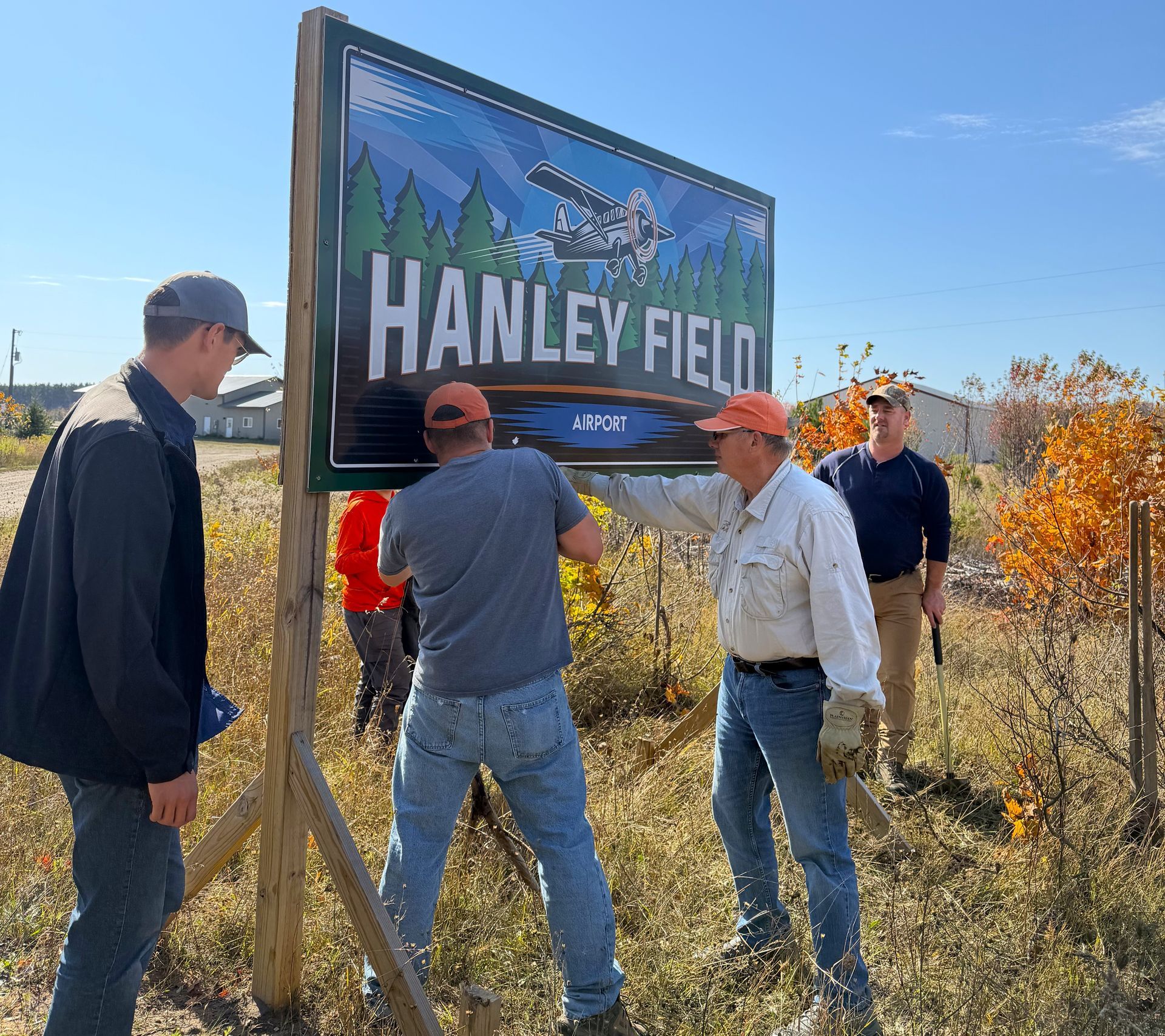
Michigan RAF volunteers had a very successful work party at Hanley Field (5Y7) in Michigan’s Upper Peninsula the October 10-11 weekend. Led by Michigan Ambassador Ryan Minnick, the crew, including Michigan Liaison Tanmoy Ganguly, cut and stacked firewood, repaired the sink and water heater, and relocated the airport sign along the road for better visibility. “We had a great weekend and got a good amount of work done. It was great connecting with supporters from the area,” Minnick said. “The assistant airport manager was there and was very happy with the results that came out of the work party.” Fourteen remained to camp Saturday night. Find more about Hanley Field in the Airfield Guide . Submitted October 21, 2026