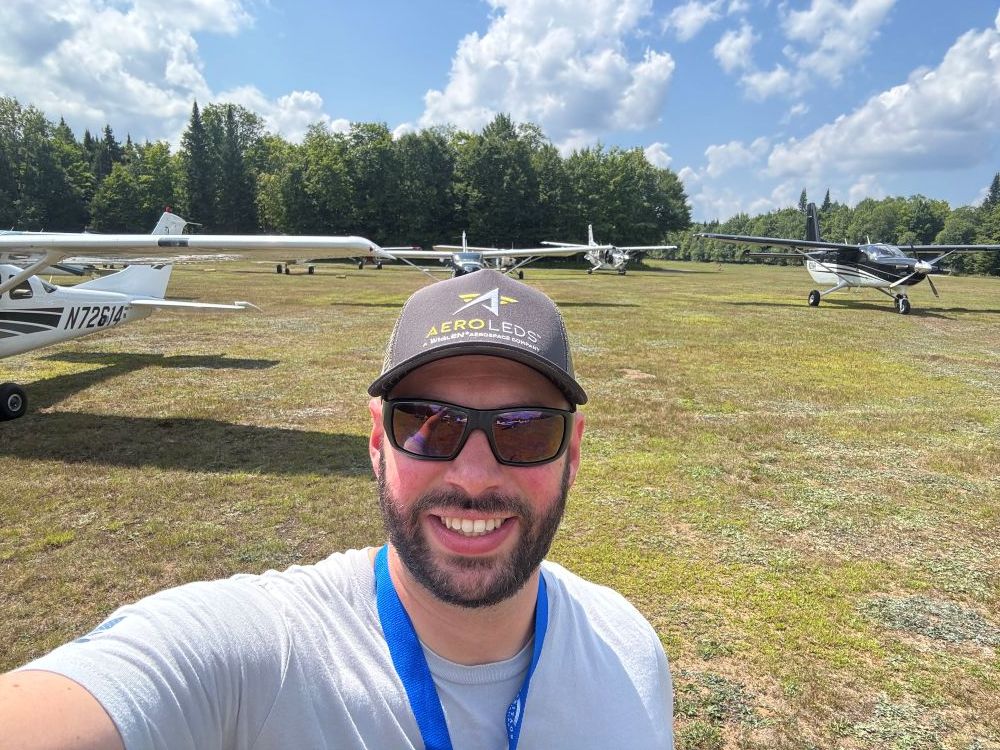
WORTH THE READ: JOHN NADEAU GUEST EDITORIAL

Our many RAF supporters have such vast and varied experience, and we’re capturing some of their words of wisdom to share with you. This month’s guest editorial is by John Nadeau, one of the RAF’s RUS Liaisons and a longtime RAF supporter.


When Opportunity Knocks, Open the Door – Better Yet, Knock First – Opportunity May Be Lurking


The first grass runway I landed on was the one I owned. I had an opportunity to purchase an airfield before buying an airplane. The runway had been neglected for over a decade. As a physical therapist, I felt a need to “rehabilitate” it. For ten years, I’d rented Cessna 150s, flying pavement to pavement from a very busy, towered airport just west of Boston, Mass. Suddenly I owned a grass airfield in Maine. This sort of opportunity just doesn’t come up very often. 


That first summer was spent plucking young birch trees, filling holes and mowing ten-year long grass and weeds. I literally worked a good riding lawn mower to a nasty demise. I allowed other pilots to access the airfield, but liability was always a major concern. 


Circa 2007, a blurb appeared in AOPA Pilot that caught my eye. A group based in Montana calling itself the Recreational Aviation Foundation had just gotten the State of Montana to add “aviation” to its Recreational Use Statute (RUS).


I called the phone number. On the other end John McKenna explained the RAF, and that an RUS limits the liability of airfield owners. I had saved an abandoned airfield and wanted that liability protection – another opportunity.


Recreational Use Statutes basically state that if a landowner keeps land open to the public for recreational purposes, and does not charge a fee, and there is no malicious intent to injure others, then the owner is not responsible if someone using the land is injured. Some states list recreational purposes, preceded with the phrase, “…including but not limited to…” Aviation for recreational purposes may be implied, but airfield owners tend to want to see it in black and white in the RUS.


We wanted to add “aviation” to Maine’s RUS. It took two years to get through the legislative process. Maine pilots and other airfield owners, as well as the RAF helped. Once “aviation” was added to Maine’s RUS, use of my airfield became “free” for all. 


John called me with the opportunity to participate in an RAF Strategic Planning Conference in Driggs, Idaho, adding, “Come out a couple of days early and we will fly you around a bit.” Enter Tim Clifford, and RAF co-founders Chuck Jarecki, Jerry Cain, and Dan Prill. What a fun opportunity! I met some wonderful and interesting people, as you can imagine.


During the conference, John offered me the opportunity to lead the RAF’s national effort to include aviation in each state’s RUS. At the time, there were only five states. He had just arranged to have me flown all over creation in the Rocky Mountains. He had me hooked, netted, and landed.


I acquired the help of Bob Kay and Dave Myrick. We started a campaign to get this done. The opportunity for additional aviation destinations was unimaginable… if only RUS liability protection could be assured in the minds of the private-use airfield owners. 


I knew nothing about owning an airfield, nor the process of getting a bill through state government. Same for Bob Kay (Boeing test pilot) and Dave Myrick (artisan glass blower). But as people volunteered to lead their own state’s effort, we grabbed these opportunities and got ‘er done. We learned more as we went along from state to state, advising RAF volunteers and airfield owners about the legislative process. We simply used the experiences we had gained, team effort, persistence, pleasantness, generosity and patience. Today there are 28 states that include aviation in their definition of recreation. Four states have no list but merely state generically, “recreation,” so we assume aviation is implied.


Recently RAF Supporter Rick McCraw of Vermont has stepped up, and he and I are available to answer RUS questions. Eighteen states still don’t specify “aviation” in their RUS, and airfield owners in these states need aviation language to be included.


So, I encourage you to open the door when opportunities knock, even if it’s all new to you. And don’t just wait for that knock. Rap on some doors yourself. Speak to airfield owners about RUS protections and airfield maintenance needs. An opportunity may be waiting within each conversation. Your knock may even be answered by someone who’ll lead the charge to add aviation language into one of those remaining 18 states’ Recreational Use Statutes. 


It sure has been a fun and satisfying ride for me.
A physical therapist, John started a unique practice in 1975 that treated children and young adults with cystic fibrosis (CF) with daily chest physical therapy in their homes before and after school/work. At the time, half of CF patients lived only to age 16. The CF clinics in Boston saw such positive results that his practice grew to provide physical therapists for hundreds of patients in three states. Though his practice survives today, CF research has made tremendous advancements in medical treatment, diminishing the need for his services just in time for his retirement.


Flying his Cessna Skyhawk provided 35 years of stress relief and sanity from fighting medical insurance companies on behalf of young terminally ill patients.

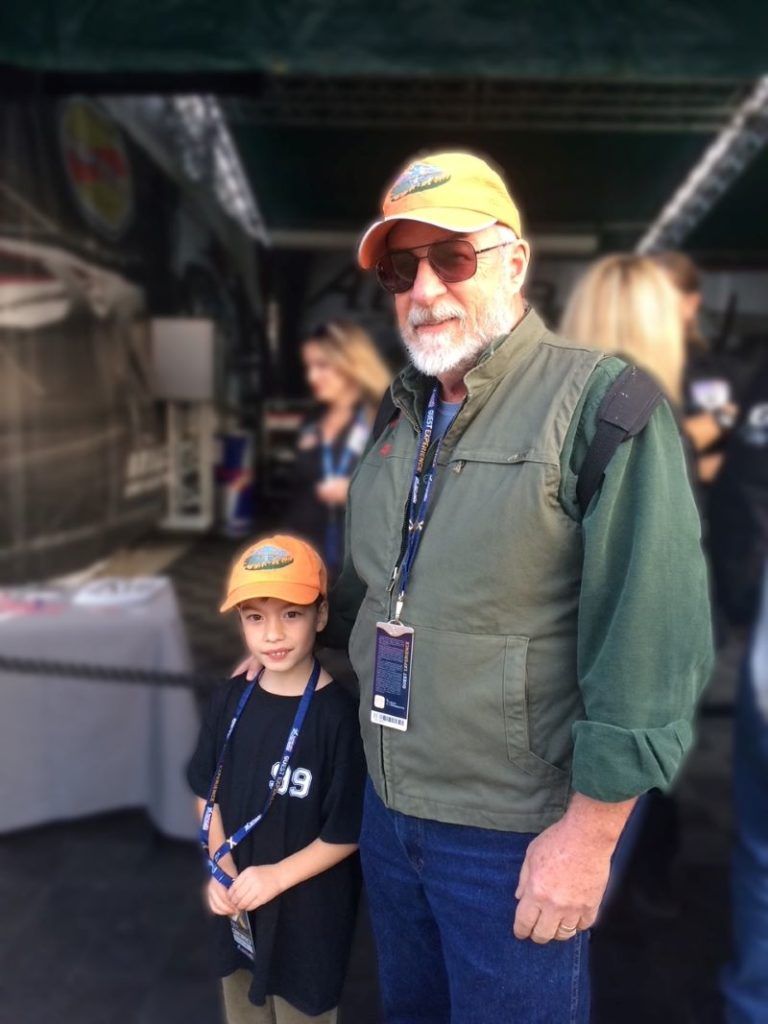
Photo: John with Eli, John’s grandson and future pilot extraordinaire


Submitted January 17, 2025


Posted in Guest EditorialNews

    Recent Posts

July 24, 2026
RAF New Hampshire and Vermont Liaison John Meade was awarded a second grant for additional camping amenities at New Hampshire’s Parlin Field, 2B3. This time, the RAF has helped fund a covered camping shelter built by local volunteers for use in case of inclement weather. The shelter will soon have a roll-down tarp for use when occupied. Campers will also soon find solar shower bags and portable charging stations available at the campsites, as part of the grant. Pilots have enjoyed the six campsites with picnic tables and fire rings funded by a 2019 RAF grant, with local pilots providing the volunteer labor. “Over the past few years, the Parlin campsites have served pilots flying into New Hampshire to camp. I know that many visitors use this as a hub of operation to see all of New England,” Meade said. He points out that the FBO can be opened with a key code for access to a restroom and conference table. There are bicycles if one wishes to tour the Sugar Hill Trail System or ride the two miles to town for groceries – including local maple syrup – and restaurants. There is self-serve 100LL available. The field is both paved and has two turf runways. In May, Meade had organized volunteers to provide seasonal cleanup, in cooperation with Heath Marsden, part-time airport manager.  Find out more about Parlin in the Airfield Guide .
By lellington July 24, 2026
TX Ambassador
July 16, 2026
We have a BIG announcement planned for AirVenture this year, and you're invited to join us to celebrate the news. Put these special events on your AirVenture schedule for Tuesday, July 21: 8:30 - 10:30 am: Donuts & Coffee at the Redbird Booth, #301 11:30 am - 12:45 pm: RAF Forum - Beyond The Pavement by Mike Goulian, Forum Stage #10 We can't wait to share what our volunteers have been working on. Submitted June 15, 2026
By Carmine Mowbray July 14, 2026
“It's hard to describe the emotions associated with this effort,” said RAF California Liaison Katerina Barilov of the restoration of Monache Meadows airstrip, on the Kern Plateau south of California’s Mount Whitney. This High Sierra airstrip had been accessed for recreation for years until the US Forest Service unofficially closed it in the 1970s citing the Wilderness Act, although the strip is not in a Wilderness area; it lies between the Golden Trout and South Sierra Wildernesses. The RAF is thrilled to announce that Monache Meadows is officially charted as L80, and has been brought back into safe operation after many years of neglect. It is open for public access, thanks to years of effort and support by RAF volunteers and donors. RAF California Liaison Rick Lach first learned of the airstrip in the 80s on a Jeep excursion planting trout in the High Sierras. Lach became an RAF Liaison in 2011, and determined ways to approach the appropriate land managers about restoring the airstrip for use after being abandoned. Persevering for 15 years with respectful communications with a series of District Rangers, he finally delivered a breakthrough in 2024 when the Forest Service agreed to include Monache Meadows in its scope of work, allocating some funds in cooperation with RAF volunteer efforts. "After years of patience and persistence, I am glad to announce that we have restored Monache Meadows back to safe operation to be enjoyed by pilots once again," said Lach. Both Lach and Barilov organized repeated work parties, seeing as many as 20 volunteers making the arduous drive to help. A Monache resident and RAF supporter donated the windsock. The remote area is popular for camping, hiking, and fishing, and up until now was only accessible seasonally by a rough and rocky road, requiring high-clearance 4WD vehicles. The road becomes soft and impassable during wet conditions and closes due to snow. Barilov said, “We appreciate everyone's help. The strip ended up nearly 2,400 feet in length, is very flat, and is covered with grass. Frankly, it looks like one of the best grass airstrips I have ever landed on.” The airstrip lies at an elevation of 7,874, so those wishing to access it must consider density altitude, and that it seasonally gets heavy snows. The RAF's Expanding the Map initiative is a nationwide effort focused on opening, improving, and restoring access to airstrips, helping connect aviators to more of the places they love to explore. Learn more about Monache Meadows Airstrip and how the RAF is Expanding The Map . Submitted July 15, 2026 By Carmine Mowbray
By Matt Foster July 14, 2026
By Matt Foster - Safety, Education, and Etiquette Committee Chair Your backcountry adventure likely involves a heavily loaded airplane, a short strip, challenging terrain, and limited options. Your practice should reflect those realities – at your home airport. Weave exercises into your normal flying, and consider bringing someone along to observe and keep you honest. Make your normal operations backcountry-ready operations. Seek out an instructor with backcountry experience or challenge your local instructor to learn about your upcoming mission and play a role in your preparation. Load the airplane as you expect to fly it. Bring the camping gear, survival equipment, and ballast that simulates your expected weight and center of gravity. You’ll learn more about how the airplane performs when it's configured for the mission…not when it's empty and light. Make all your landings “spot” landings (remember: your “worst” landing is your standard). Know your performance for takeoff distance and power settings. Learn to lean for density altitude. Practice these calculations for your aircraft. Fly non-standard patterns where airports allow. Practice go-arounds with varying flap settings. Practice slow flight and canyon turns. You can do many of these on every local mission with only a little more thought and purpose…and it can be fun and rewarding. Visualize the adventure, and practice before you launch your adventure. The backcountry is no place to discover your limitations. Submitted July 14, 2026 Photo Credit: Bill Brine