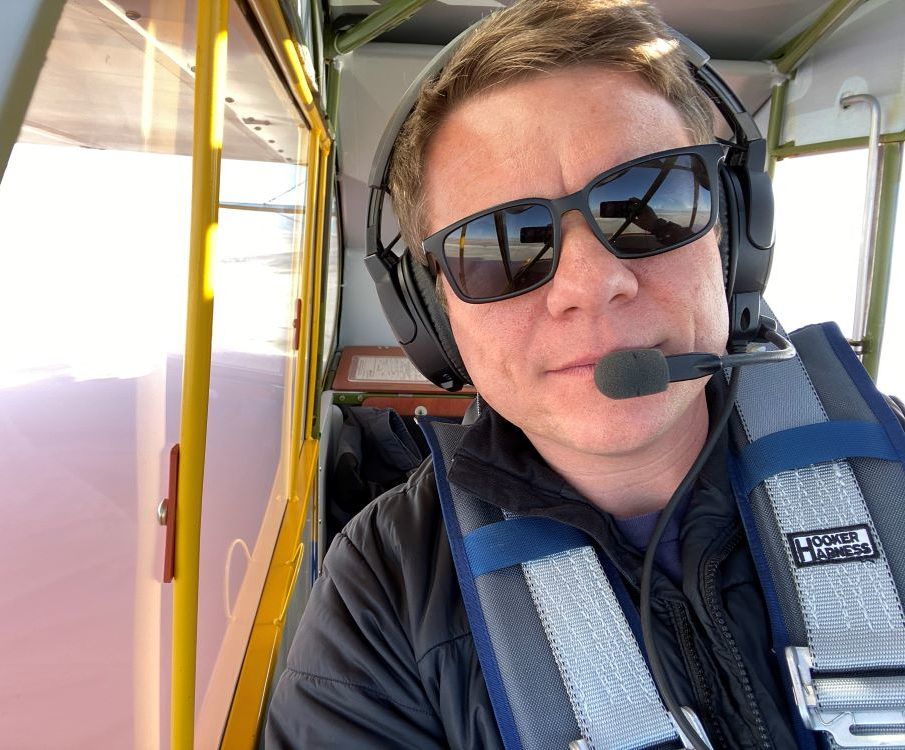
WORTH THE READ: ROY EVANS II GUEST EDITORIAL

Our many RAF supporters have such vast and varied experience, and we’re capturing some of their words of wisdom to share with you. This month’s guest editorial is by Roy Evans II, the President of Utah Back Country Pilot s Association.

Throughout my journey in aviation, I’ve been guided by many mentors. In my adolescence, I found myself taxiing across a spacious apron following the tire tracks of countless flight students like me. Immediately my instructor slammed the brakes, turned towards me in the tight confines of that Cessna 152 and asked me, “What do you want to be when you grow up?” I quickly replied, “I want to be a professional pilot.” Twice as fast as I had replied, my instructor said, “Then start right now and get on the yellow line.”

The benefits of an active, engaging mentor/mentee relationship are often overlooked. Our modern, connected lives rarely find time for the peace and solace many of us find while flying and enjoying the backcountry.

In the state of Utah, we are the benefactors of the exemplary stewardship of recreational aviators who enjoy our historic, unparalleled backcountry. When two members of the Utah Back Country Pilots Association were out enjoying a fair weather day and landed at an airstrip they were met by park rangers. When questioned about pilots’ rights in landing at this airstrip, their true professionalism shone. What transpired over those tense moments for these two became the foundation that our organization has been striving for. Their innate stewardship for aviation’s access to our public lands made the impossible happen. Utah’s first airstrip located in a state park, Temple Mountain, once on the chopping block of existence, now thrives as an airstrip with access to Goblin Valley State Park. 

Etiquette and customs traverse generations — not in books or signs — but in actions. Each time we roll our tires in the backcountry, our impacts on the future of recreational aviation are felt across the world. Learning more about how we can turn our errant marks into positive impressions lies in our individual efforts to engage with those who’ve made this all possible, and the organizations that perpetuate those impressions to the impressionable. Whether it be your membership dues, your participation in work parties and public comment periods, many times a simple email or phone call can bridge the gaps our adversaries exploit in restricting or removing one of America’s greatest freedoms. 

While we all will find ourselves straying from the yellow lines from time to time, it’s important to surround ourselves with those with the passion to help us steer back on course. Organizations such as the UBCP, Idaho Aviation Association, Montana Pilots Association, and RAF are chock full of mentors looking for ways to help preserve and protect backcountry flying, and I know they would love an extra set of hands. During this winter season, while many of us wait for the snow and the skies to clear, let’s take this time to engage with our local aviation community. Find a mentor who will empower you to continue to make better aeronautical decisions; and prepare ourselves to serve in a similar role. Start making better decisions today that will provide even more opportunities for recreational aviation in the future, and find joy in keeping the dreams of backcountry flying alive.

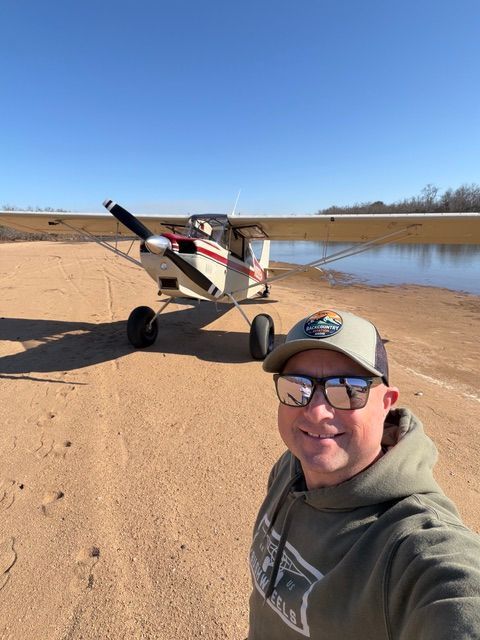
Roy Evans II has been flying airplanes since he was eight years old. Having the opportunity to make a career out of being a professional aviator, Roy volunteers as the President of the Utah Back Country Pilots Association, preserving and protecting Utah’s backcountry airstrips while enhancing the safety of pilots across the west.


When his chores are done, he’s likely flying around in his Cub Special with one of his children in the back teaching them how to read a sectional while navigating them to the nearest huckleberry milkshake. 
Submitted December 21, 2023.


Posted in News

Recent Posts

By lellington December 21, 2025
Bill credits aviation for much of his success in business and the ability to serve his companies and family. What began in a Champ, and a Tri-Pacer owned by five people, turned into what Bill calls, “a key business tool” in which he accumulated 9,000 hours – in a Cheyenne, a Pilatus, and a TBM, where ninety-five percent of his flying was for business. “My retirement enabled me to recall ‘Why I Learned to Fly’, a slogan from an old RAF video.” Bill’s son, Patrick, purchased the C185 they now share. “While attending a business function, some associates arrived in corporate jets. As they joined up on the tarmac, the jet pilots gathered around Patrick’s 185, and one of the passengers asked, ‘What’s special about this?’ No explanation needed for this RAF audience,” Bill says. “My involvement in the RAF is, in a partial way, repaying the rewards aviation has endowed me with. Having been involved in many worthwhile nonprofits, this is one where financial support is only part of the picture. Physically participating in great projects that have a lasting effect, with good people, returns a great personal benefit,” he says. “My only regret is that I wasn’t there at the start.” Bill and his wife Jane are privileged to be able to split time between their long-time home in eastern Nebraska and Scottsdale, Arizona. While still serving on several boards, he enjoys golf “about every third shot,” biking, cars, and reading, but always looks forward to the time he can be involved in the RAF. “It’s flying with a purpose,” he adds. Bill can be reached at bdugan@theraf.org
December 15, 2025
AR Ambassador
By Kodi Myhre December 11, 2025
At about this time, every year, we have this conversation at the RAF about what our year end letter (code for asking for your financial support) should say to you, and about the RAF and the accomplishments of the past year.
By Taylin Trafton December 11, 2025
A Christmas gift of flight lessons from his parents started Scott Anttila’s aviation journey in 1985. “I learned at Johnson Field, a small grass strip tucked into the woods in Michigan’s Upper Peninsula, and that early exposure to simple backcountry flying stuck with me,” Scott says. Growing up in the U.P., he spent a lot of time outdoors and found that flying was another way to get to the places he liked to explore—especially the ones most people never saw. As he earned more ratings and eventually moved to the Detroit area for work, Scott realized he needed a way to stay connected to northern Michigan. He bought an airplane and used it to get back to the smaller airstrips and lake country he enjoyed. Along the way, he also flew gliders out of Frankfort, soaring along the Sleeping Bear Dunes and towing sailplanes over the Great Lakes. “Those flights gave me a different appreciation for the landscape and made me even more interested in the small, out-of-the-way airports scattered around the state,” he says. Visiting those kinds of places, Scott first came across the Recreational Aviation Foundation. He started using RAF-supported airstrips both inside and outside Michigan. “I noticed how well-kept they were and how much access they opened up,” he says, adding, ”Over the years, I’ve watched a number of grass strips close, which made the RAF’s mission feel especially important to me. Maintaining these airstrips keeps aviation connected to the outdoors and makes it possible for more people to reach the quiet, remote areas that inspired me to fly in the first place.” Scott joins the other two RAF Michigan Liaisons, General Grant and Tanmoy Ganguly. He can be reached at santtila@theraf.org . Submitted December 11, 2025.
By Taylin Trafton December 11, 2025
“The word that comes to mind when I think of our second Walker Ridge work party is magical,” RAF California Liaison Doug Lumgair said, "even though it started off again with a truck stuck in the mud.” Volunteers began arriving Friday afternoon in a tailwheel Rans, a Super Cub, and Lumgair in his Cessna 170. A pickup with a big dump trailer brought the Polaris Ranger, and more pickups arrived. The runway surface posed major problems with boulders protruding from the surface. Everyone was eager to get started with pry bars and remove them. Once they fired up the generators to power the hammer drills, they discovered that this was the best method for attacking the rocks below the surface and breaking them up into pieces that they loaded into the trailer for removal. “At times, it felt like we had taken on an impossible task. But with steady work and persistence, by afternoon, we began to see the light at the end of the tunnel,” Lumgair said.  In the Friday evening fire circle, they made new friends while sitting around a propane fire pit that had been cleverly transformed into a radiant heater by placing a washing-machine drum over it. Walker Ridge lies in a dark-sky area. Before the full supermoon rose, Lumgair said they could see the Milky Way with the naked eye. The campsite at the south end of Walker Ridge has a gorgeous view of the valley, and the view became “even more breathtaking as Central Valley tule fog filled the valley and the supermoon lit the fog, creating a shimmering white lake.” Lumgair said. Saturday morning, two crews quickly organized with hammer drills, and others began cutting brush along the runway edges. Volunteers had already removed what Lumgair called an incredible amount of brush during their first work party, but Saturday, they hauled out twelve more trailer loads. Late on Saturday, they had enough time to work on the rock outcroppings in the south turnaround area as well. "It was amazing that we were able to cut and haul so much brush and break down rocks and fill the resulting holes—all in one steady, hard-working day. Thank you very much to everyone for supporting the RAF in so many ways,” he said. Some stayed Saturday night to enjoy another beautiful evening. Work remains, and Lumgair is planning more work parties in the coming year to complete further improvements, some of which will require additional approval from the BLM. “Please let me know if you get up there this winter. I’d love to hear your thoughts and see any photos of your experience, Lumgair added. Doug Lumgair can be reached at dlumgair@theraf.org . Submitted December 11, 2025.