Bill and Yvette Tracy
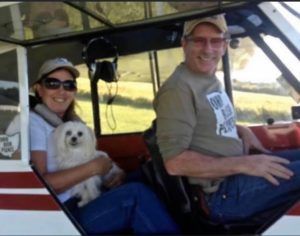
Most pilots hanker for ever-faster aircraft after attaining their pilot privileges, eager to get from point A to B swiftly. But not RAF members Bill and Yvette Tracy of Elyria, Ohio.


“It takes us a week to get to Montana,” he says, obviously preferring that slower pace. “I flight plan for 80 miles an hour, and take out my Sectional, and enjoy landing at all the purple circles.” 


Bill has 3,500 hours, nearly all in their 150-hp SuperCub. His father flew a 90-hp Cub. Using it as a ranch tool, he’d fly over his Nebraska ranch checking cows, fences and water. “Dad never flew more than 30 miles from home,” Bill said, so he and Yvette are taking a very different approach. Tracys have flown their SuperCub from coast to coast, landing in all 48 contiguous states since buying it 11 years ago. They placed second behind RAF’s Utah Liaison Wendy Lessig in the AOPA Airport Pilot challenge, landing at 89 airports in one week last August.
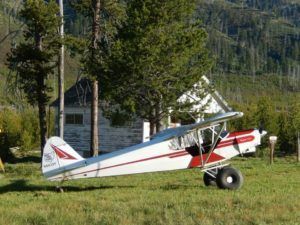
“Wherever dark parks us, that’s where we pitch our tent,” he said. 

Bill works as an A&P for the airlines at Cleveland-Hopkins International Airport, and when not aloft, Yvette enjoys her dog grooming business. Their son is also an aviation mechanic, and was alarmed when the Coast Guard alerted him that his parents’ ELT had gone off over the water off Cape Cod during one of their journeys. “I don’t swim,” Bill said, so it relieved everyone that it turned out to be a false alarm.

He says he likes to fly where the only traffic to worry about are the crop dusters. Asked about any especially challenging flights while crossing the country in the little Cub, he simply replied, “Bad weather is just a chance for new adventures. If it weren’t for bad weather, we wouldn’t have met so many new friends.”


Submitted September 24, 2020; written by Carmine Mowbray
Recent Posts
March 30, 2026
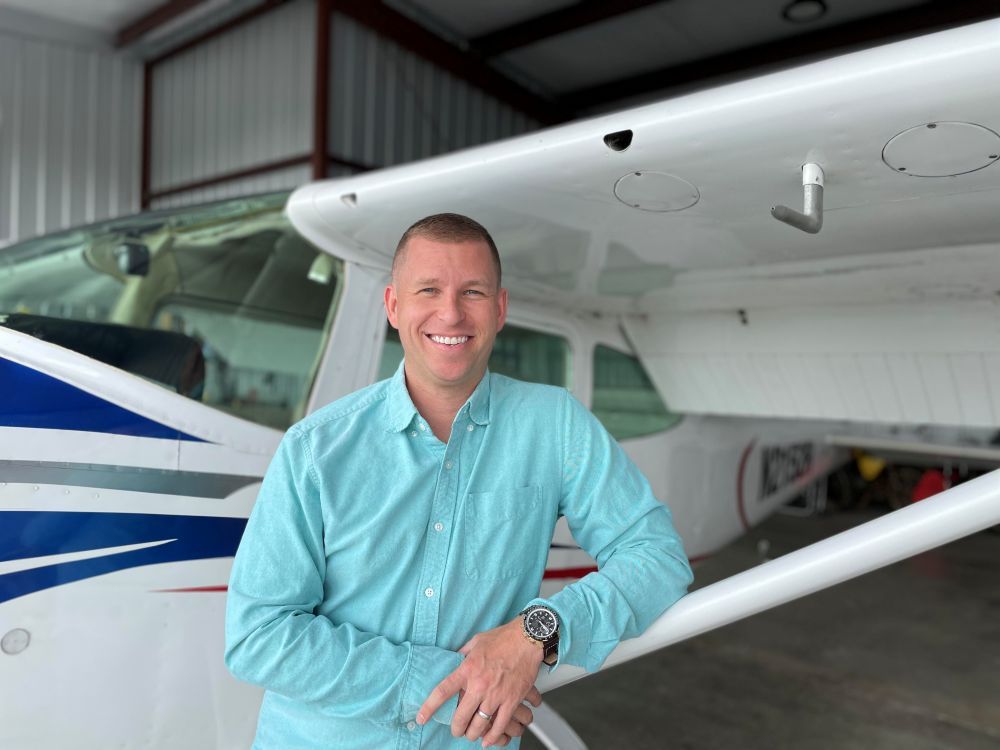
As you're planning your 2026 flying adventures, remember to review safety briefings for the airstrips you plan to visit. The RAF strongly recommends you review safety briefings and print a copy to have in your airplane - it's even required to fly into some airfields, like Ryan Field (2MT1). For those airfields, pilots flying in are required to review the briefing on an annual basis, and now is the perfect time to catch up on any changes to the runway/area that happened throughout the winter. You can find safety briefings on the RAF Airfield Guide . If an airfield in the Airfield Guide has a required briefing, the airfield listing will clearly indicate it and have a tab to view the briefing. Submitted March 30, 2026 Photo By Jim Stevenson
March 30, 2026
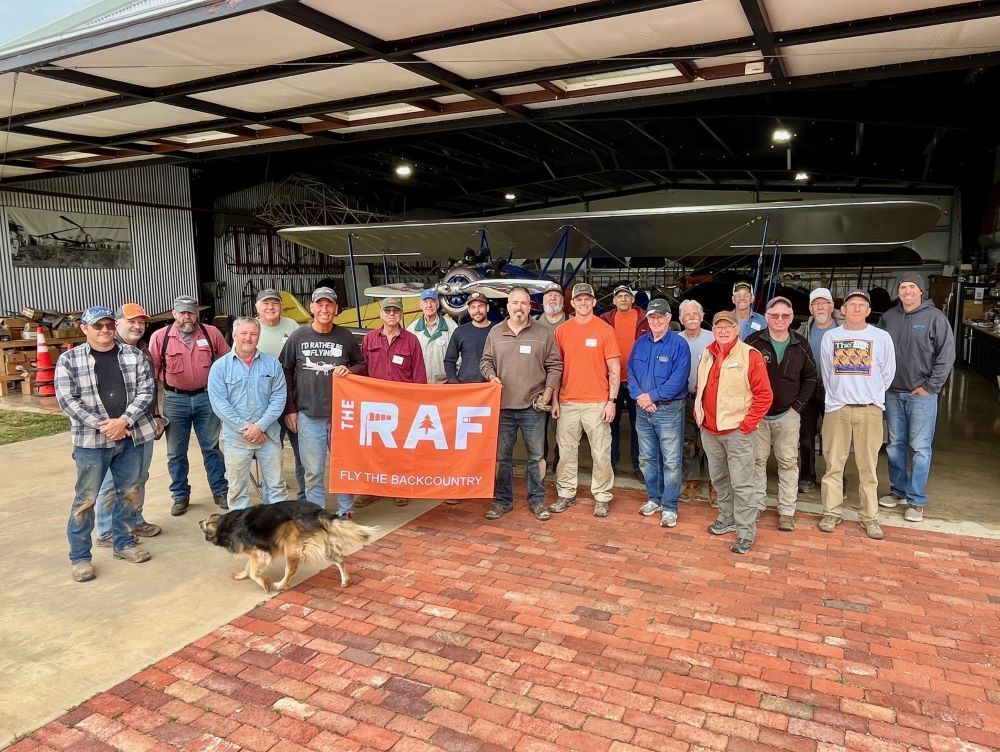
RAF Texas volunteers and Ranger Airfield Foundation volunteers helped begin restoration of the historic 1928 Ranger Airfield hangar on March 28. “A Wright biplane landed here at the field in 1911, and people have been using it ever since,” Ranger Airfield Foundation Founder Jared Calvert said. He noted that Amelia Earhart landed there in a Pitcairn Auto Gyro. Richard Bach, Pancho Barnes, and General Patton also landed at the field. It’s the oldest continuously used turf field in Texas. 
By Carmine Mowbray March 30, 2026
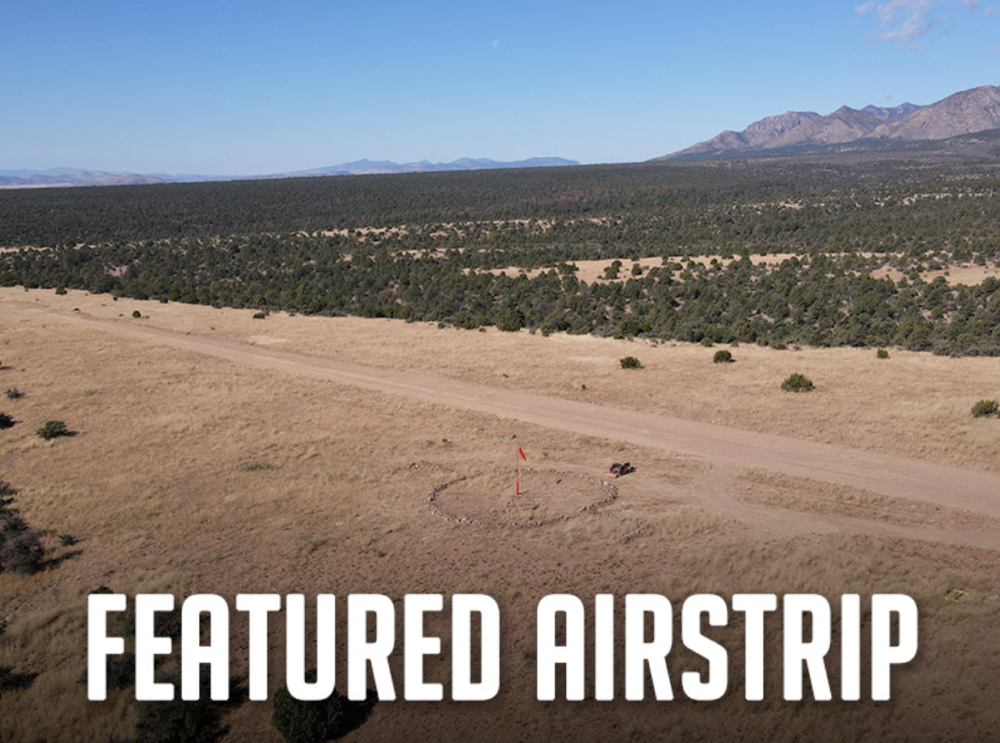
For adventurers seeking access to the Gila Wilderness, we suggest landing at Sacaton Airstrip, NM16, near Buckhorn, New Mexico. The runway lies on a “finger mesa,” and the Rain Creek trailhead lies just northeast of the field. Thanks to RAF New Mexico Liaison Ron Keller's coordination with the USFS using a Cost Share Agreement, Keller was able to organize RAF and New Mexico Pilot Association (NMPA) volunteers to rehabilitate and reopen the long-abandoned airstrip in 2022. Beyond reopening the airstrip, Keller added camping amenities, including picnic tables and a new vault toilet. Most recently, Keller oversaw the installation of new shade structures, most welcoming to campers and hikers. RAF and NMPA volunteers complete ongoing maintenance at Sacaton and other airfields in the Gila National Forest. You’ll see white-painted rocks along Sacaton’s 3,989-ft dirt runway, and surrounding the segmented circle near the RAF windsock. The airstrip lies at 6,200-ft elevation, so pilots should be mindful of density altitude while flying over high terrain in the vicinity, even in winter temperatures.  “Anglers will enjoy plying streams for the rare native copper-colored Gila trout, once a threatened species,” Keller reports. The mile-and-a-half trail to the crossing at Rain Creek is narrow and challenging and traverses a variety of terrain, but the serious hiker will be rewarded trekking through steep canyon walls lined with green alder, willow, and boxelder, hoodoos, and eagle aeries above. There are rumors of a double waterfall some distance on the west fork of Rain Creek trail. See the Sacaton page in the Airfield Guide for more details. Note that the airstrip may be unusable due to snow or after heavy rains. This runway should be considered one-way in/one-way out to avoid overflying the Wilderness boundary. There is a 4.6% upslope to the East, favoring landing Runway 08 with right traffic, remaining clear of the Wilderness east and north of the airfield. Please consider others seeking a Wilderness experience. Prior to landing at Sacaton, permission is required by calling the USFS Gila Dispatch center at 800-538-1644. Please familiarize yourself with Sacaton in the Airfield Guide and the New Mexico Pilots Association Safety Briefing . Submitted March 30, 2025 By Carmine Mowbray
By lellington March 29, 2026