OLYMPIC AIRFIELD BATHHOUSE FUNDED WITH RAF GRANT

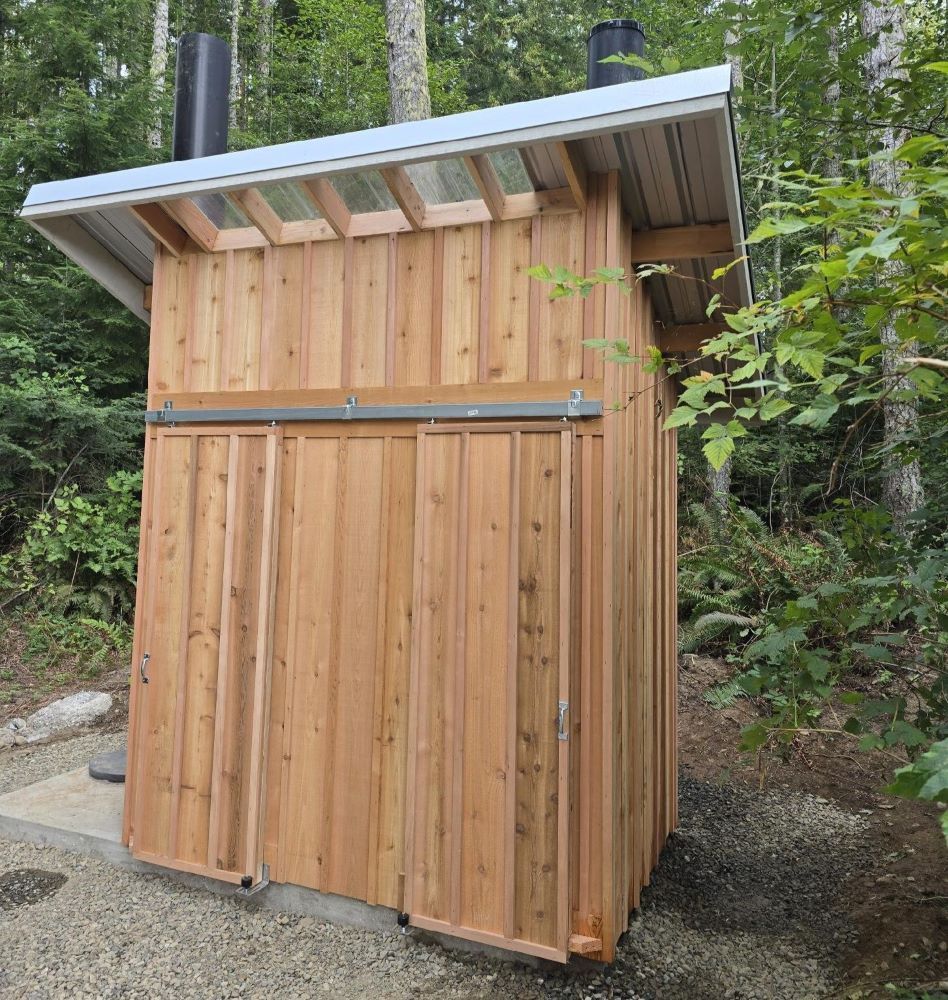
Located near the San Juan Islands between Port Townsend and Sequim, Washington is privately-owned Olympic Field, WA45 – what RAF Washington Liaison Ray Ballantyne calls, “an exquisite grass runway 2,500 feet long, bordered by an equally long float pond for float equipped aircraft.” To improve the camping area at the airfield, RAF supporter Jay PerryCook suggested the RAF help build an off-the-grid bathhouse with hot shower in the trees nearby. Property owners Ryan and Marianne Larrance agreed, and offered to provide the water for the shower, and labor and equipment, including an excavator. PerryCook developed drawings, and scoped the project, and Ballantyne was awarded an RAF grant for materials. PerryCook organized other volunteers and they broke ground on August 2. 


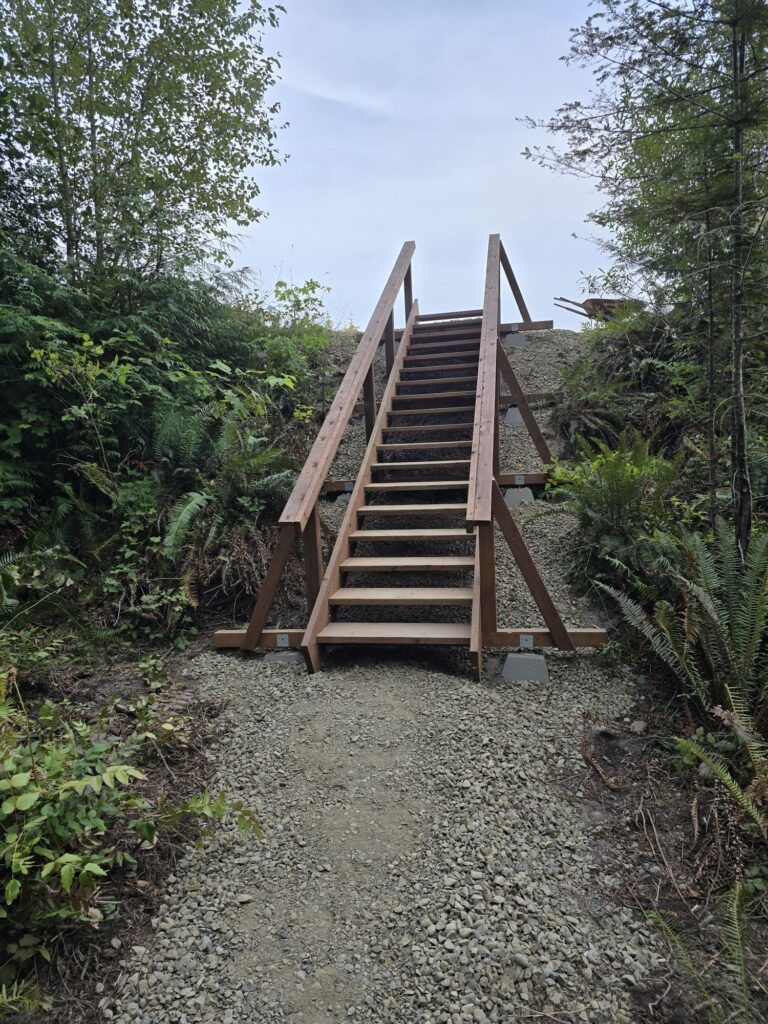
For the following two weekends, Kyle Williams, Oregon Ambassador Kevin Johnson, Tim Nichols, and Dave Riffle joined Jay, Ray, and the Larrances on the bathhouse construction. They also built a 20-foot stairway and rock pathway down the hill to facilitate access. To share the new facilities, the Larrances welcomed pilots and neighbors for a fly-in and concert August 24.
Ballantyne says that the region is known as the “Lavender Capital of North America,” and Discovery Bay has clean water along forested slopes. Olympic Field offers a quiet and secluded place to camp. Just over the hill to the west is Olympic National Park, with glaciated mountains, temperate rainforests, and the rugged Washington coastline. 


If biking, running, or hiking are your interests, the 126-mile Olympic Discovery Trail can be accessed down the hill from camp. It follows the Old Seattle & North Coast Railroad grade.


Ballantyne points out that Ryan’s parents used to host an annual party for neighbors and the aviation community, and this August event marked the 30th anniversary of their first one. “Their last fly-in, they had 400 people! Now the next generation is carrying on the tradition and is also welcoming recreational aviation campers. Just let them know you’re coming,” Ballantyne says. See the Airfield Guide for contact information and field details.


Submitted August 30, 2024
By Carmine Mowbray


Posted in News

Recent Posts
March 30, 2026
As you're planning your 2026 flying adventures, remember to review safety briefings for the airstrips you plan to visit. The RAF strongly recommends you review safety briefings and print a copy to have in your airplane - it's even required to fly into some airfields, like Ryan Field (2MT1). For those airfields, pilots flying in are required to review the briefing on an annual basis, and now is the perfect time to catch up on any changes to the runway/area that happened throughout the winter. You can find safety briefings on the RAF Airfield Guide . If an airfield in the Airfield Guide has a required briefing, the airfield listing will clearly indicate it and have a tab to view the briefing.  Submitted March 30, 2026 Photo By Jim Stevenson: Ryan Field, MT (2MT1)
March 30, 2026
RAF Texas volunteers and Ranger Airfield Foundation volunteers helped begin restoration of the historic 1928 Ranger Airfield hangar on March 28. “A Wright biplane landed here at the field in 1911, and people have been using it ever since,” Ranger Airfield Foundation Founder Jared Calvert said. He noted that Amelia Earhart landed there in a Pitcairn Auto Gyro. Richard Bach, Pancho Barnes, and General Patton also landed at the field. It’s the oldest continuously used turf field in Texas. 
By Carmine Mowbray March 30, 2026
For adventurers seeking access to the Gila Wilderness, we suggest landing at Sacaton Airstrip, NM16, near Buckhorn, New Mexico. The runway lies on a “finger mesa,” and the Rain Creek trailhead lies just northeast of the field. Thanks to RAF New Mexico Liaison Ron Keller's coordination with the USFS using a Cost Share Agreement, Keller was able to organize RAF and New Mexico Pilot Association (NMPA) volunteers to rehabilitate and reopen the long-abandoned airstrip in 2022. Beyond reopening the airstrip, Keller added camping amenities, including picnic tables and a new vault toilet. Most recently, Keller oversaw the installation of new shade structures, most welcoming to campers and hikers. RAF and NMPA volunteers complete ongoing maintenance at Sacaton and other airfields in the Gila National Forest. You’ll see white-painted rocks along Sacaton’s 3,989-ft dirt runway, and surrounding the segmented circle near the RAF windsock. The airstrip lies at 6,200-ft elevation, so pilots should be mindful of density altitude while flying over high terrain in the vicinity, even in winter temperatures.  “Anglers will enjoy plying streams for the rare native copper-colored Gila trout, once a threatened species,” Keller reports. The mile-and-a-half trail to the crossing at Rain Creek is narrow and challenging and traverses a variety of terrain, but the serious hiker will be rewarded trekking through steep canyon walls lined with green alder, willow, and boxelder, hoodoos, and eagle aeries above. There are rumors of a double waterfall some distance on the west fork of Rain Creek trail. See the Sacaton page in the Airfield Guide for more details. Note that the airstrip may be unusable due to snow or after heavy rains. This runway should be considered one-way in/one-way out to avoid overflying the Wilderness boundary. There is a 4.6% upslope to the East, favoring landing Runway 08 with right traffic, remaining clear of the Wilderness east and north of the airfield. Please consider others seeking a Wilderness experience. Prior to landing at Sacaton, permission is required by calling the USFS Gila Dispatch center at 800-538-1644. Please familiarize yourself with Sacaton in the Airfield Guide and the New Mexico Pilots Association Safety Briefing . Submitted March 30, 2025 By Carmine Mowbray
By lellington March 29, 2026