VOLUNTEERS RAISE PAVILION AT TRIGGER GAP
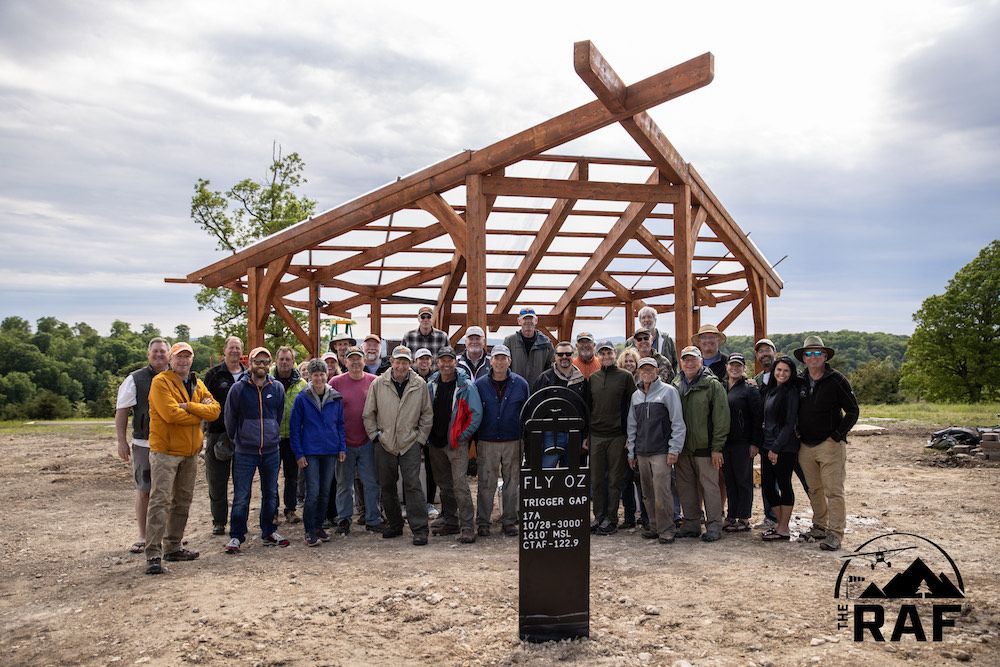
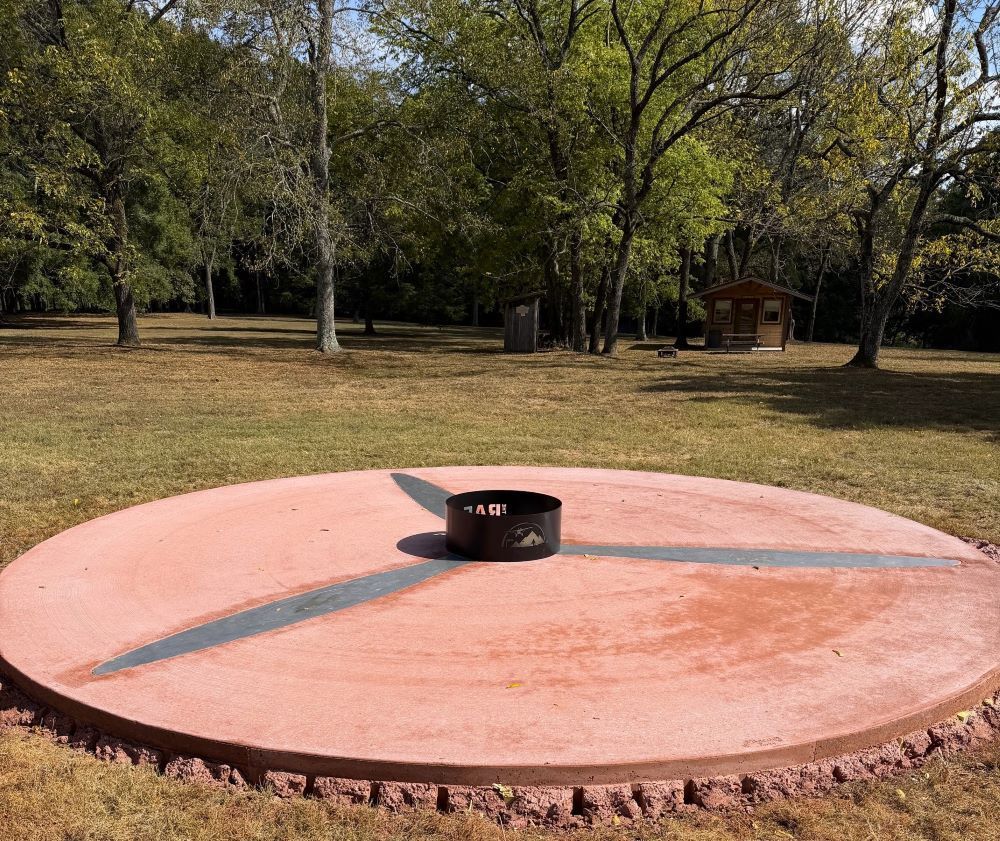
The open air pavilion is nearing completion at Trigger Gap Airfield in Arkansas, 17A. Volunteers came from 12 states representing RAF members, the Tailwind Aviation Foundation, and local Fly Oz friends, most of whom are also RAF members.

“We had a very successful work party,” RAF Arkansas Liaison Dave Powell said. “All had a great time and enjoyed building community together in addition to structures,” he added. The Nature Conservancy staff also came out including Scott Simon, Arkansas TNC Director.

“I was awed by the skill, enthusiasm and can-do attitude of each and every one of our forty volunteers,” RAF Arkansas Liaison Harper Goodwin said. Everyone contributed, some by screwing 16-inch screws into massive beams with big hammer drills, while others dug trenches, installed wiring and lighting, built a shower tent, mowed, leveled new areas, and spread grass seed, he reported. There were trips to the hardware store. Folks boiled some crawfish, and cooked for the crew. “My goodness did they cook . . . three meals a day,” Harper added. “Everyone was an important cog in the wheel and it was a lot of fun seeing it run smoothly.” 

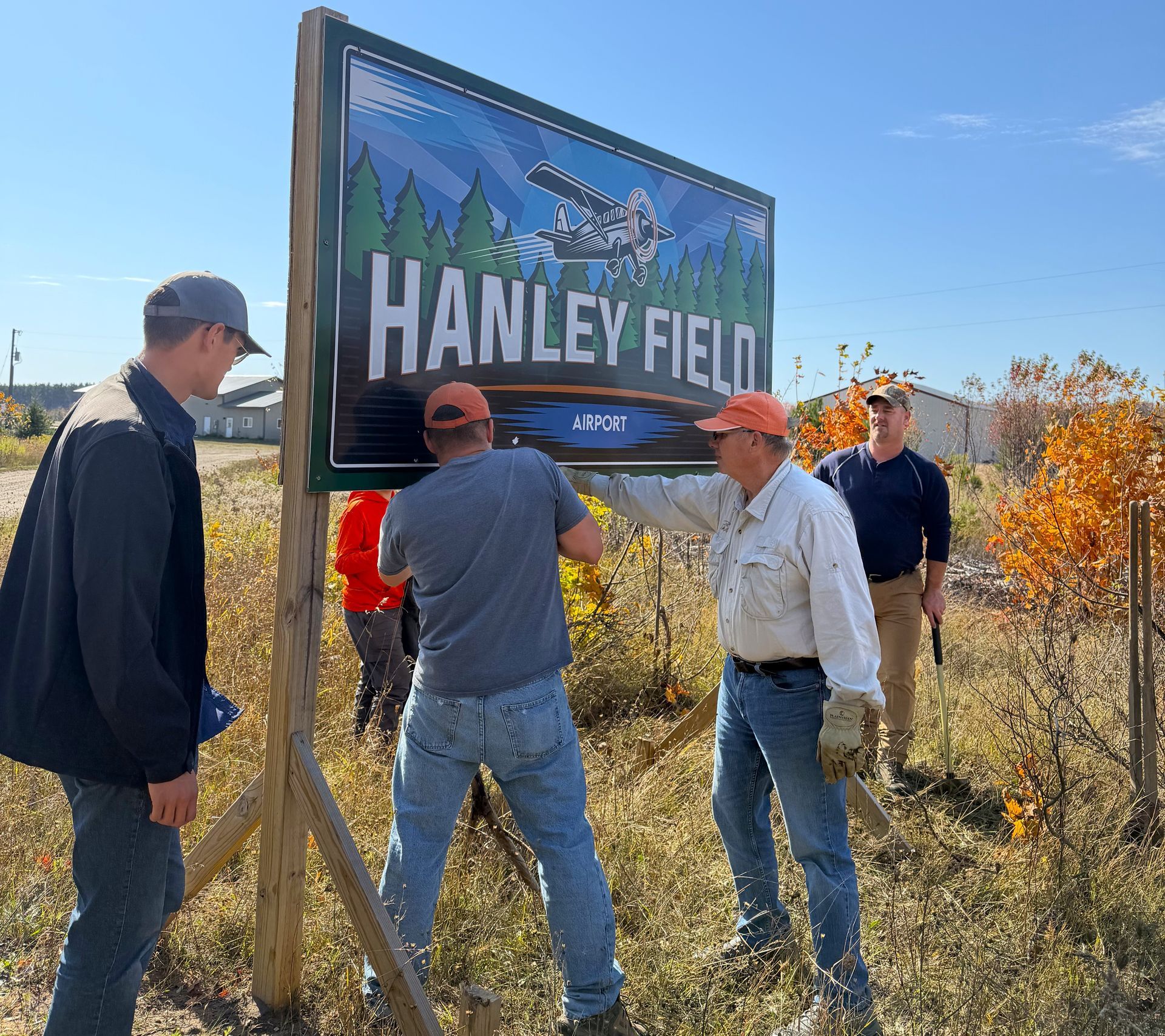
In addition to the pavilion, the crew replaced windsock frames, cut and split firewood, fabricated chairs and painted them along with cementing in a new monument sign. Stone masons are scheduled over the next several weeks to create a stone fireplace and wall to finish the pavilion.

“I am very proud of what we all accomplished and most of all I cherish the friendships that were made. I look forward to crossing paths with each and every one of the team as we now have a special bond, with Trigger Gap and the RAF as the foundation,” Harper said. 

The RAF thanks all who contributed their time or monetary donations toward this project, and values its relationship with Fly Oz and The Nature Conservancy.

See details about Trigger Gap in the Airfield Guide.

Volunteers Improve Richland Creek

In addition to all the work accomplished at Trigger Gap, volunteers took on projects at Richland Creek airfield, 4AR9. They constructing a composting toilet similar to Trigger Gap and erected a gazebo with wood cut by the same Amish supplier who provided timbers for the Trigger Gap pavilion.  (Photos and report to follow.)

“Trigger Gap and Richland Creek are but two more examples of the best that the RAF can be…not only did we build structures but once again we built community,” said RAF Chairman John McKenna. “Big thanks goes out to the folks who traveled near and far to help as well as to those that contributed the funding needed to buy what hard work alone could not.” The Richland Creek listing can be found in the  Airfield Guide.

Submitted May 14, 2021


Posted in News

    Recent Posts
August 25, 2026
CALL TO ACTION: Public Comments Requested to Support Access to 10 of Utah's Sensational Backcountry Airstrips The BLM has issued an Environmental Assessment (EA) regarding the following ten Moab-Monticello backcountry airstrips. Pilot comments will help to open access to the airstrips. Your Comments are Needed by Thursday, September 3. Please use the link below to state in your own words why you support access to these backcountry airstrips: Nokai Dome Piute Canyon Potato Ridge Playa Big Flat Red Canyon Spring Canyon Castle Creek Steer Ridge West Wee Hope Mine
August 25, 2026
Our many RAF supporters have such vast and varied experience, and we’re capturing some of their words of wisdom to share with you. This guest editorial is by Bill McGlynn, President of the RAF.
August 25, 2026
Nestled in among awe-inspiring mountains, Glacier Creek (KGZ) airstrip is 15 nm east of McCarthy in Alaska’s Wrangell-St. Elias National Park. On July 11, a work party drawing 25 volunteers was held there, led by RAF Alaska Liaison Stef Goza, her husband Randy, and Alaska Ambassador Bri Norby. They were joined by a group of National Park Service maintenance crew members who’d been flown in the night before and cleared the trail from the airstrip to the cabin before volunteers arrived.
August 18, 2026
Posted in Ambassadors , Georgia Ambassador
By Carmine Mowbray August 14, 2026
Join the excitement as the RAF continues its momentum Expanding The Map, making these the most exciting years in our history! We encourage you to explore the growing number of destinations where you can share the joys of recreational aviation with family and friends. This time, we’re announcing the reopening of Keg Knoll Airstrip in central Utah, closed years ago by the designation of the Labyrinth Canyon Wilderness Area. Thanks to RAF efforts to gather widespread support from pilots and RAF allies, the BLM has allowed this airstrip to be reopened for public access. RAF Utah Liaison Wendy Lessig has led the effort over the past three years in advocating for the reopening of Keg Knoll airstrip. Various meetings were organized with the BLM to explore whether the airstrip could be reopened as allowed by the Wilderness Act. After the BLM prepared an environmental assessment of the airstrip, they issued a final decision to approve Keg Knoll airstrip for reopening, subject to a set of reasonable conditions that protect the wilderness area. Keg Knoll Airstrip has outstanding recreational value and offers pilots ready access to a true wilderness experience. Visitors can experience dispersed primitive camping next to their airplanes, hiking around Horseshoe Canyon, and stargazing under the dark skies at night. “One thing that makes Keg Knoll airstrip unique is the accessibility of the relatively easy two-mile hike to Colonnade Arch, also known as Five-Hole Arch,” RAF Utah Liaison Wendy Lessig points out. Keg Knoll is now open, with a cooperative work party to further improve the airstrip and install a windsock planned for the fall that will include volunteer pilots and the BLM. Since Keg Knoll airstrip is in a Wilderness area, no motorized or mechanized devices are allowed, so volunteers will be limited to the use of hand tools to perform maintenance. Current reports state the airstrip itself is in good shape, but pilots must be aware that the south 700 feet of the original airstrip is closed, and will be marked with rock X’s. What remains open is 2,000 feet of runway length. “We will need help from all the pilots who visit Keg Knoll airstrip to be good stewards to help protect and preserve the Wilderness environment for this special airstrip,” Lessig said. For more information about Keg Knoll, visit our dedicated web page . Submitted August 15, 2026 By Carmine Mowbray