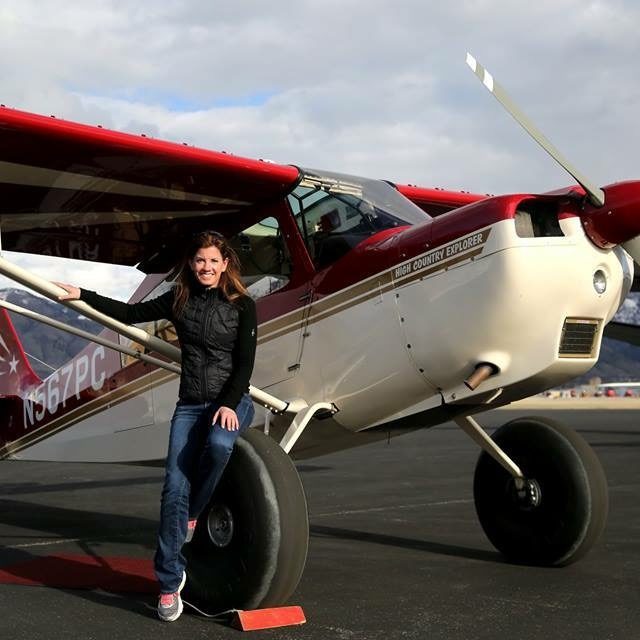
State Liaisons
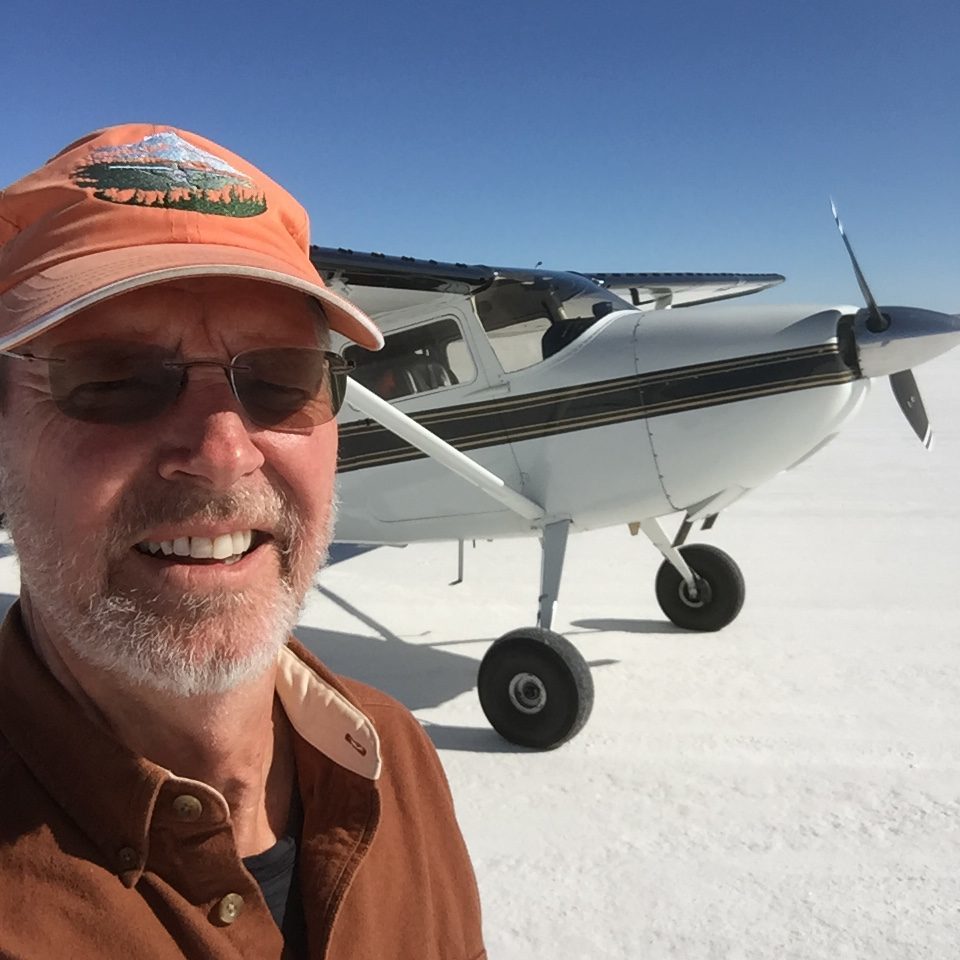
Mark Spencer, Arizona State Liaison
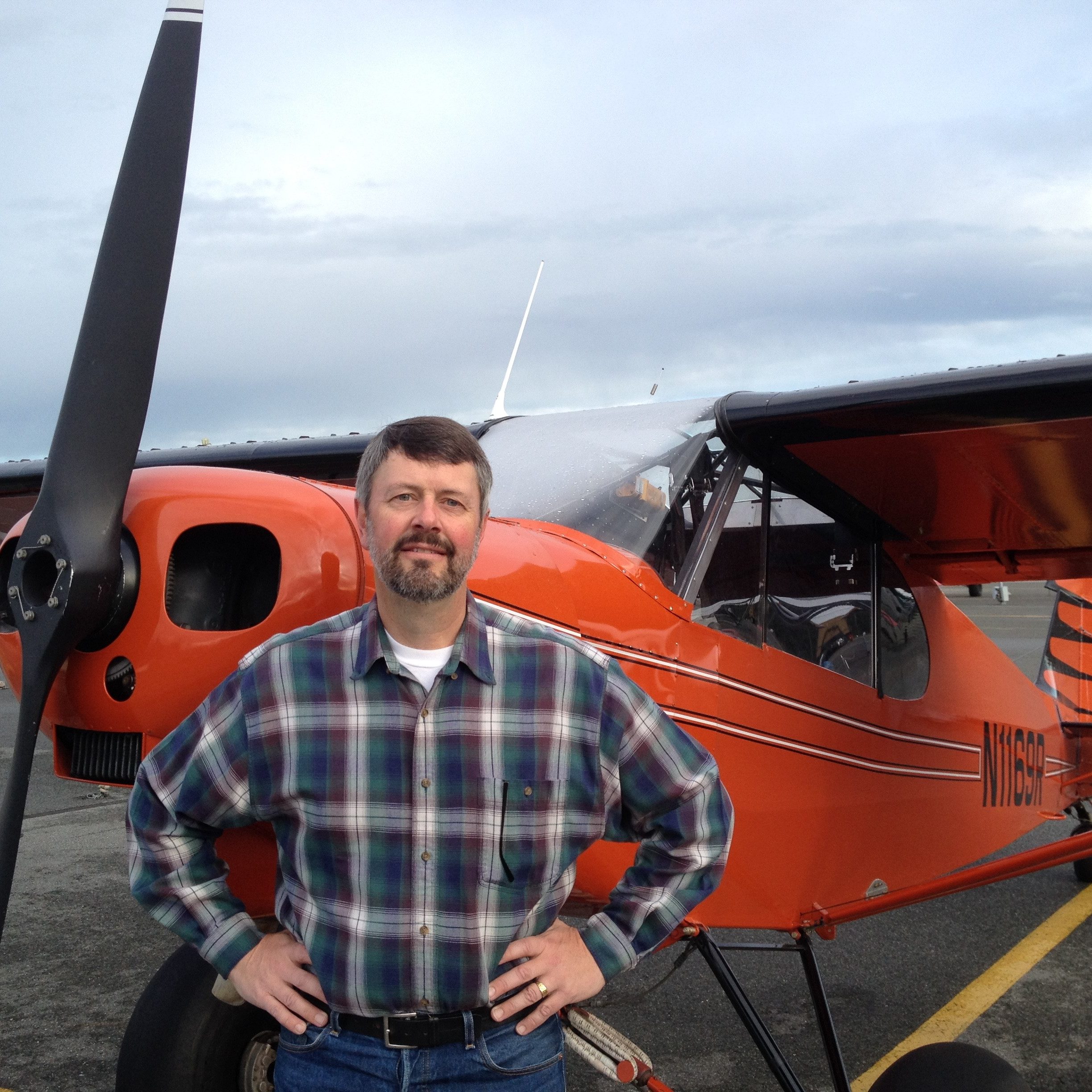
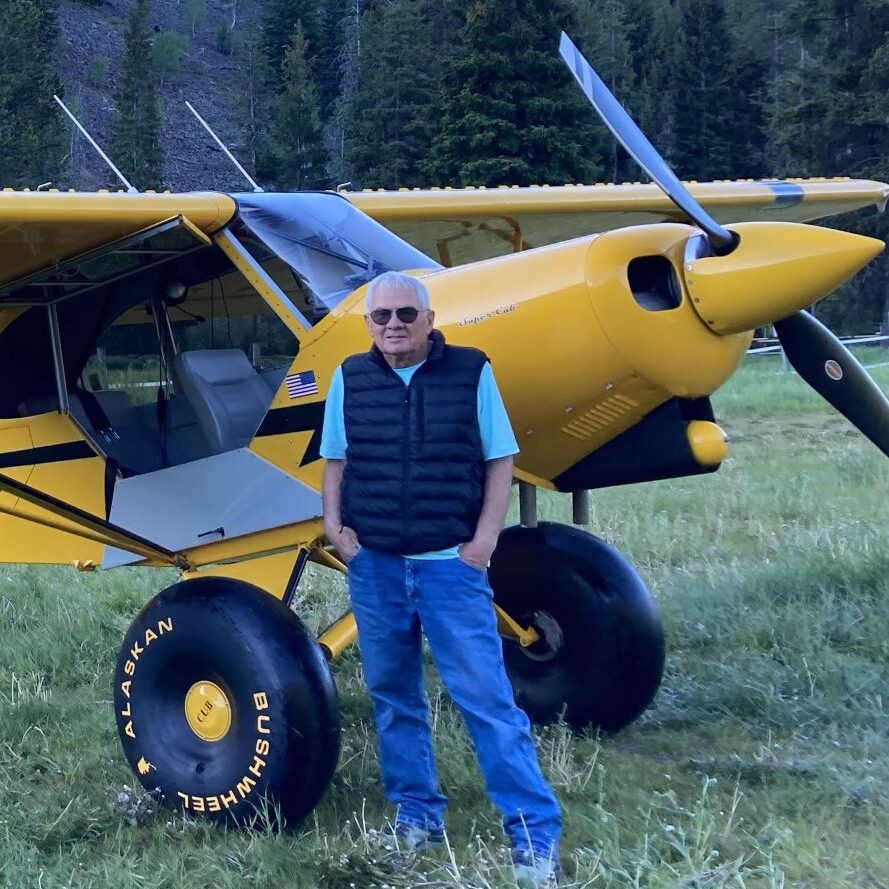
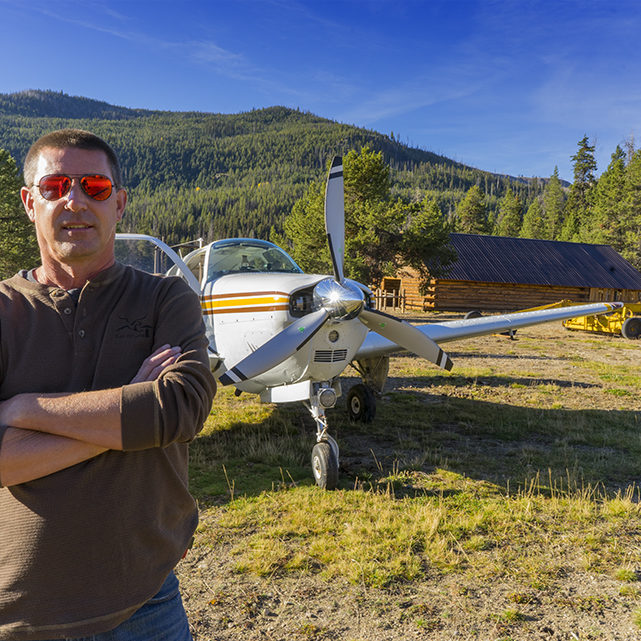
Mark has lived in Arizona since 1974 and has had a long career in the Aerospace industry beginning with Sperry Flight Systems in the early 80’s. From Sperry he moved on to W.L. Gore & Associates where he was involved in microwave coaxial interconnect designs used in avionics, radar and medical devices. If you had asked Mark at age 12 what he wanted to be when he grew up he would have said “an inventor!” He is named as “Inventor” or “Co-Inventor” on 13 U.S. and European Patents so it looks like he fulfilled this dream pretty well. Mark has always been an entrepreneur owning several businesses on the side of his engineering career including an auto-body shop, photography and a small skiing and rafting tour business. In 2000 Mark ventured out completely on his own with his current business, an engineering consulting and manufacturing representative business in RF Microwave, where he is still involved heavily in the aerospace industry in Arizona and New Mexico.
Mark and his wife Stefanie are both private pilots currently living in the backcountry of southeastern Arizona near an old ghost town called Pearce. Mark and Sefanie have four grown children.
With the purchase of their Cub Crafter’s Top Cub, Mark got very excited about backcountry flying and jumped in with both feet and spearheaded the effort to add aviation to Arizona’s recreational use statute.
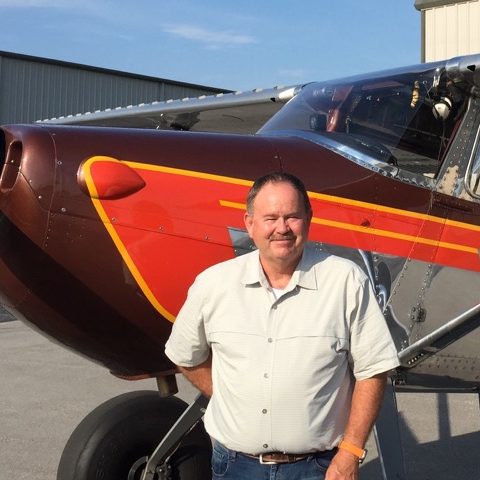
Richard "Rick"
Lach, California State Liaison
Richard “Rick” Lach, from Kernville, CA, has had a passion for aviation from an early age. He can recall riding his bike to Van Nuys Airport, where he would sit on the railroad tracks and watch planes land. After joining the Air Force he spent four years maintaining F-100, F-101, and F-105 in the Far East. In 1998 he decided that his high-end Computer Communication business wasn’t for him anymore, and sold out to buy a Lodge in Alaska. Amongst the wilderness his new venture had a bar, restaurant, rooms, cabins and a 200 foot landing strip. All this cozied up adjacent to Wrangle St.-Ellis National Park, in the village of Chistochina. Unfortunately it burned to the ground two years later, at which point Rick, with his wife Holly, came back to California and the Kern River Valley. Rick then decided that he would get serious about aviation. He started Raven Aviation and acquired an STC to convert Piper PA-22s back to taildraggers. He then acquired his FAA/PMA approval to manufacture components for himself and other STC holders in Alaska. He is also a Certified Light Sport Repairman and a Rotax technician. His passions soon were centered on backcountry flying and smaller airports. Then the ultimate opportunity came his way. The small mountain airport in Kern River Valley where he lived needed a new Airport Manager. He jumped at the chance, and now the BIG KID runs the candy shop, as he would say, taking full advantage of the high mountains, flowing rivers and lakes, desert scapes, and great weather. With nothing but toys to work on and fly, he’s in heaven. So when you stop by the airport or call, be prepared to talk backcountry flying or working to open old and new airstrips in California.
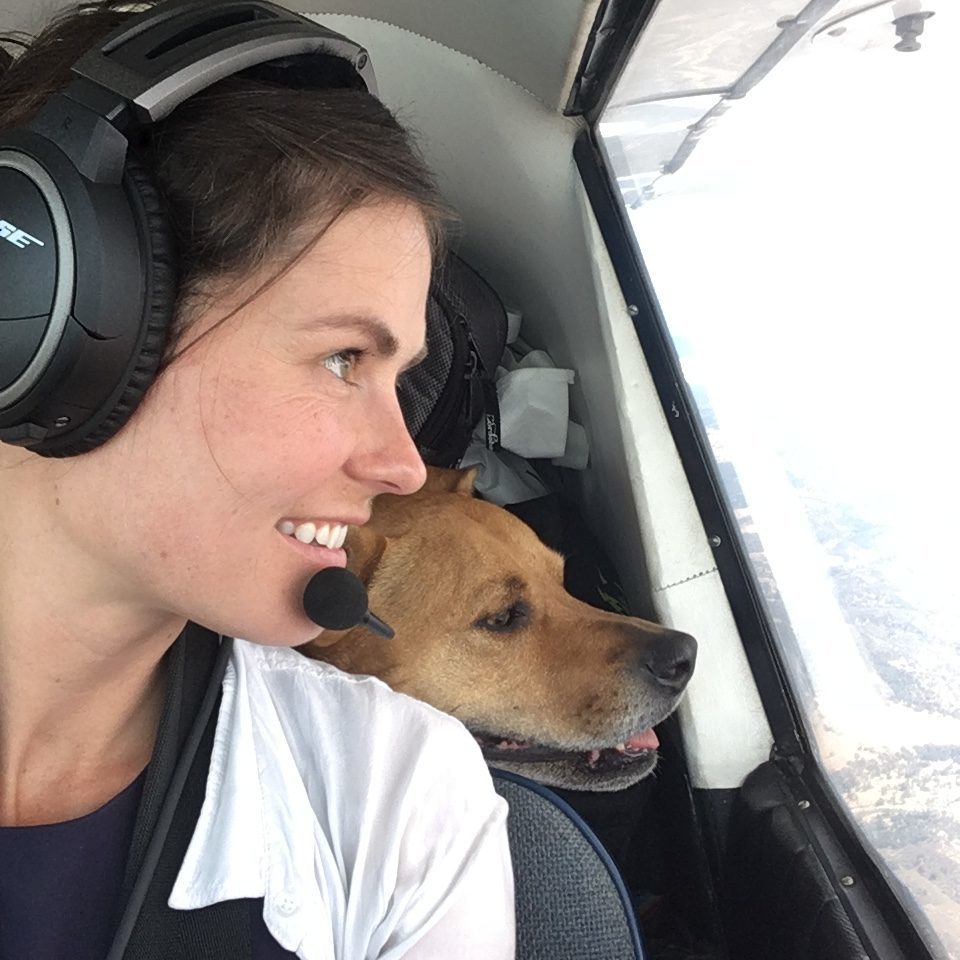
John Kounis, Southern California State Liaison and Webmaster

As editor-in-chief of Pilot Getaways magazine, John Kounis criss-crosses the country in his Cessna 185 researching fun destinations, but prefers the backcountry for fun. Before starting the magazine, he spent eight years in Germany, where he flew his Cessna 172RG more than 1,200 hours in over 40 countries—as far north as Spitzbergen about 800 nm north of the Arctic Circle and as far south as Cape Town, South Africa. A pilot since 1981, John has seen many of his favorite California backcountry airstrips like Coyote Flats and Tunnel Meadow in the Sierra Nevada disappear, which motivated him to do his part by volunteering for the RAF.
Patrick Romano, Colorado State Liaison
Patrick Romano always knew he wanted to fly. So it was not a surprise to anyone when he took his first lesson at age 14 and started instructing by the time he was 18. After a decade of flying everything from helicopters to business jets, he had to get a real job. He is now operating several Domino’s Pizzas in the Denver area. Patrick and his girlfriend enjoy flying all over the backcountry in their planes. He is still an active instructor and in his spare time is the dealer for CubCrafters and consults on all things backcountry related with his company Backcountry Aviation LLC.
Jack Tyler, Florida State Liaison
Mike Hart, Idaho State Liaison
Andy Rowe, Maine State Liaison
I may be the slowest learner in aviation history as I first soloed in 1963, but did not get my private license until last summer....2010! I followed up with a seaplane rating a month or so later and am presently working on an instrument rating. I’ve owned 2 aircraft, a Champ (in 1963) which my Dad sold while I was interrupting my college years with a visit to Paris Island and Camp Lejeune, and the 180hp Skyhawk on straight PK’s that I own today. Between then and now I managed to get a degree in Art History, shoot almost 1000 TV shows accumulating more frequent flyer miles than the average airline crew, and pick up a USCG Master’s license, sailing the Atlantic from Cape Town to Spitzbergen....all of which interfered with my quest for a private license. At least, that’s my excuse, and I’m sticking to it!
I’m a lifelong outdoors nut whether it be hunting, fishing, sailing, diving, climbing, ice boating or wind surfing. I am amazed that the RAF has accomplished so much in such a short time. Now that I’ve gotten to know a bit about the organization, I’m not surprised and hope that we can add many Maine airstrips to the RAF’s success story.
I’ll have a lot of help here as my instructors, mentors and friends comprise the cream of the crop of Maine’s bush pilots and I’m looking forward to getting to work. My Dad would be proud that at the age of 69, I finally have a real job.
Craig McCullough, Maryland State Liaison

A private pilot since 2003, Craig McCullough received his instrument rating in 2005 and has since flown his Cessna 172 up and down the eastern seaboard to airstrips in Philadelphia, Williamsburg, Charleston, Savannah, Key West and many points in-between. Craig works for Hewlett-Packard managing sales teams that support civilian and intelligence agencies within the federal government. Weekends, Craig can often be found flying with his wife and two daughters to small seaside airports like Cape May, New Jersey, or beautiful little spots in the country like Fallston, Maryland or the Corry-Lawrence airstrip near Lake Erie. The threatened disappearance of a few small airstrips and the closure of one of Craig’s favorite local airports, Baltimore Airpark, brought him to the RAF.
Brad Frederick, Michigan State Liaison 
Brad Frederick is a native of Michigan and continues to reside in Ada, Michigan with his wife of 39 years “Diz”. He grew up on a family farm outside Ann Arbor. They have three children, and enjoy getting up into the air. Brad’s son Ed taught him to fly when he was 55, and he has said it remains one of the absolute highlights of his life.
To get more involved, Brad started and operates S.H.C.A.H.A. a 501[c] 3 Nonprofitt Corporation, which holds Prickett Grooms Airfield, a public use, albeit remote field. He also operates a Local Museum in Sidnaw Michigan.
Brad works at Kem-tron Inc., a Manufacturers Rep. Firm and Distributor for the Electronics Assembly Industry. He started the company 23 years ago, and he still has fun most every day.
Brad loves to build and develop. He has built houses, cabins, and airfields, and hopes to someday build an airplane. He enjoys fishing, both fresh and saltwater, hunting, snowmobiling, ATV’s, and motorcycles, both on and off road. He’s also an avid boater, and camper, enjoying a campfire with friends whenever he can.
His plans for the future involve finding new challenges, as well as continue promoting aviation, and making more friends on his quest of “Fly till I die.” (Safely of course)
Ron Normandeau, Montana State Liaison

It’s not often a volunteer shows up for an RAF project with a passion for flying the backcountry and a career of cartography behind him. Ronald Normandeau was raised in Polson, Montana, attended the University of Montana, spent 22 years with the U.S. Geological Survey and retired from the U.S. Forest Service after a career as a Cartographer/Photogrammetrist. Ron earned his pilots’ license in 1964 and proceeded to “use every method known to man to find ways to fly and finance flying,” he says. He is currently restoring a 1947 Aeronca Chief and flying a friend’s Taylorcraft.
Ron and his wife Kathy have retired in Polson.
In his 22 years with the U.S. Geological Survey in Denver, Ron participated in the major transition from constructing maps manually to using digital methods. The result is what you see in your GPS systems with moving maps that encompass the complete U.S.
Ron’s twelve years with the U.S. Forest Service in Missoula have enabled him to bring other valuable experience to the RAF, and a good rapport with the USFS.
Ron maintained a parallel career as a reserve officer in the Corps of Engineers in the military occupational specialty (MOS) of Topographic Engineer (21D). This career encompassed service in: 19th Special Forces (ABN), 30th Engineers, 1st Maneuver Training Command, and Commander, 379th Engineer Battalion.
When the State Liaison position was developed by the RAF, Ron– with his willingness and experience – was a great fit for the task in Montana.
Shane Gorman, Nevada State Liaison
Shane and his wife Sue moved to Reno after retiring to Lake Tahoe for five years. They keep their Citabria hangared at nearby Truckee, CA. Shane has been busy leading RAF efforts in Nevada now that his is retired from a technology company in Silicon Valley.
They have a daughter, 29, who lives in the Bay area and teaches special ed and a son, 24, enrolled in an MBA program. Sue is involved in charitable work in Reno and also teaches botanical art part time.
Shane enjoys flying in all the western states but particularly Utah, Idaho and Montana. “I am essentially retired and keep busy as an active CFI for primary students and then contribute time to non-profits when possible,” Shane said.
John Zanchi, New Hampshire State Liaison
John’s passion for protecting airstrips was kindled in 1998 when he responded to an ad in the Atlantic Flyer seeking aviators interested in reestablishing a former unimproved private airfield not too far away in neighboring Maine. This led to a friendship with John Nadeau (RAF liaison for New England). John Zanchi had obtained his pilot certificate in 1981 while working in NYC not long after his first General Aviation cross-county flight in a Cessna 182.
His most fun times have been exploring New England and the Adirondacks of NY on straight floats; enjoying the three-dimensional challenge of aerobatics; and giving scenic rides off the ice runway on Lake Winnipesaukee in Alton Bay, NH.
Larry Filener, New Mexico State Liaison
Russell "Russ" Holland, New York State Liaison
Russ didn't start flying until 50, with a gift from his wife Sue of an introductory lesson. Her comment "You've always wanted to fly ... and you're not getting any younger, you know" was answered with the warning "I might like it, you know!" He set about making up for lost time, pursuing private, commercial, instrument and then last year his CFI. He shared a Cessna 175 with a friend for several years, using it to explore and photograph in upstate New York and the Adirondack Mountains in particular, as well as for work flights to Boston, DC, and New Orleans and family flights to Ontario and New Brunswick. Along the way, his tailwheel endorsement and single engine sea rating provided him the most fun flying he's had to date, and although 7667M got him in and out of a lot of places, his 'low and slow' interests led to the desire for a more capable back country plane. He is currently finishing his Rans S-7S with plans to have it eventually live part of the year on amphibs. Russ is a member of Galaxy Aviation, the Upstate Flying Club, the Oneida County Aviation Association, EAA, AOPA and SAFE.
His 'day job' for the last 30+ years has been in special education and developing and advocating for assistive technology solutions for kids and adults with disabilities. He founded Adirondack AccessAbility which he now runs with his wife. "It is great now to be able to meld my love of teaching and passion for flying, and give forward some of what I've been lucky enough to experience. With the RAF I hope to put the advocacy experiences of my professional life to new use in the effort to develop and maintain back country general aviation options for the New York State aviation community and all who come to visit us."
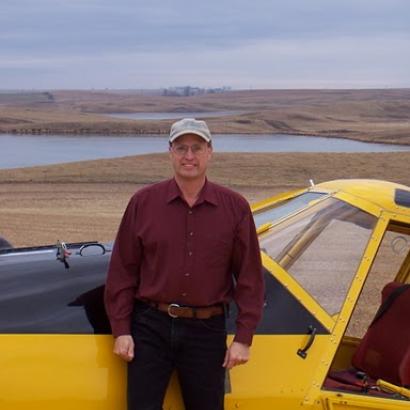
Brian Rau, North Dakota State Liaison

Brian is the first to admit that he’s a “flatlander”.
“I do recognize that the world is round and not every place is as flat as North Dakota.” Actually, his portion of North Dakota – Prairie Coteau (French for “pot holes”) – is quite rugged with rolling hills. Brian and his wife Elly consider the Utah backcountry their favorite flying vacation spot. “The first time we visited the area, we rode our bicycles from the Canyonlands airport into Moab and back, UffDa!!” (Scandinavian for “bad idea”) The Utah area fits their limited flying opportunity well, as the strips are usually open and temperatures moderate in the late fall and early spring when they are not busy farming and flying as aerial applicators. (FAA for “crop dusters”) Brian is currently involved with the National Agricultural Aviation Association, which uses up most of his vacations.
Some consider aerial application as not being environmentally friendly. Brian says, “the truth is that high production agriculture, of which aerial application is an important part, is very good for the environment. High production agriculture allows food to be grown without as much fossil fuel use and with less land, which allows more land to remain for people and wildlife.” Brian’s knowledge and experience brings an important aspect of conservation to the RAF.
As in backcountry flying, agricultural flying is about how much weight you put in the airplane for the conditions at the time. “What’s different is that most of us flying into the backcountry don’t have the luxury of excessive power or turbine engines. If I get lazy with my 182 going into a backcountry strip, I am in big trouble,” Brian says.
Brian’s entry into backcountry flying was mostly self taught, lots of reading, talking to others and practicing short field landings and takeoffs, followed by very cautious trips into some of the less demanding strips before moving on to more difficult strips. “I believe that I achieved my experience safely, but in retrospect I could have saved myself a lot of time by hiring an instructor who knew the area well,” Brian says, adding, “the UBCPA has a list of instructors willing to help.”
Some may not consider caution characteristic of an Ag Pilot. “You will find that those who have flown ag for 30 years are the most cautious of all, as they have seen what the wrong attitude does to pilots and aircraft. One of my mentors told me as a young pilot, ‘ There are two things in life everyone must learn. First there is a God, and second, you are not Him.’ ”
Brian concludes, “I hope to meet all of you sometime in the backcountry”.
Dennis Smith, Oregon State Liaison
Although Dennis Smith was born in the South, he has always called the Northwest home. His father, who worked for both Lockheed and Boeing, introduced Dennis to flying early. He was easily hooked after viewing the Puget Sound and Cascade Mountains from the air. 
Currently residing in the Willamette Valley of Oregon with his wife Stephanie, who is also a pilot and Garmin engineer, the couple can often be found cruising the local skies in their Piper Tomahawk looking for fun places to go and beautiful Northwest features to photograph.
As president of the Oregon Pilots Association (2011 to 2013), Dennis says several concerns have been brought to the organization’s attention, including backcountry issues and airstrip closures. And with some time on their hands, Dennis and Stephanie have wanted to explore the backcountry airstrips for additional recreation opportunities. After seeing the disappearance of many good destinations, Dennis was motivated to apply to the RAF as a volunteer in Oregon.
The couple is now on the lookout for a backcountry airplane so they can join the folks around the campfire and share the joys of recreational flying.
Lloyd Babcock, Pennsylvania State Liaison
Lloyd took his first flight out of a grass strip from a backcountry airport that is now closed, and soloed in a Piper J-3 from a grass field in West Chester, PA back in 1956. His love of flying started with his first flight and has been his passion ever since.
He was a co-founder of a flying club that started in 1964 at KMQS, Coatesville, PA. It was the very same airport that he flies out of today with his Mooney Ovation.
He currently spends most of the winter in the Bahamas and island-hops throughout the Bahamas and the lower Caribbean. During the summer months, he flies mainly in the northeast, but has flown his Ovation to California, Nova Scotia, Montana, and out west several times, including when he met John and Tricia McKenna in Bozeman, MT.
After hearing the RAF story at their dinner meeting, he decided that he wanted to be part of the great plan to save backcountry airports. He will dedicate as much time as it requires to carry out the RAF mission in the State of Pennsylvania.
Scot Warren, Texas State Liaison
Scot Warren grew up on a farm in Colorado where friends started teaching him to fly at 11 years old. His passion for flying comes from his dad who owned Pueblo Aircraft service from about 1965 until 1969, when he was killed in a plane crash.
Scot remembers getting in trouble for climbing in airplanes and flipping switches. Now he gets paid to do just that.
He soloed at 16 and earned his private rating at 17. After graduating from high school, Scot attended Lehman Aviation’s ag pilot training school in Casa Grande, Arizona, where he finished his commercial training at age 18. He landed an ag pilot job in the Arkansas Valley, Colorado, and when he wasn’t ag flying, he towed gliders at Black Forest, Colorado. Then he moved to Temple, Texas in 1984 to answer a listing for an ag pilot seat and during that time he managed to barter for his Instrument and multi-engine rating.
A year later, Rio Airways hired Scot to fly its turboprop commuters. At age 19 and 20 he was too young to upgrade and moved to Jet East in Dallas where he flew corporate turbo props and jets and earned his ATP certificate at age 21, two years before he could exercise the privileges. At age 23 Jet East upgraded Scot to King Air captain and type rated him in a Lear Jet on his birthday.
Subsequently, Scot received an offer he could not refuse from Mr. Jim Wikert and worked for him as a corporate pilot, flying freight at Express One International Dallas, Texas, He flew 727, and 737’s in a supplemental Freight and passenger charter as well as Mr. Wikert’s personal aircraft. This included anything from a Pitts S2B and King Airs to Lear Jets (25, 35, 31, 36), Hawkers, Citations and a DC-9. Scot was typed in the Citation, DC-9, B-727, B-737, at the age 24 and 25.
In 1990, at 26, Scot began working for Southwest Airlines. While working for Southwest, he started Warren Aircraft in 2003, which specializes in Super Cub restorations. He has always had a passion for backcountry recreational flying, but his aviation career took left seat, leaving him little time to enjoy flying for fun — the “shoemaker can’t afford the shoes syndrome,”
When Randy Lervold called Scot three years ago to ask him to be a CubCrafters Certified Sales Center, he accepted. Now he has the perfect airplane to get around the backcountry — and to promote and preserve neighbor friendly and safe, recreational flying.
Scot is looking forward to working with TEAM RAF and the general aviation population.
R. M. "Bob" Burley, Vermont State Liaison
What began as frequent 12 mile bicycle rides to a local Vermont airport in the early 1950’s quickly evolved into a full-fledged airport rat manifestation.
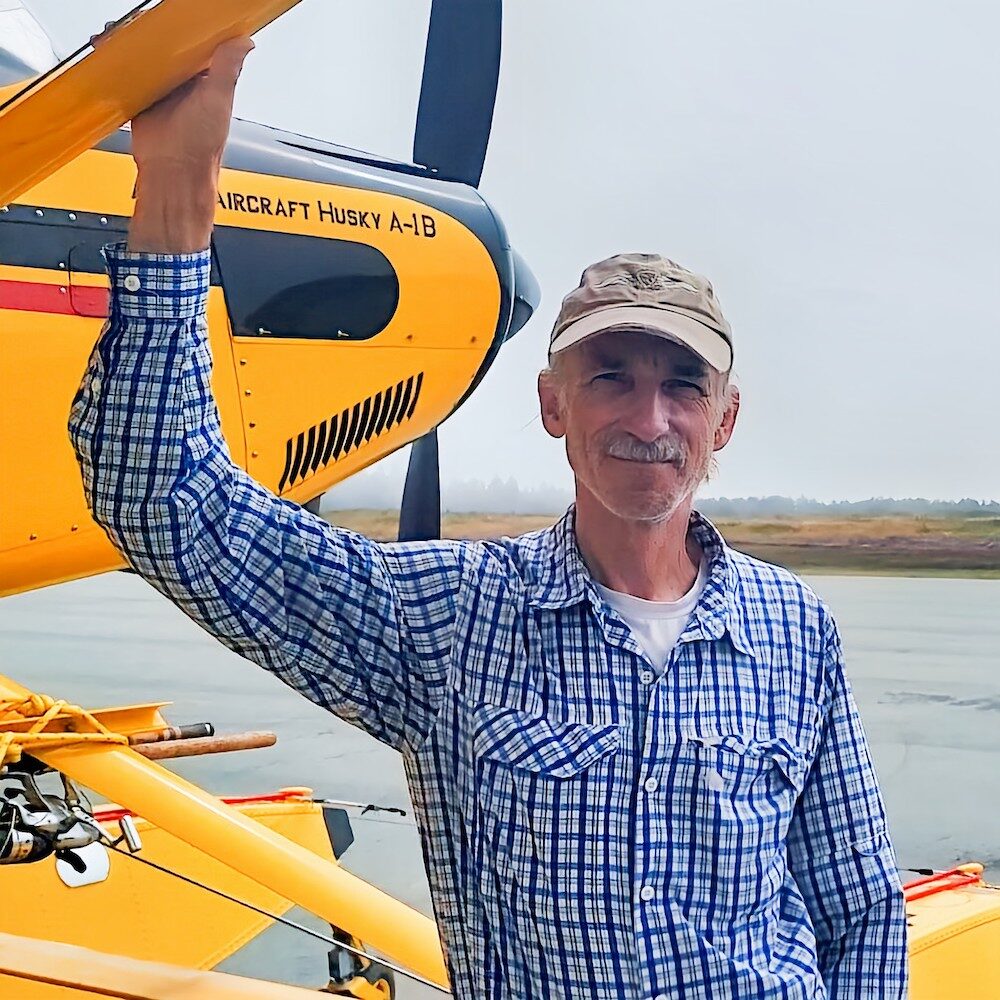
Along the way, peripheral excursions have included: retired international corporate executive (F-10 company), former Air Force officer, pilot, stints as Highway Engineer, logger, Operations Director for a large New England FBO, aerial surveying, Museum Aviation Curator and other fruitful stops. Currently living and managing a forest and wildlife area in Northern Vermont (aka the “Dog Patch”), much current personal time and treasure is expended in pursuits of Masters Alpine Ski Racing, technical mountain biking, mountain climbing, rowing, golf, Chairman of Town Council and perhaps most importantly, the discovery of interesting places for “walking the dog”, (an Aviat Husky A-1B with over 10 years of field trials experience). As a matter of policy, we always remain available for random mischief, with frequent presence at back country strips and “non-strips” in New England, the Adirondacks and Quebec. Grass, gravel, ice, snow and tail draggers would in deed appear to be a verifiable natural law.
While equally comfortable in black tie or grease stained coveralls, the hands remain calloused.
Robert L. “Bob” Kay, Washington State Liaison
Bob has 42 years’ experience flying in Washington, the Northwest, and world wide. He retired from a 32-year career as a pilot in the Washington state Air National Guard flying fighters and tankers. Bob worked for the Boeing Aircraft Co. and spent 21 years as a Production Test pilot and Instructor there.
Bob has commuter airline experience as well, with Cascade and Empire Airways. His general aviation experience has been in corporate jets, turboprops, light twins and backcountry flying in single engine aircraft with the State of Idaho and US Forest Service contracts.
All this adds up so far to about 13,500 hours in three dozen airplanes. Bob currently is the owner of KayCo WorldWide, LLC, manufacturer of lightweight backpacking equipment. He also serves as reseller of pre-owned aircraft in Washington State and provides aviation consulting.
He and his wife Jo enjoy backpacking, skiing, biking, boating and fly fishing. They live in Kent, WA near Crest Airpark.
Chuck Aldrian, Wisconsin State Liaison

Chuck started flying in 1966 to facilitate the expansion of his Milwaukee based Architectural and Engineering Company throughout the Mid-West and Eastern States. Since then he has accumulated over 5600 hours with almost half of it multi-engine time.
Since retiring from the Architectural business in 1998 and moving to NW Wisconsin, Chuck has been very involved with the local EAA Young Eagle Program where he has flown over 400 kids exposing them to General Aviation and hoping they will someday become pilots.
Chuck and his wife Judy have flown all over the country including twice to Alaska, Hudson Bay, the Bahamas, the West Coast, East Coast and almost everywhere in between.
Chuck was introduced to the RAF by Founding Director Chuck Jarecki whom he met while on a group Air Tour in Australia along with their wives.